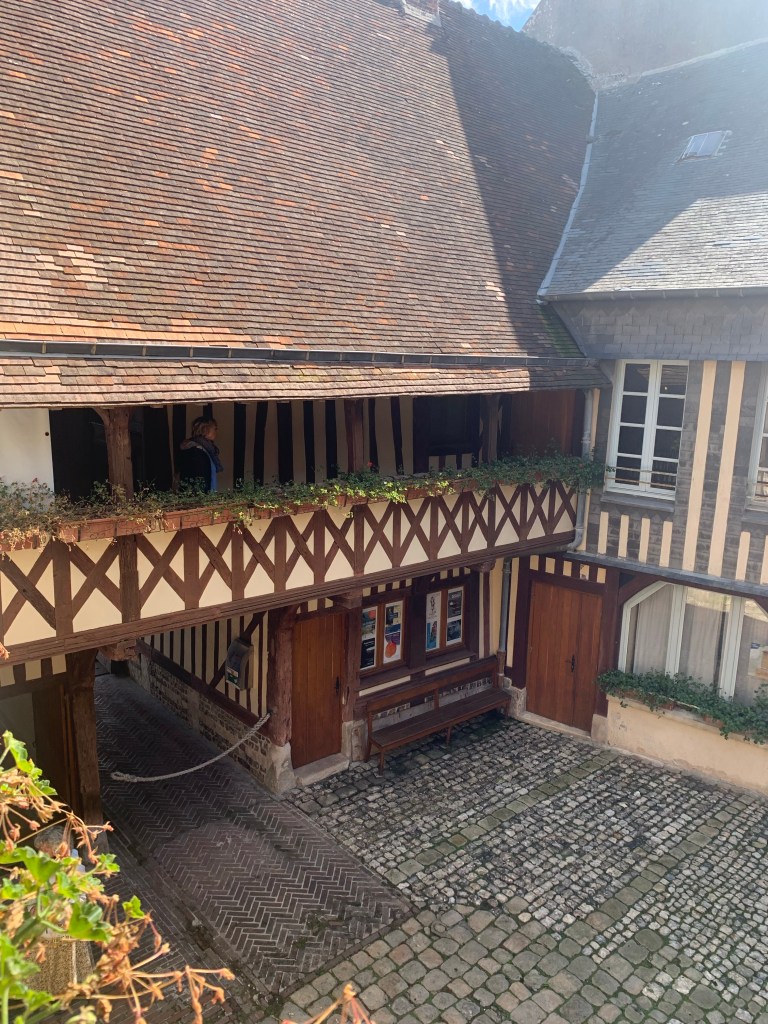
After leaving Veules today we stopped for lunch in the port of Saint-Valery-en-Caux and a quick trip into an old house, now a museum, that ‘may’ have been visited by Henri IV.
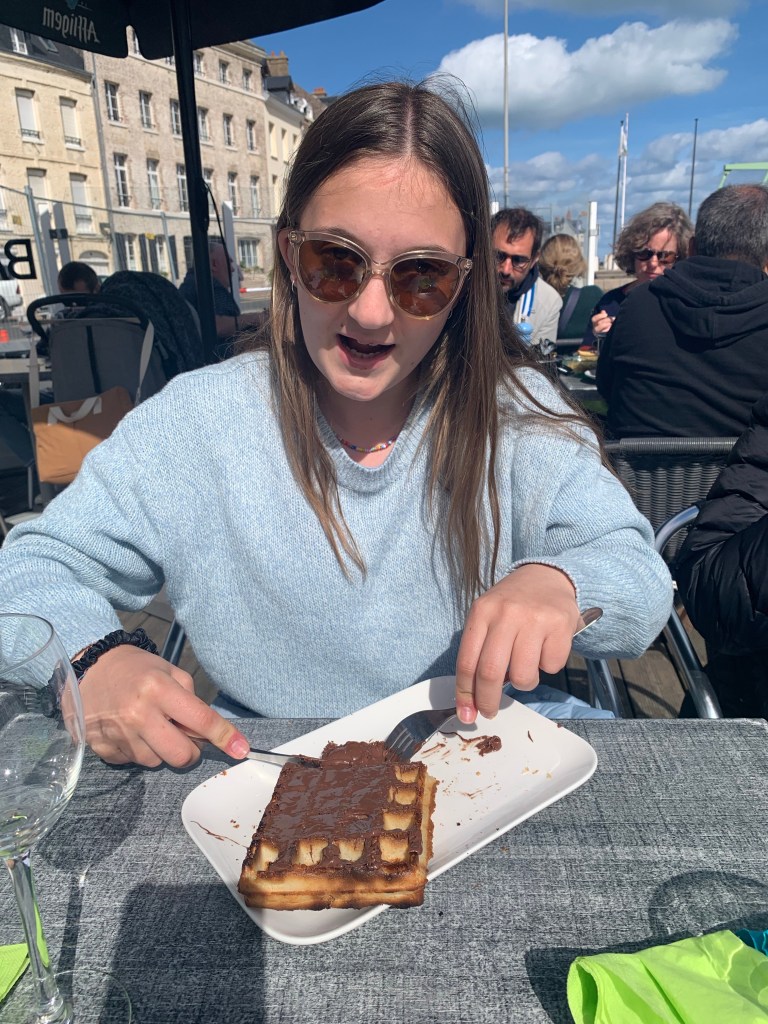
We tried some oysters from Veules-les-Roses Lavinia and Louis had a gaufre au Nutella!The old house called Henri IV
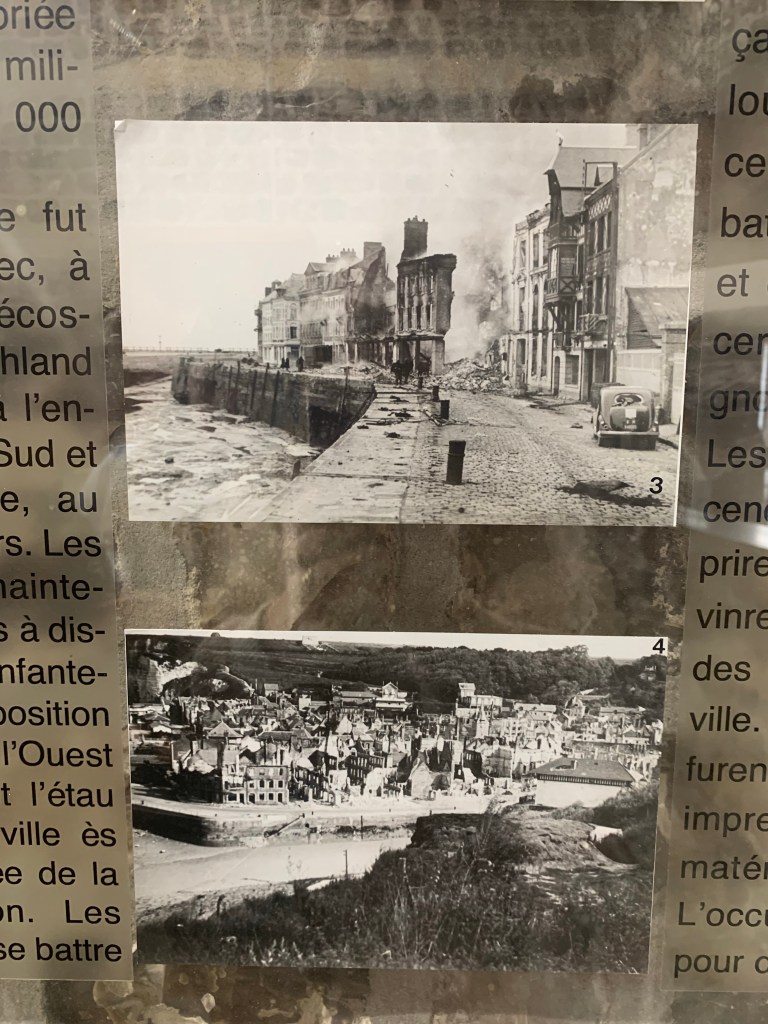
The museum showed a lot about the development of the town, the fishing industry and damage during WWII.
Destruction of the town in 1940, over 40,000 allied prisoners were taken when they couldn’t escape in time 😞
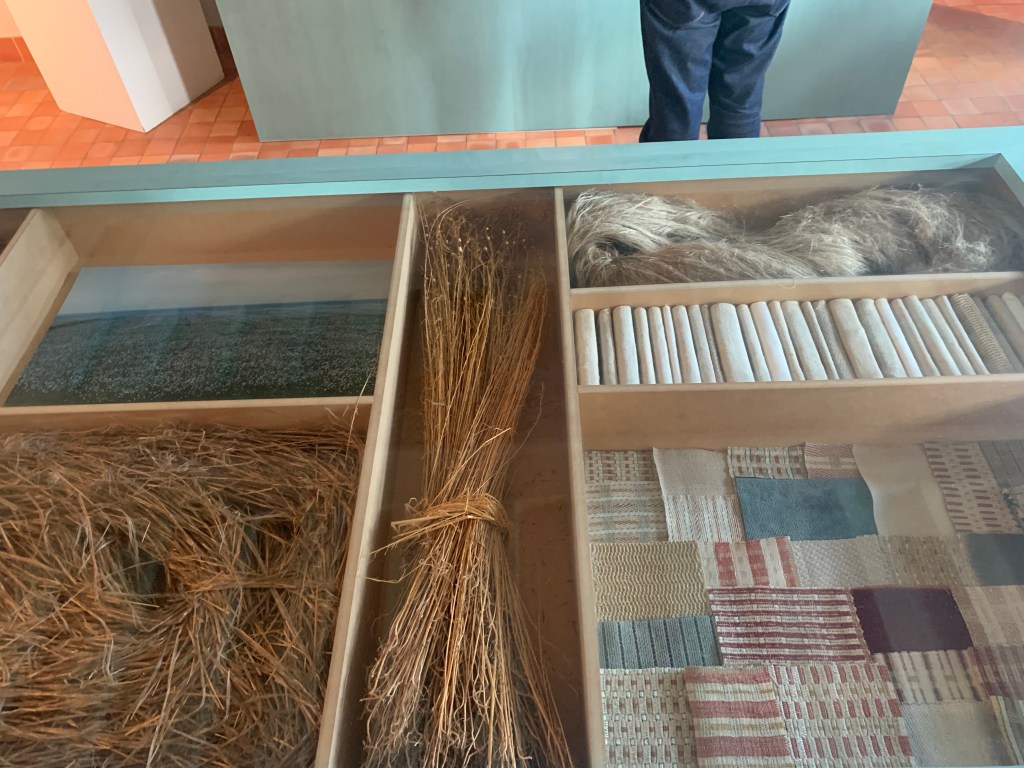
There was also a section about the flax industry which was and still is very important in the region. Apparently Normandie supplies about 50% of the world’s production of flax. We passed many fields where the farmers were rolling the cut flax into bales.
The stages of flax to linen
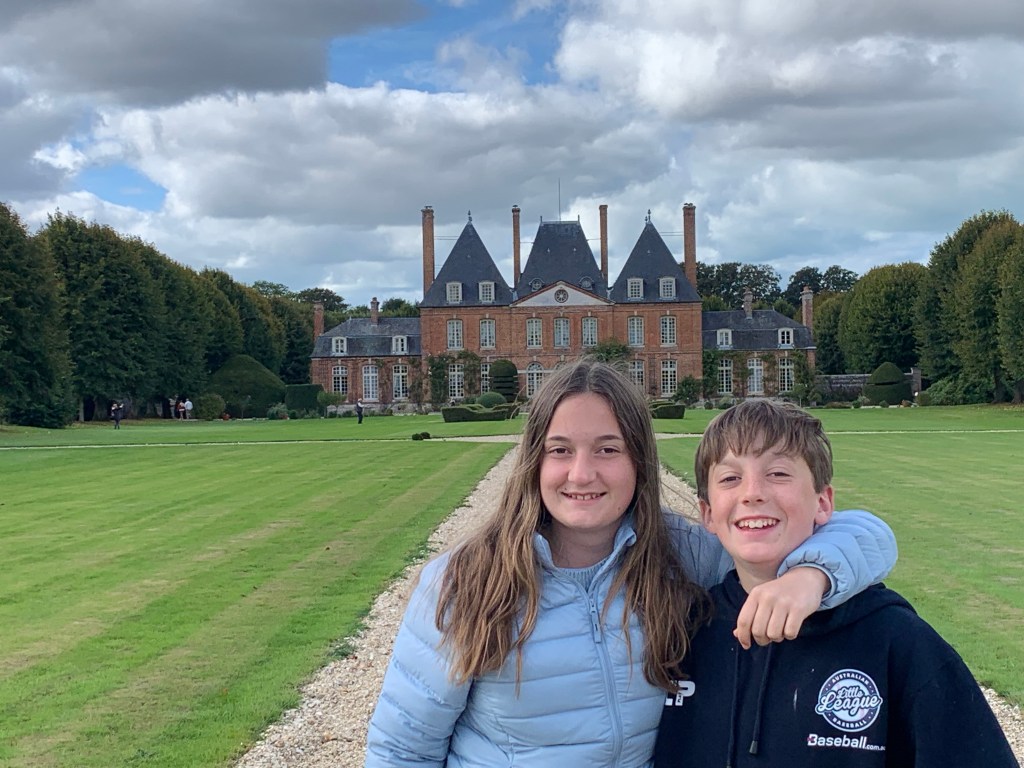
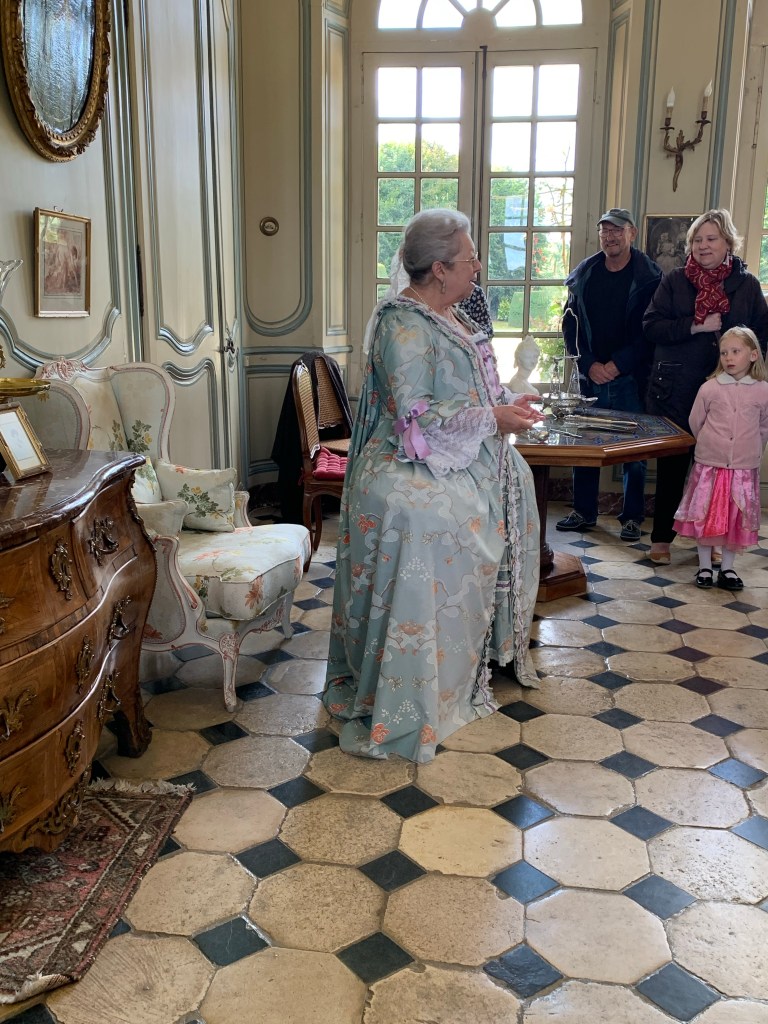
We headed into the charming château of Mesnil- Geoffroy where a current day Prince and Princess live! The gardens were extensive and designed by the nephew of the famous Le Notre. The château was not huge but very well furnished. The guided tour gave us lots of information about life in the 17th and 18th centuries.
Apparently dining tables were only introduced in the 18th century, before that you kind of ate wherever. They were very afraid of being poisoned so most aristocrats visiting each other would take their own servant to serve their drinks. When dining tables were introduced, the French used to lay the cutlery with the ends closest to the table edge not away from us like we do today. Apparently it was when the aristocracy escaped to the UK after the revolution they started to change and lay cutlery like the English and as we do today.
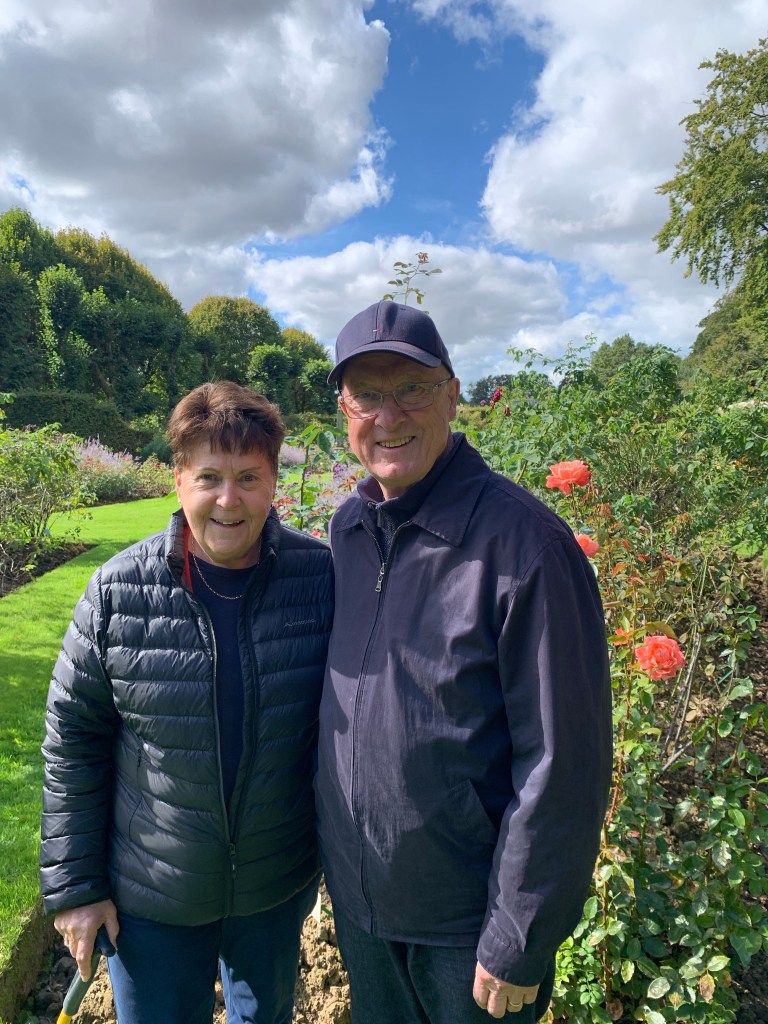
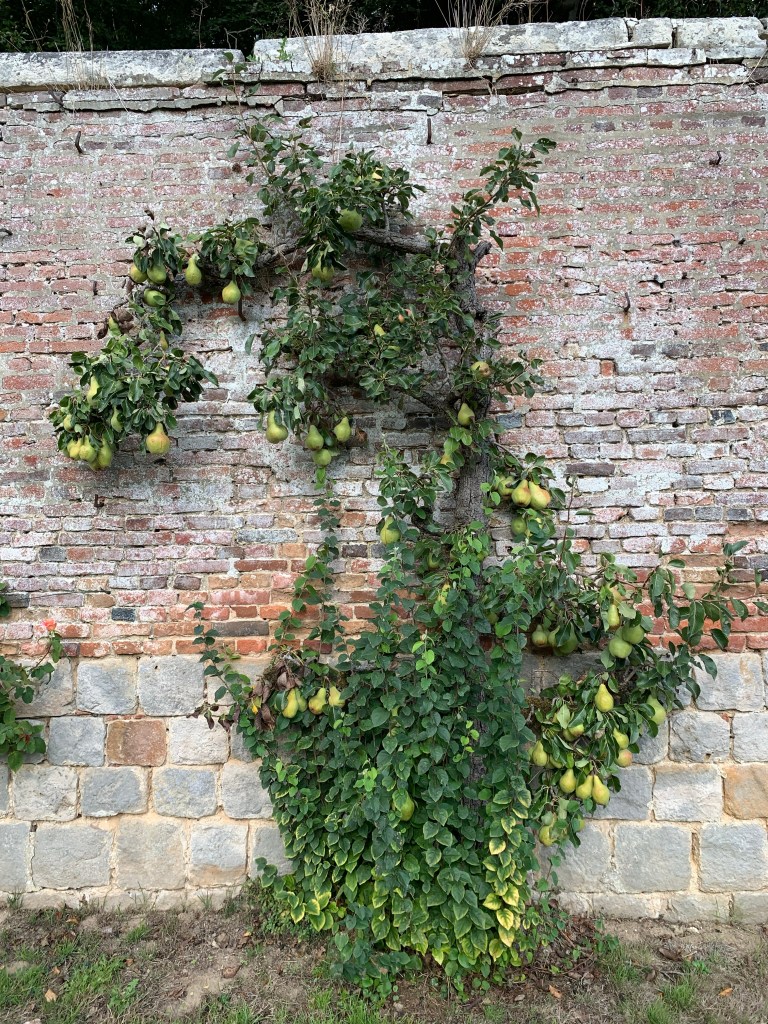
In the rose gardenLots of espalier fruit treesInteresting design
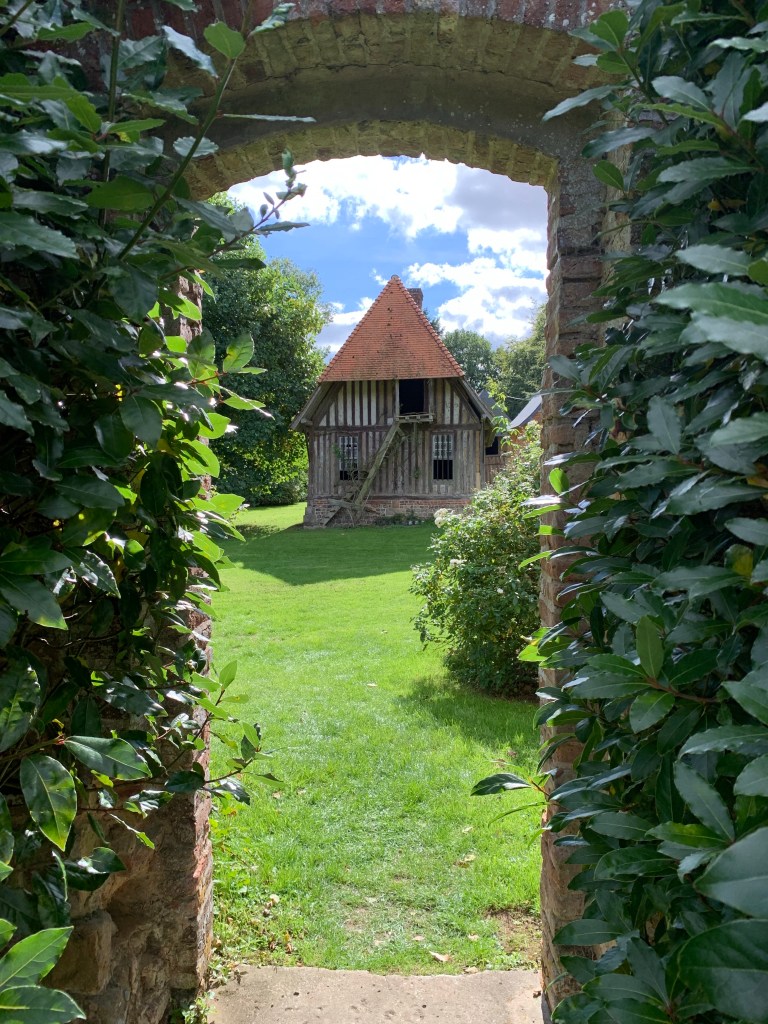
Basically a hen house, but pretty cute!
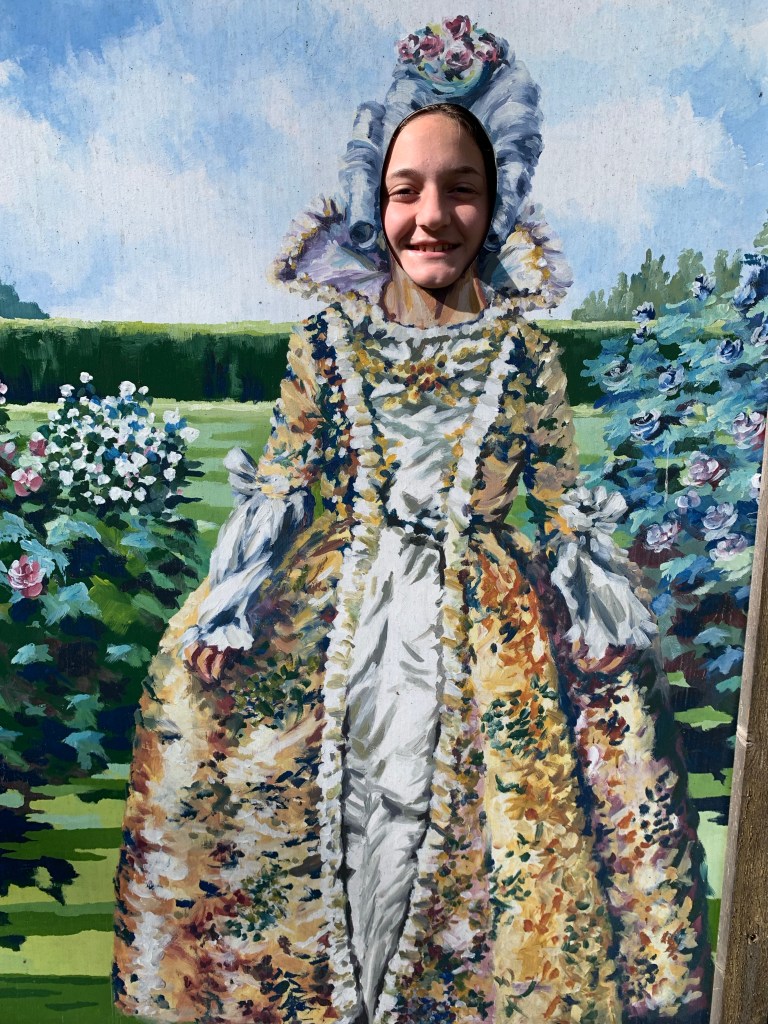
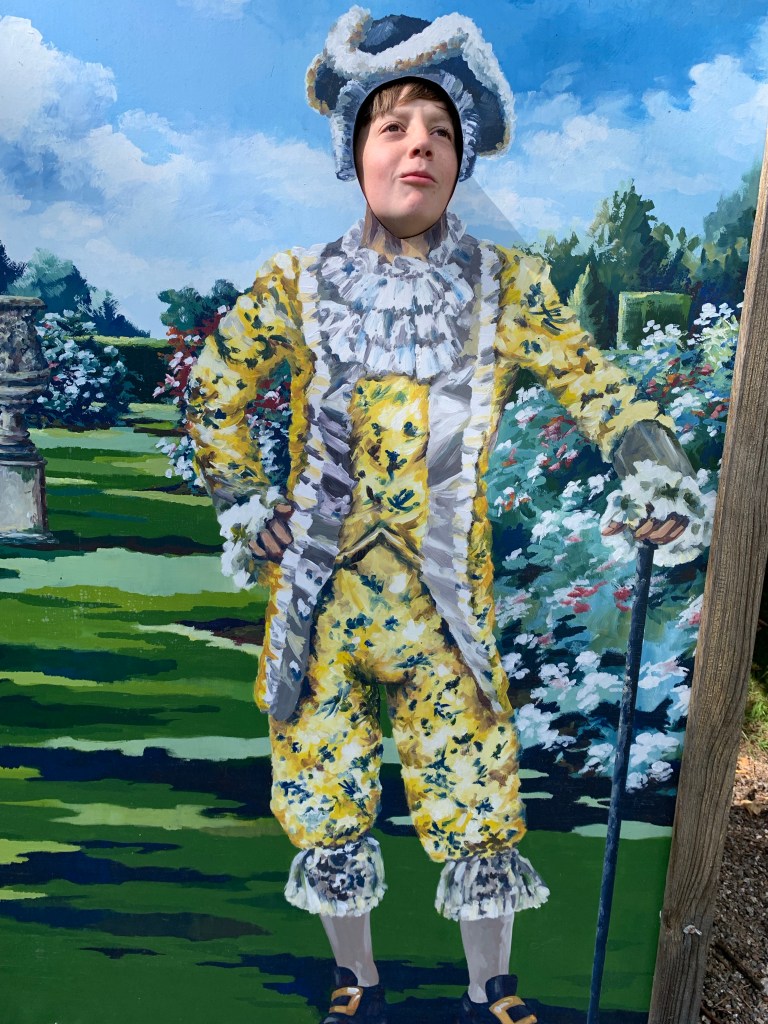
Lavinia as a fancy ladyLouis as a Comte? !The princesse of the house in period costume
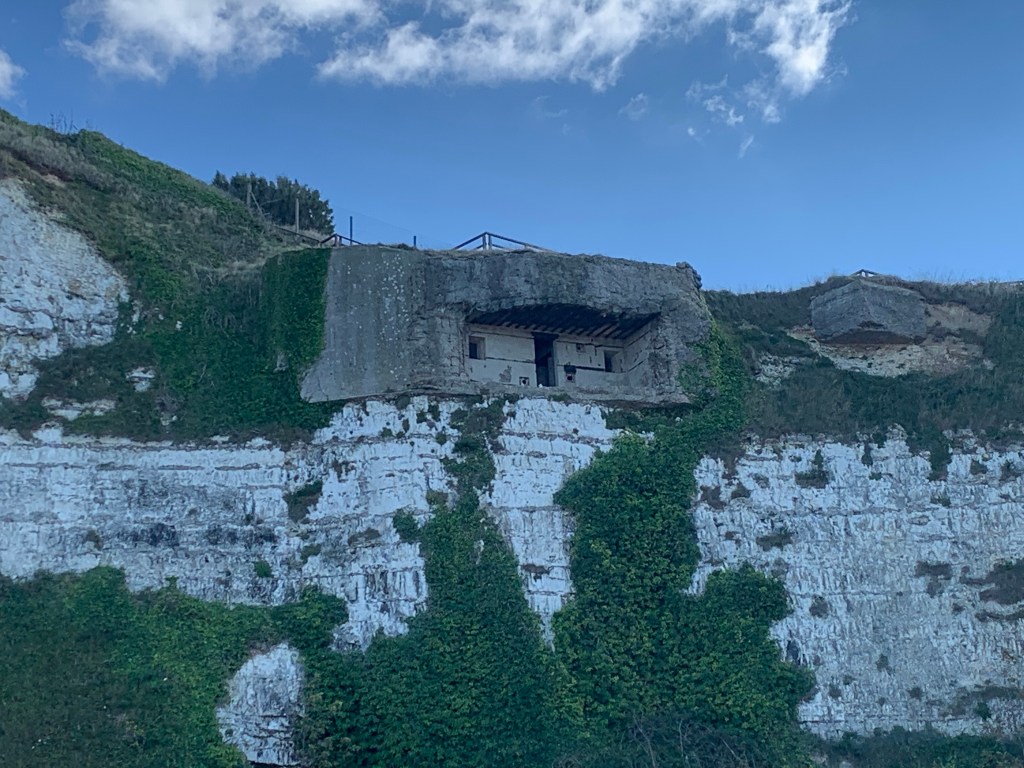
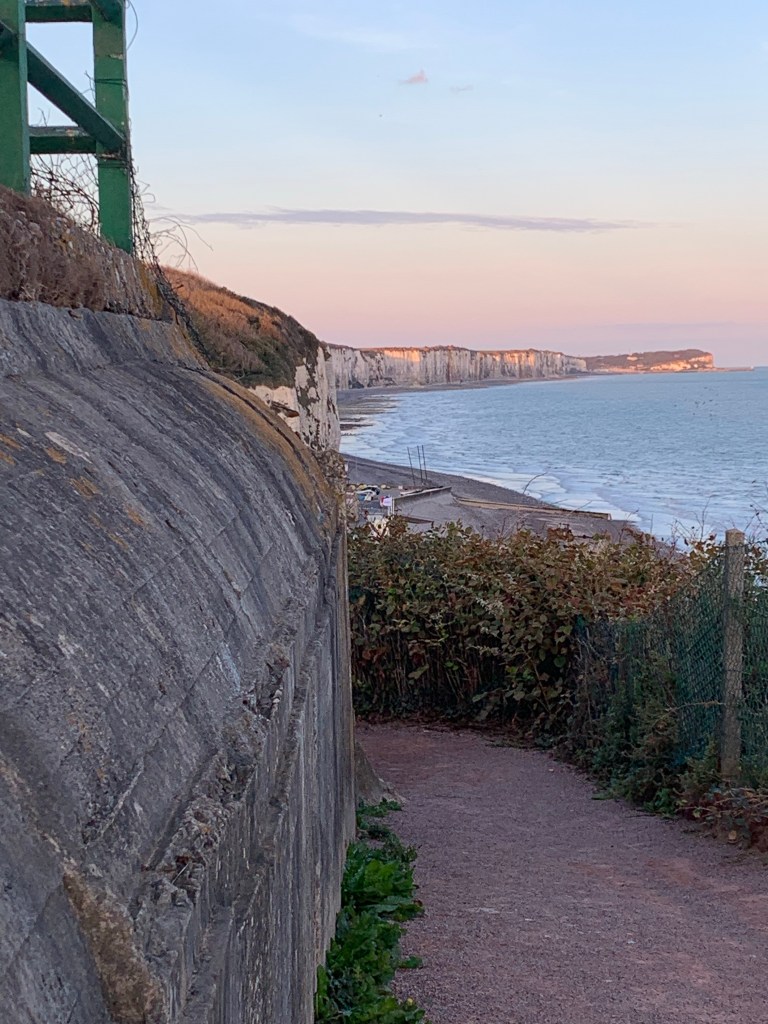
Along with beauty of the coast, there is the ever present reminder of WWII. The Atlantic wall was an extensive system of fortifications built by the Nazis along the coast of Europe to defend against an Allied invasion. The fortifications include gun placements and reinforced bunkers or blockhaus. These blockhaus are very present in the landscape today. I would have thought you would want to erase the memory of them and the war but the effort to remove these enormous structures simply must not be worth it. The fact that so many are still standing shows how strong they are.
View from a blockhaus at Veules, you can see the cement corner and the cover over the beachAnother blockhaus at Veules, about 100m from the first oneA blockhaus at Saint-Valery overlooking the beachAnother blockhaus on the other side of Veules
Even with all these defences it didn’t stop the eventual invasion in 1944.
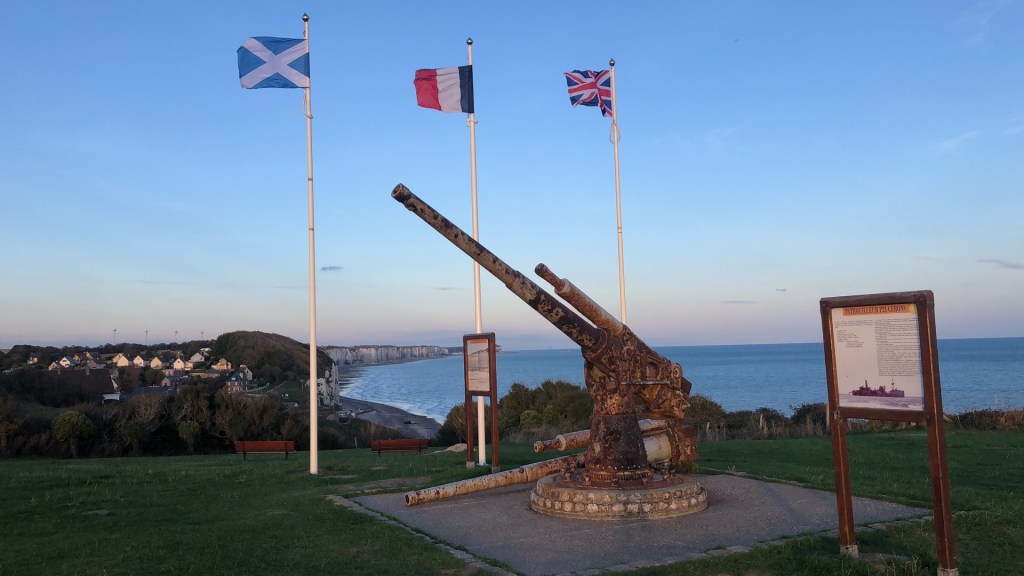
Veules-les-Roses did not escape the war. In 1940, the British and French troops fought one of the last battles of the German 1940 offensive on French soil at Veules. Eight days after the fall of Dunkirk, thousands of soldiers were encircled at Veules. Ships were sent in to rescue them but suffered heavy bombing from artillery and aircraft. One ship was lost during this and there is a memorial on the cliff to it and the battle. While many soldiers were saved, 5000 men were taken prisoner.
Memorial to the battle of June 1940 at Veules
A lot of the seafront buildings at Veules were destroyed, including the Casino and about 30 houses.
Scottish troops were the ones who liberated Veules from Nazi occupation in September 1944 and so the main square is called Place des Écossais.
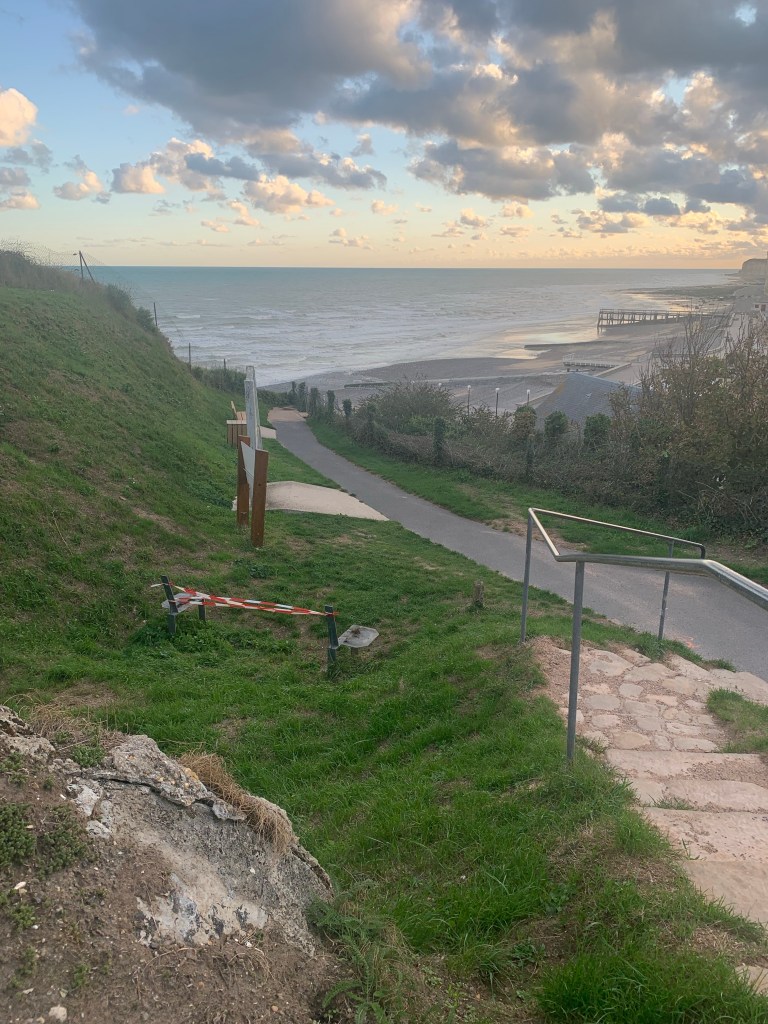
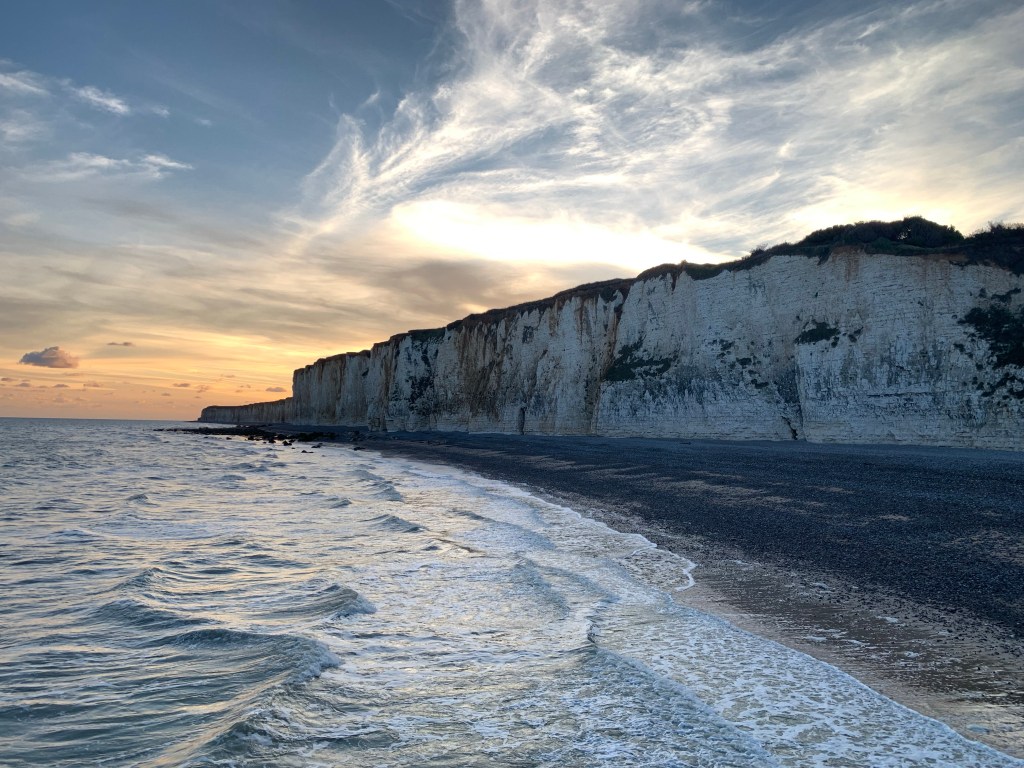
This part of the coast is called the Cote d’Albatre (Alabaster coast) in the Caux region. It is about a 130km stretch from Dieppe towards Le Havre. It has some beautiful white cliffs interspersed with valleys and cute little villages.
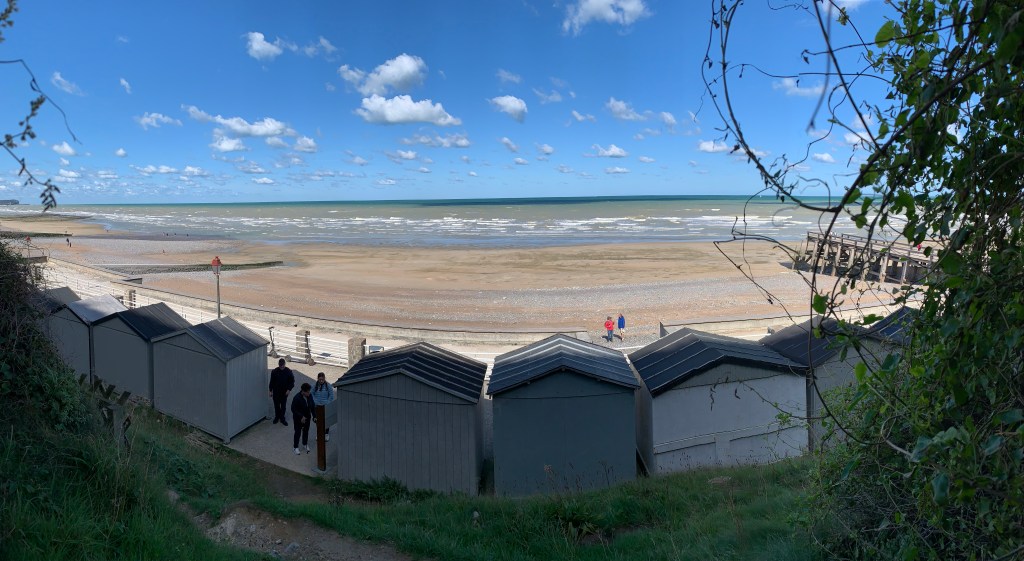
Beach at Veules-les-roses, morning light
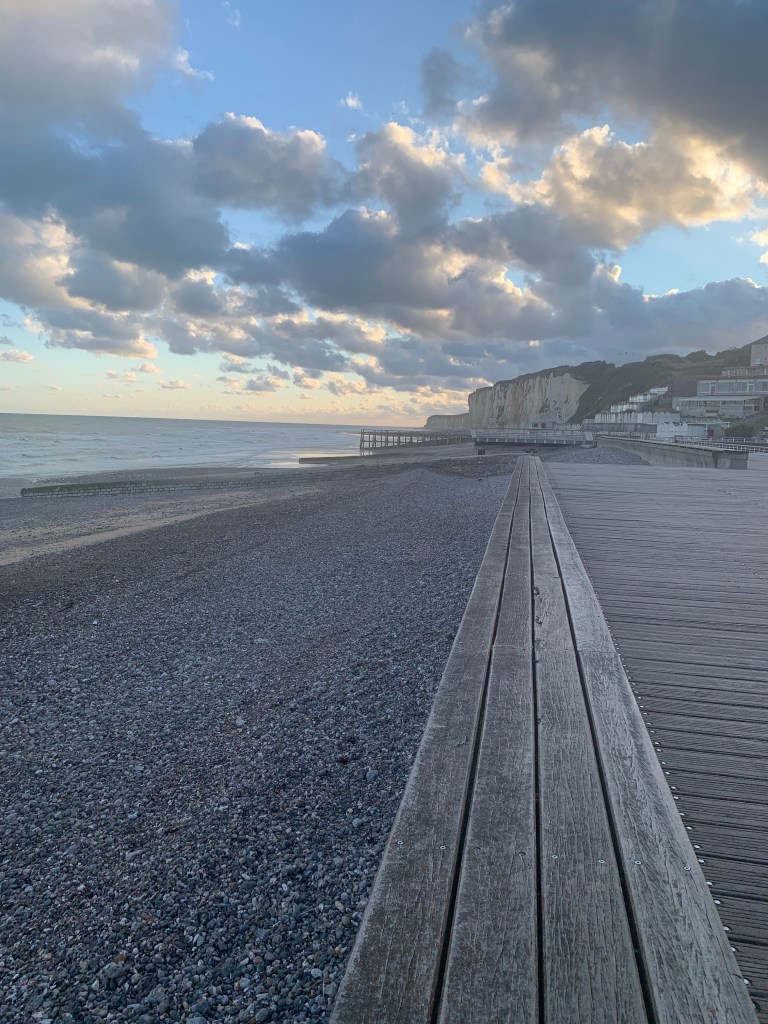
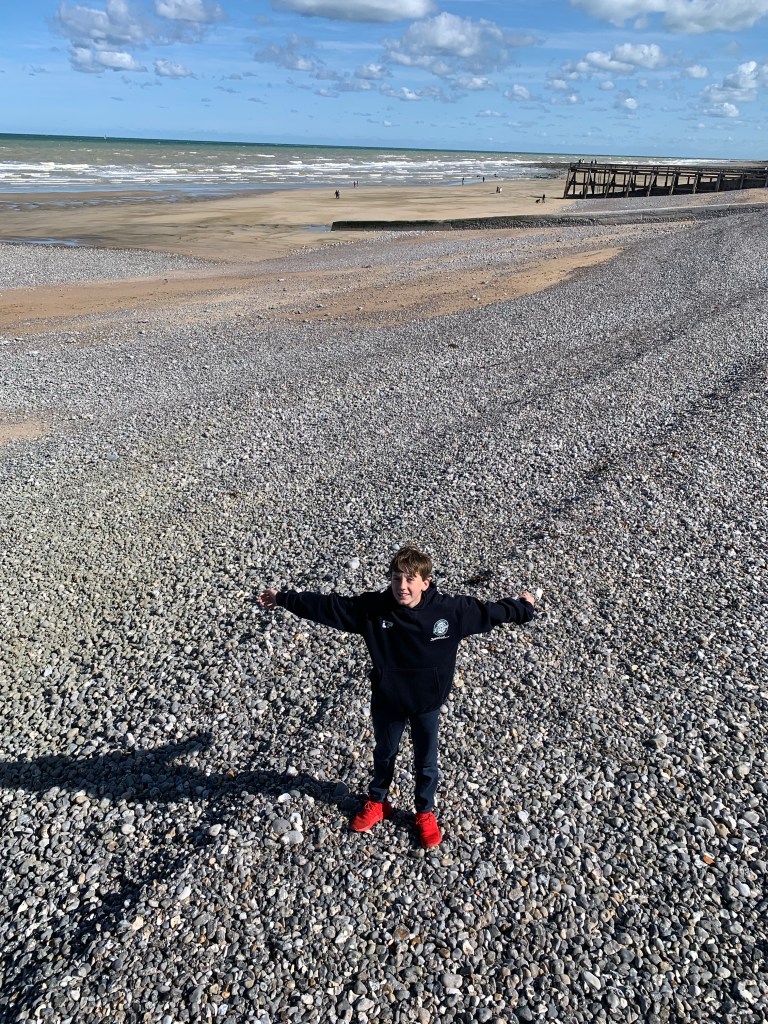
The cliffs are quite stunning and the beaches are very rocky. There is some sand when the tide is out.
Lavinia at Saint-Aubin-sur-Mer
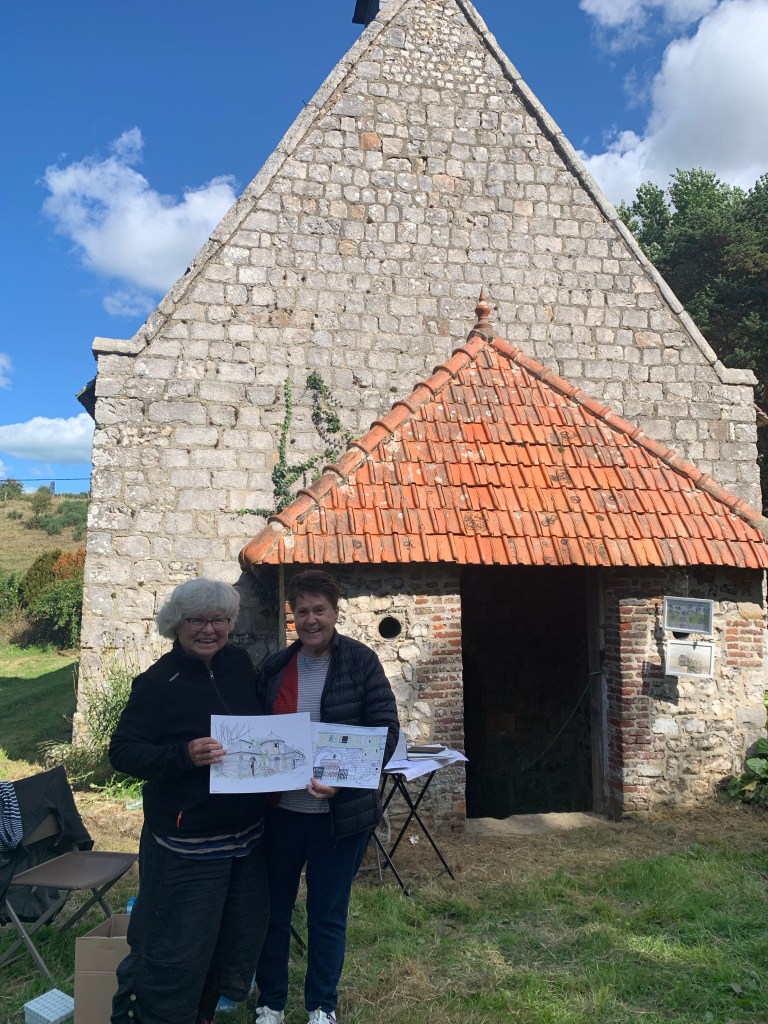
We stopped in to visit a very old church, the Chapelle de Val, that is in dire need of being restored. We met a delightful group of ladies who are trying to save the church and raise money and they gave us a tour.
The Chapelle de Val
The earliest parts of the church date from around the 9th century and then there are Roman, Gothic and Renaissance elements. It was originally the chapel for a leprosy colony and served three villages around it. Louis the XIV decided this was an expensive way to look after lepers and said that they should be attached to hospitals which makes sense. The church was in use in the 1960s but a myth was circulating that there was buried treasure so treasure hunters have ransacked and destroyed a lot of the inside. It was very dark inside so no photos.
To raise money they were selling works of one of the members of the association who is an artist. They also signed me up as a member!
Mum with the artist and her artwork
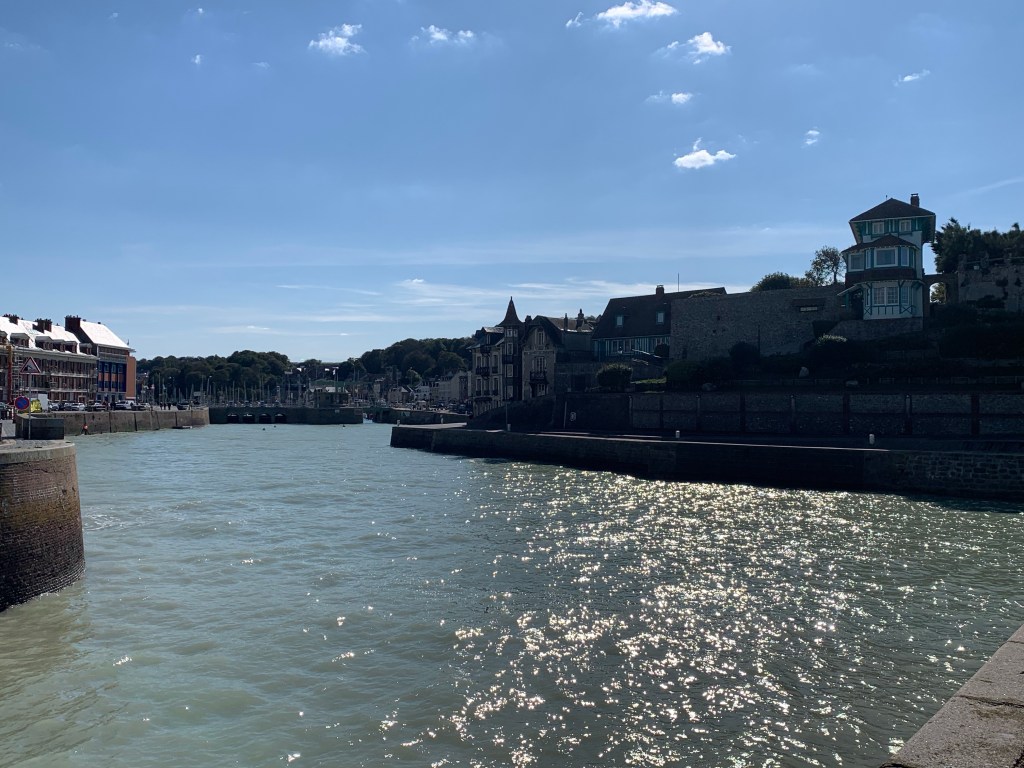
We continued in to Saint-Valery- en- Caux which is a little bigger and has a large port with pleasure boats.
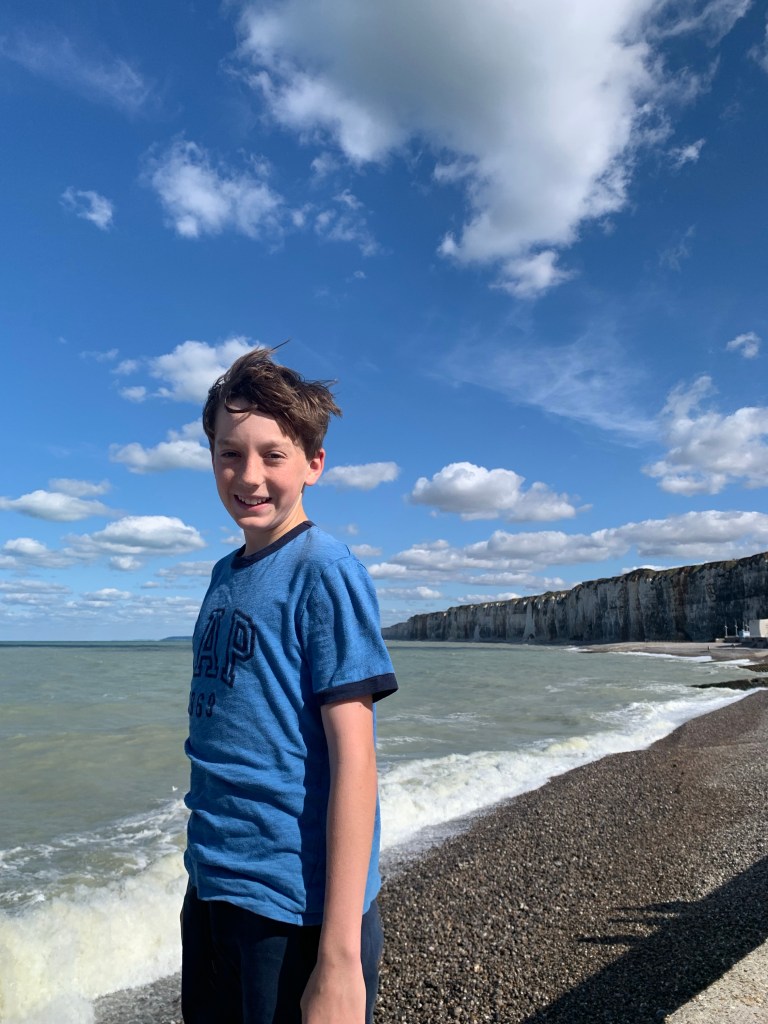
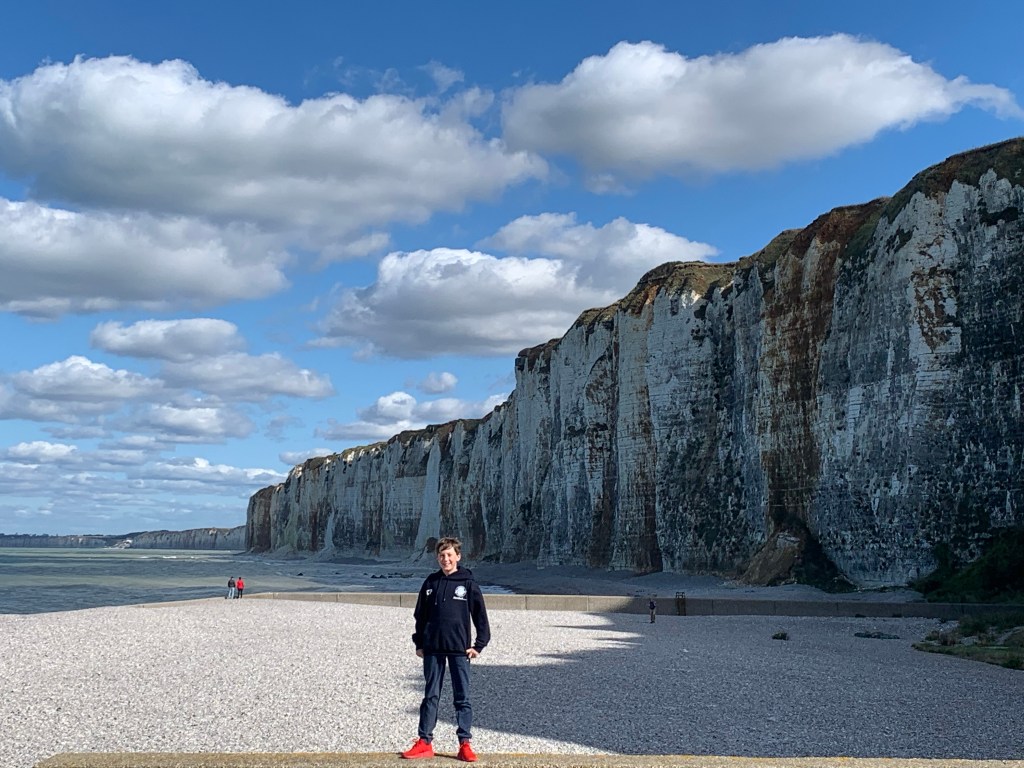
Saint-Valery-en-CauxLouis at the beach at Saint-Valery-en-CauxThe cliffs at Saint Valery
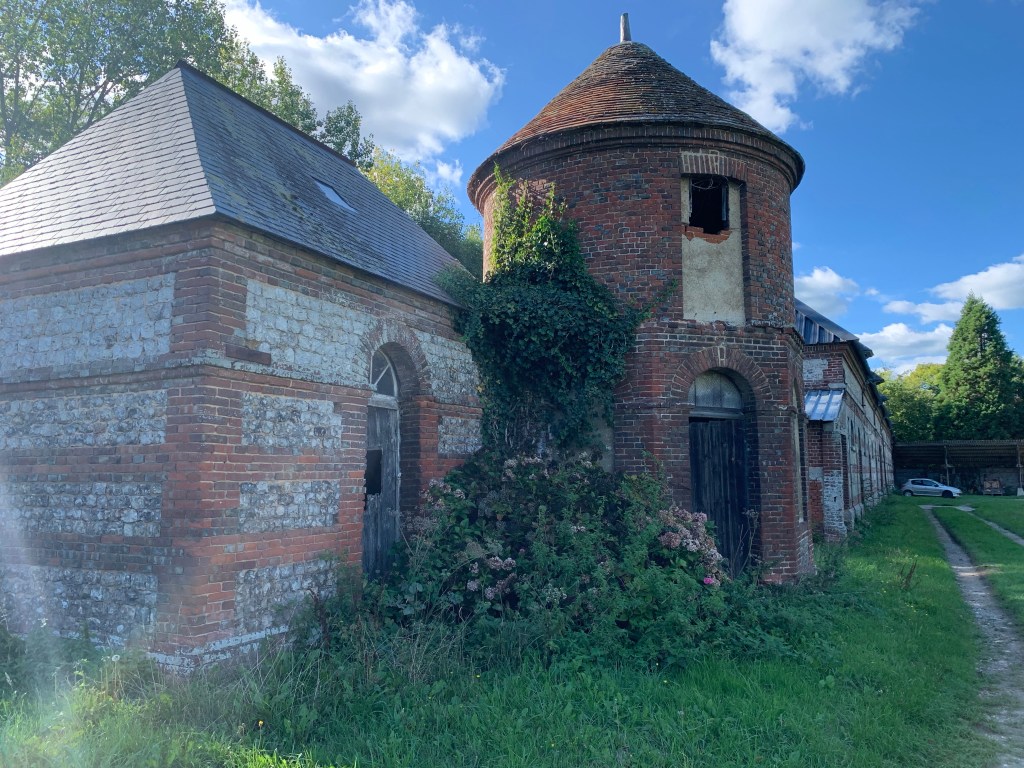
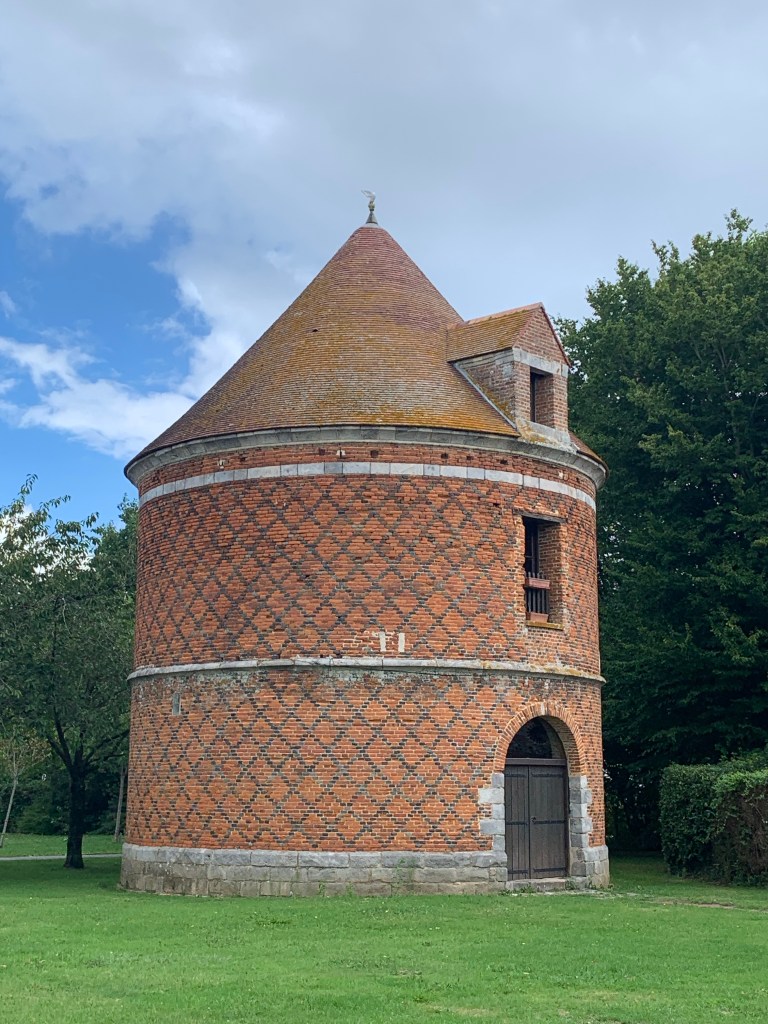
The drawings from the artist that Mum and Dad bought were of local villages. We had already visited one of them so we went to find the other. This picture includes a Colombier ( dove house).
Real life version of their drawingCliffs at Veules, morning light
Named as one of the « plus beaux villages « or most beautiful villages of France, Veules-les-rose does not disappoint! We have a weekend away as a birthday present from Mum and Dad! 😊
The town was once full of fishermen and weavers but in the 19th century it became a seaside holiday town for all the Parisians, including one Victor Hugo.
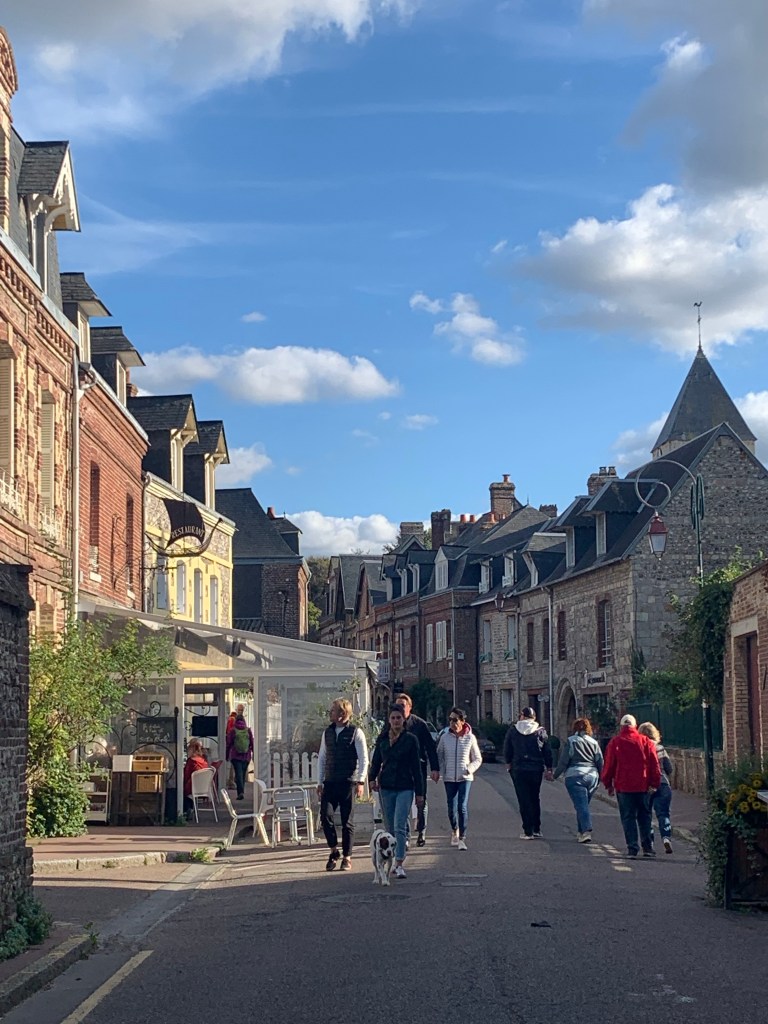
We are staying in a charming rental cottage right in the centre of town. It’s very nice to walk around and then be able to walk back to the house. It is a very popular town and there a lots of people around! It’s even busier in summer. Our house is on the street called Anais Aubert who was an actrice who made Veules famous.
Our house for the weekend
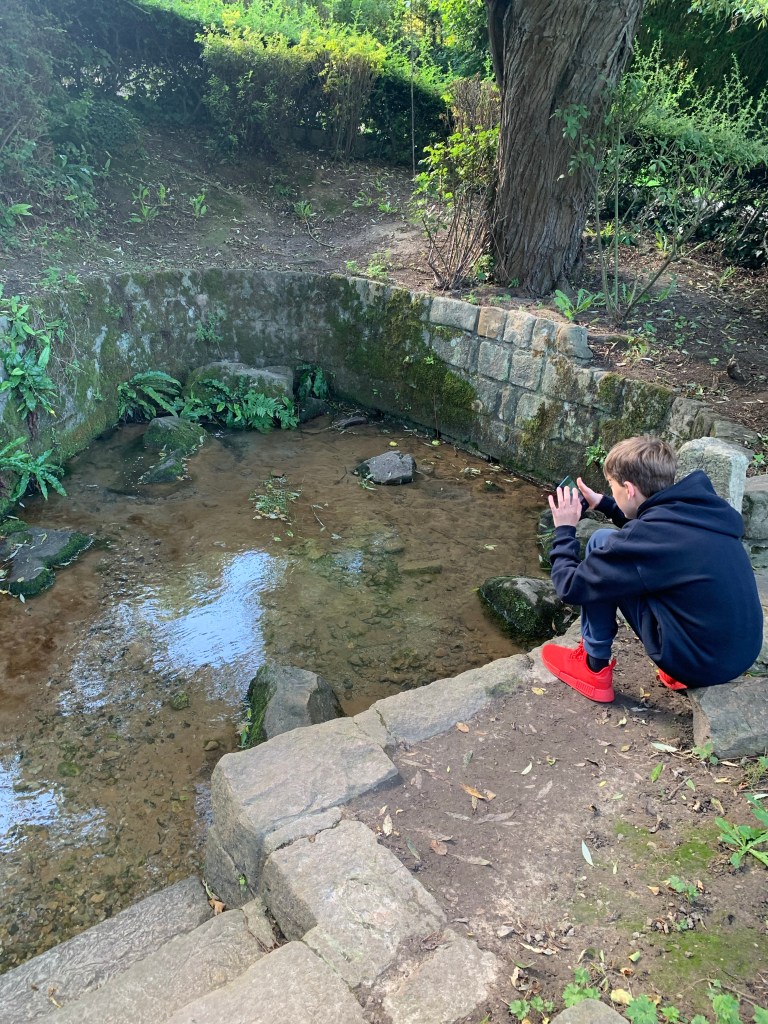
The village is famous for having the shortest river in France. From the source to the sea is 1139 metres long!
Louis at the source of the Veule river
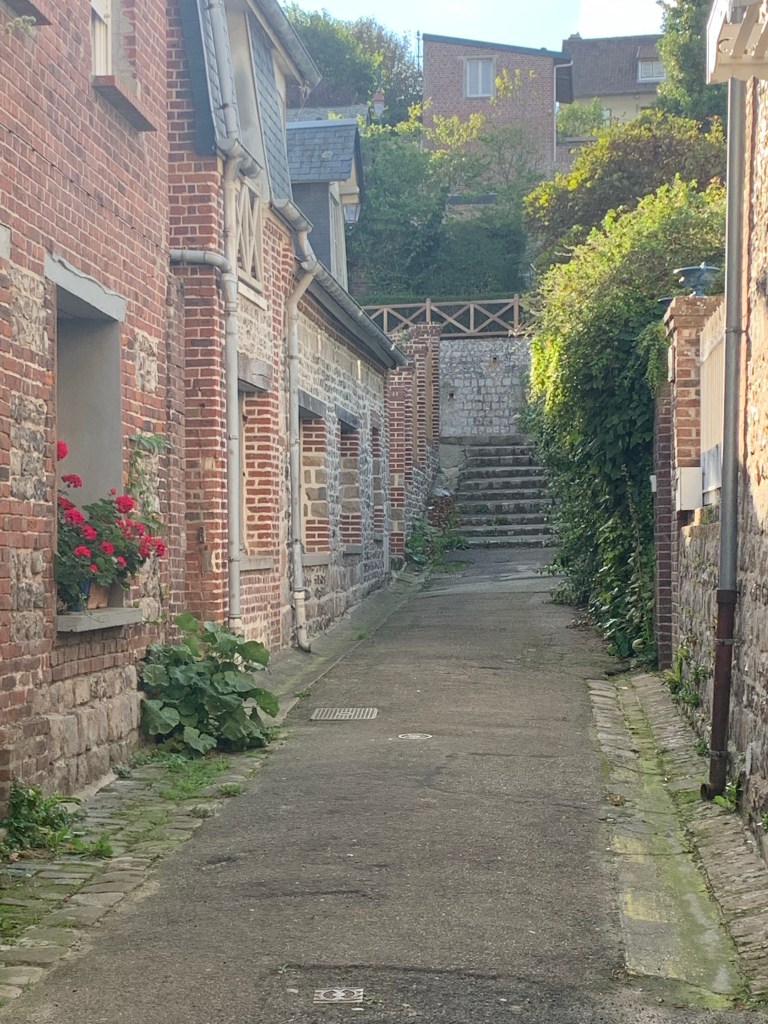
Walking around the village was very pleasant and there were many beautiful houses, cute laneways and the river flowing along.
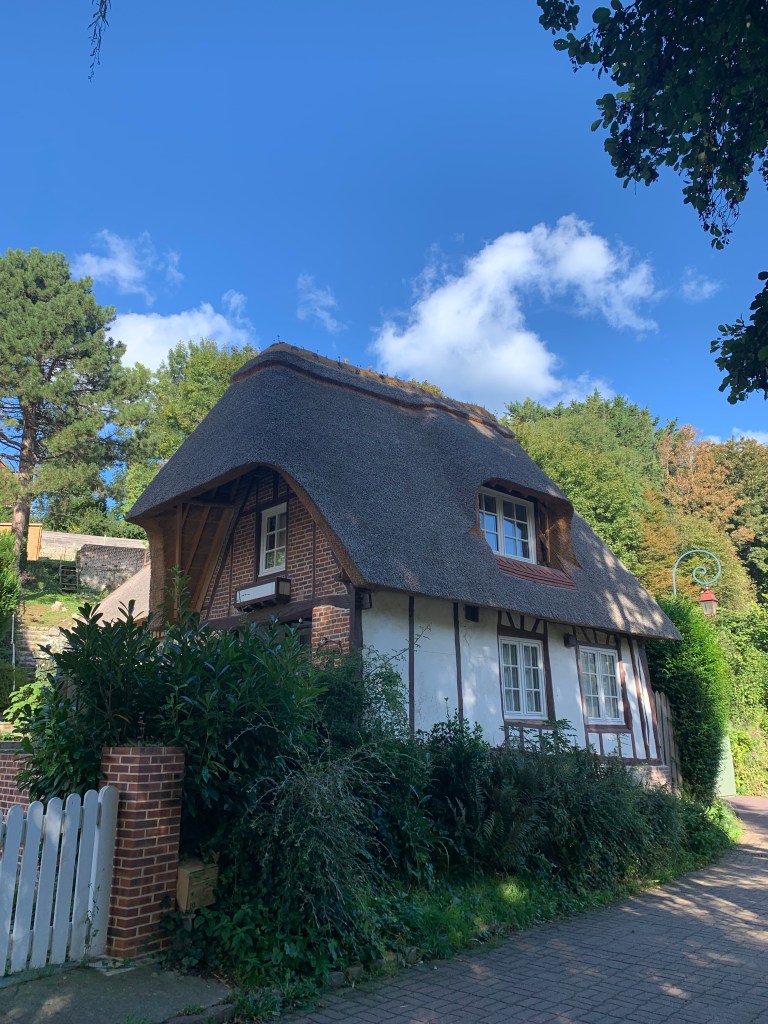
An 18th century holiday homeThatched houses are common here
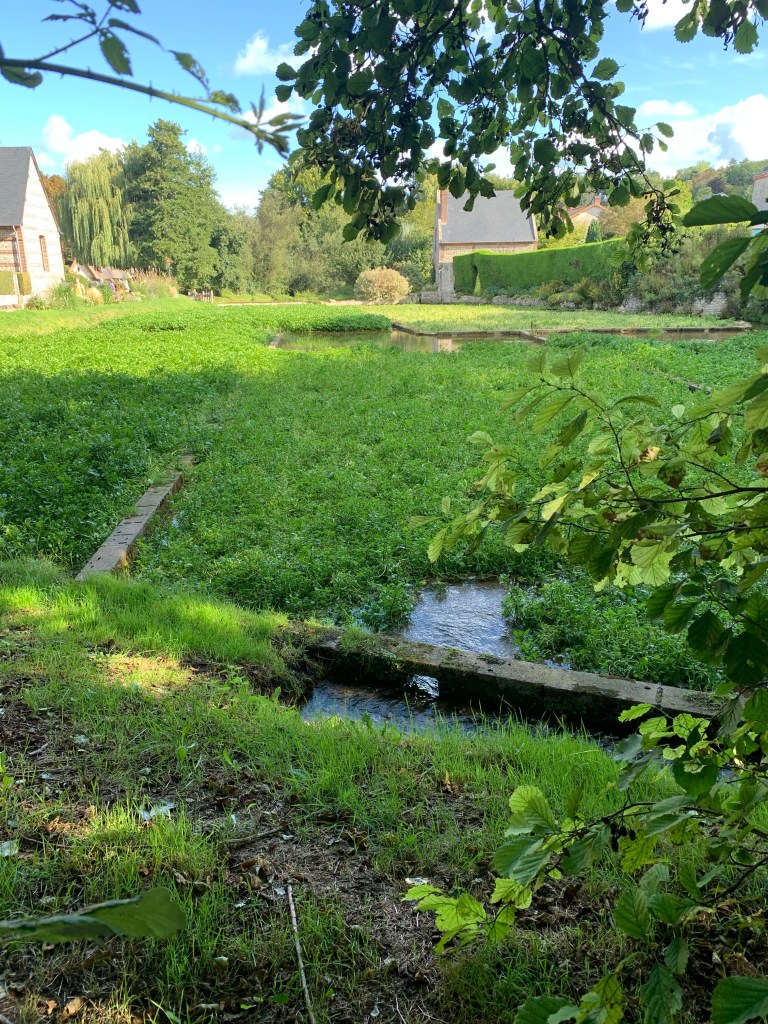
The village was also famous for watercress production and some of it remains in the village.
A field of watercress
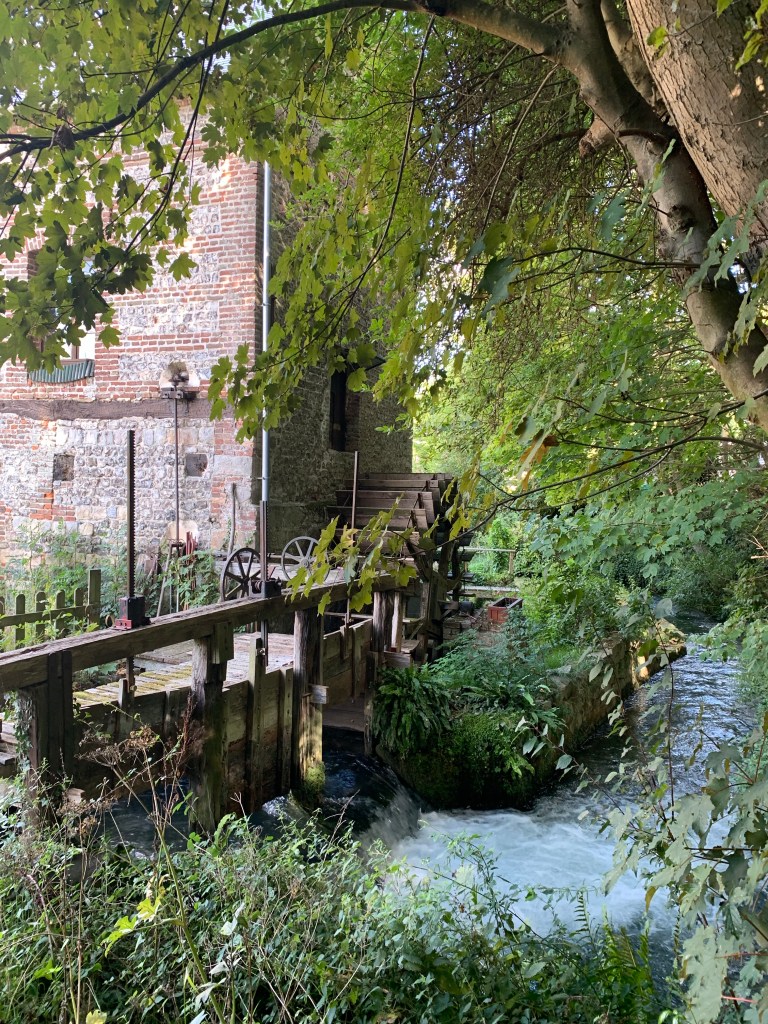
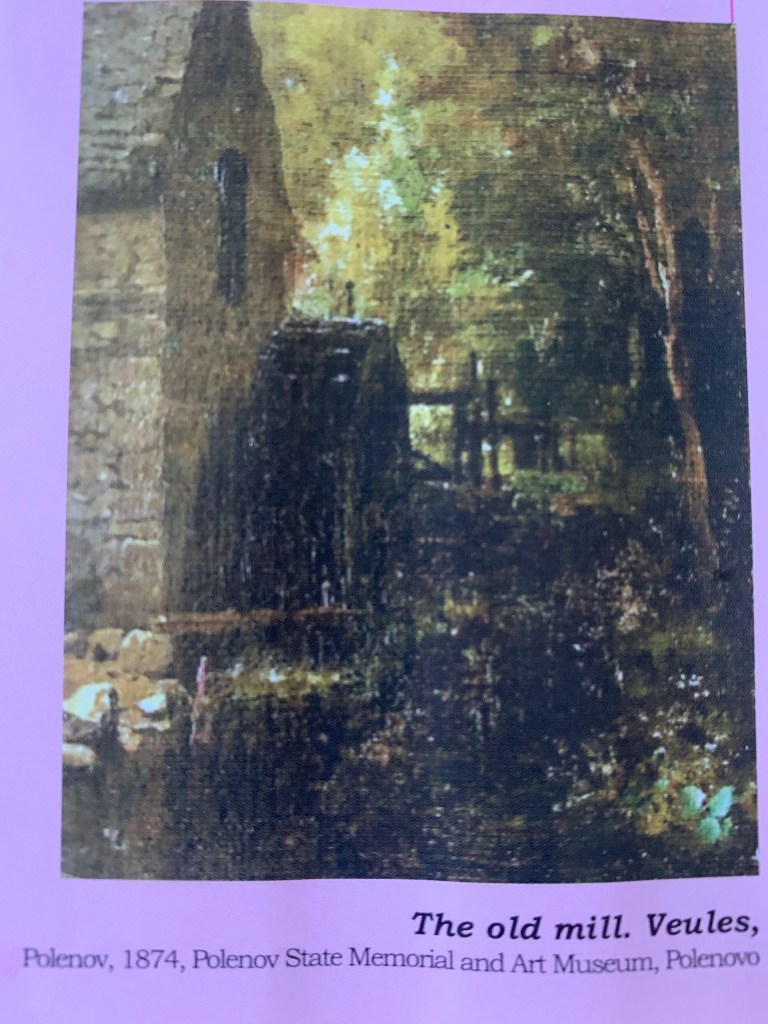
Originally there were 11 mills on the river doing all sorts of tasks but now only a few remain.
A group of Russian artists liked Veules, as did others, and here is a painting of the same mill. it has hardly changed!
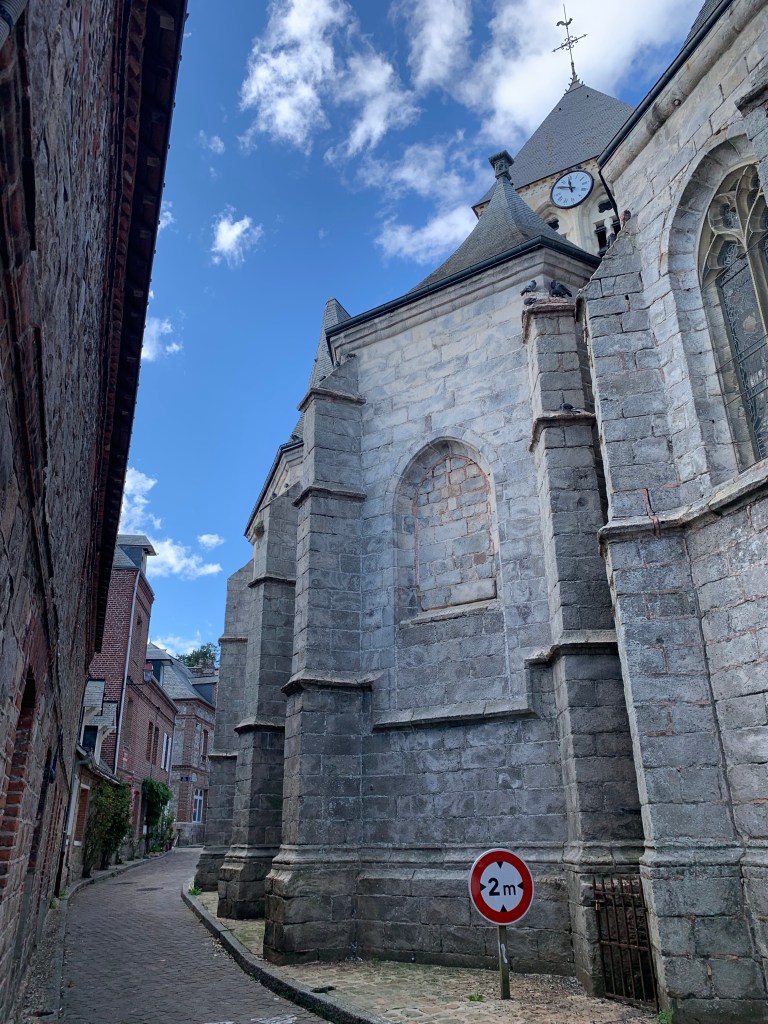
The lovely town church.
Narrow street and church
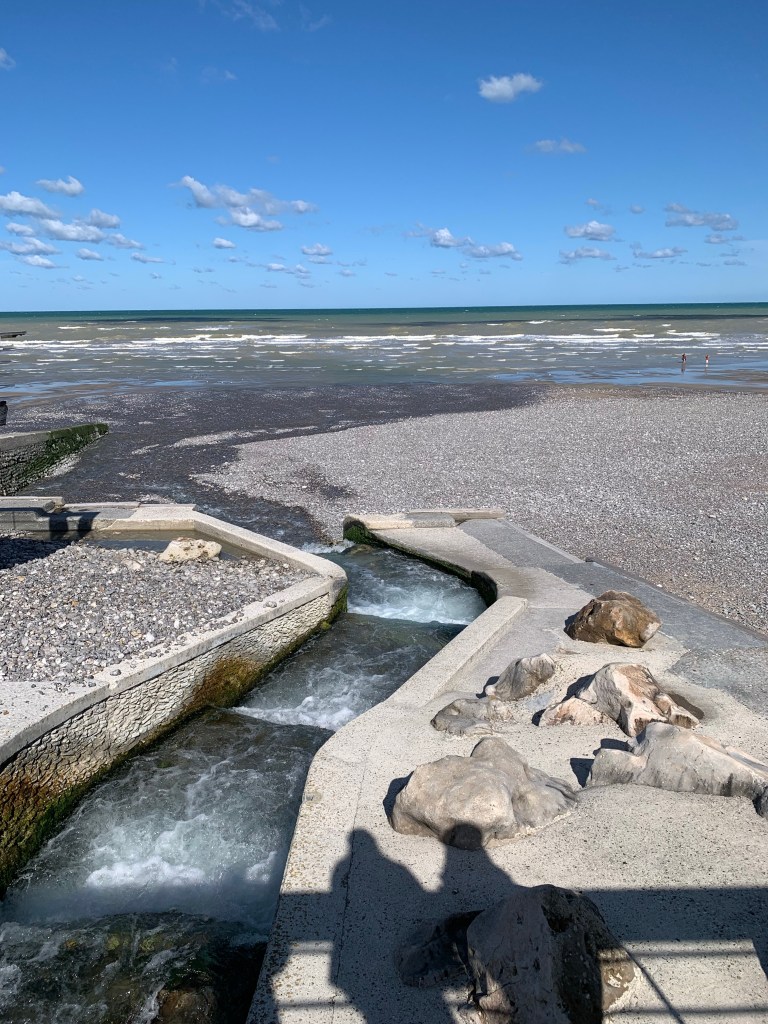
Of course the river must meet the sea after its 1km journey.
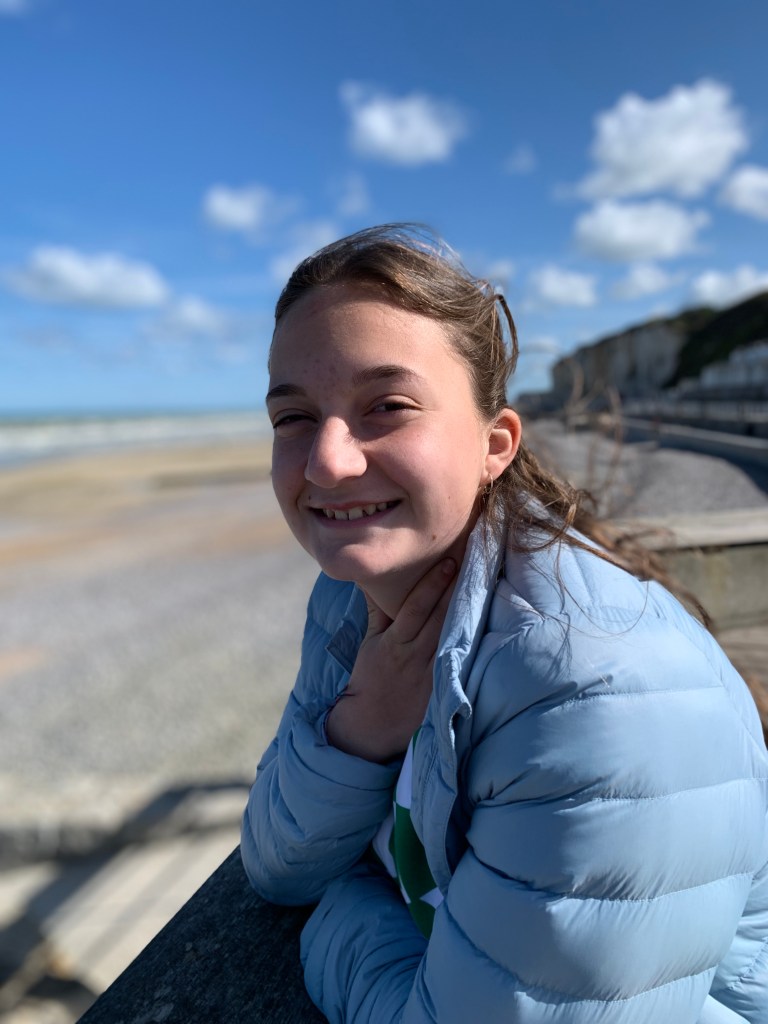
Where the river meets the seaLavinia by the seaLouis on the beach. Pebbles of course!
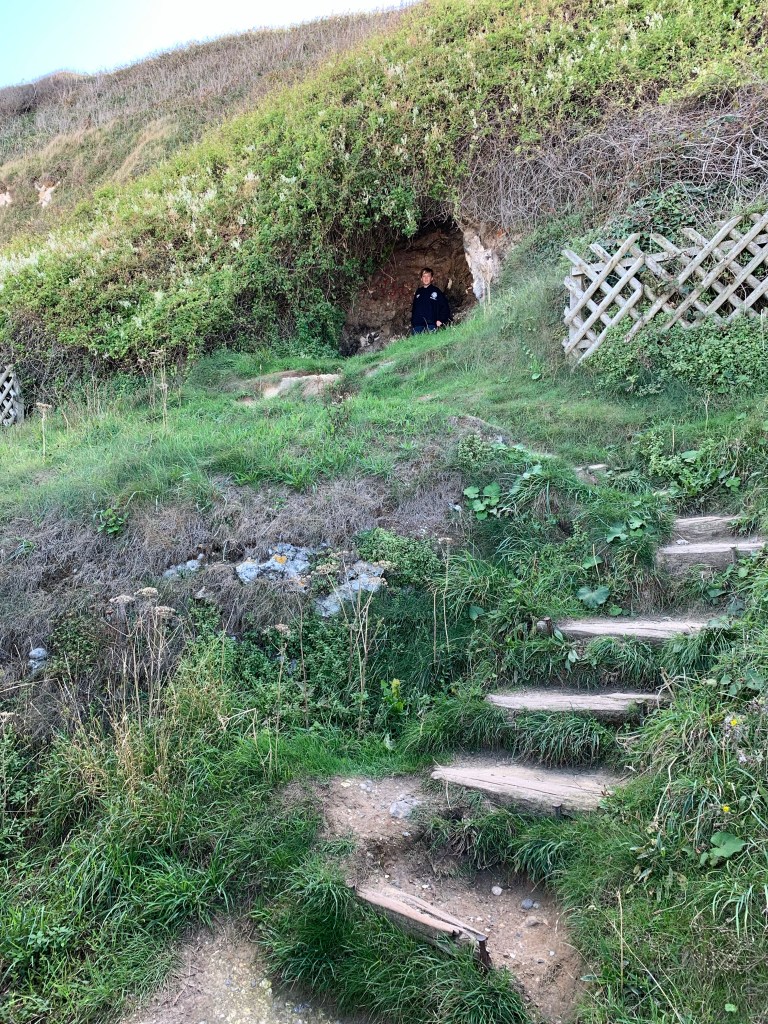
Victor Hugo was a frequent visitor to Veules and stayed in a lovely mansion by the sea. He also spent a lot of time in a little cave in the cliffs where he would talk to locals and sit and think.
Louis in Victor Hugo’s caveThe view from Victor’s cave. A pretty nice vista
I am always pretty happy to have a birthday 🥳 ! It’s better than the alternative 😁.
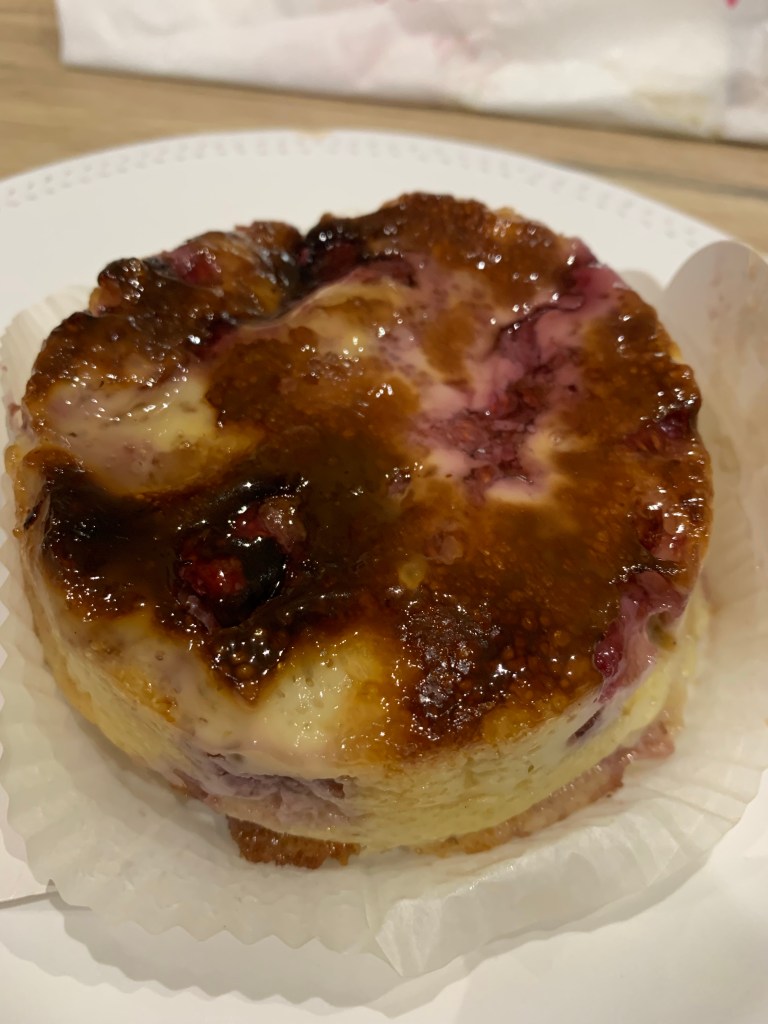
I had a lovely day. A quick visit to the local market at Duclair to buy some cheese and pâté, a new patisserie for lunch, the arrival of my worksite materials and a lovely dinner!
The truck turned up with my next job!
The diplomate – berries and cake, kind of like a pudding 😊
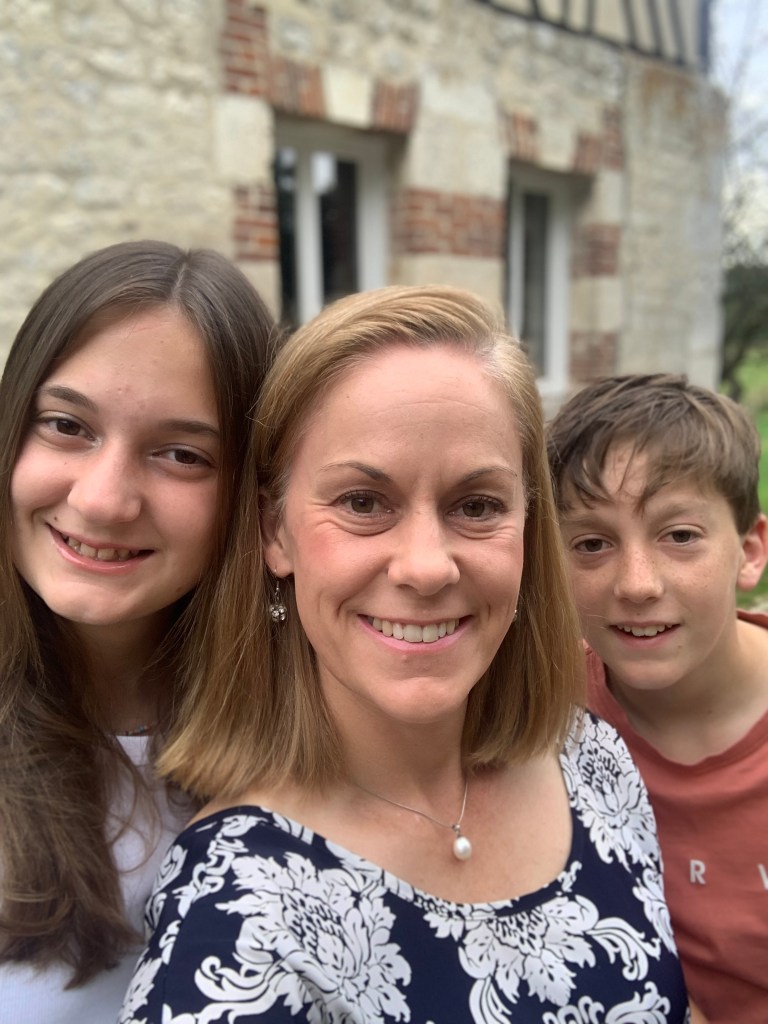
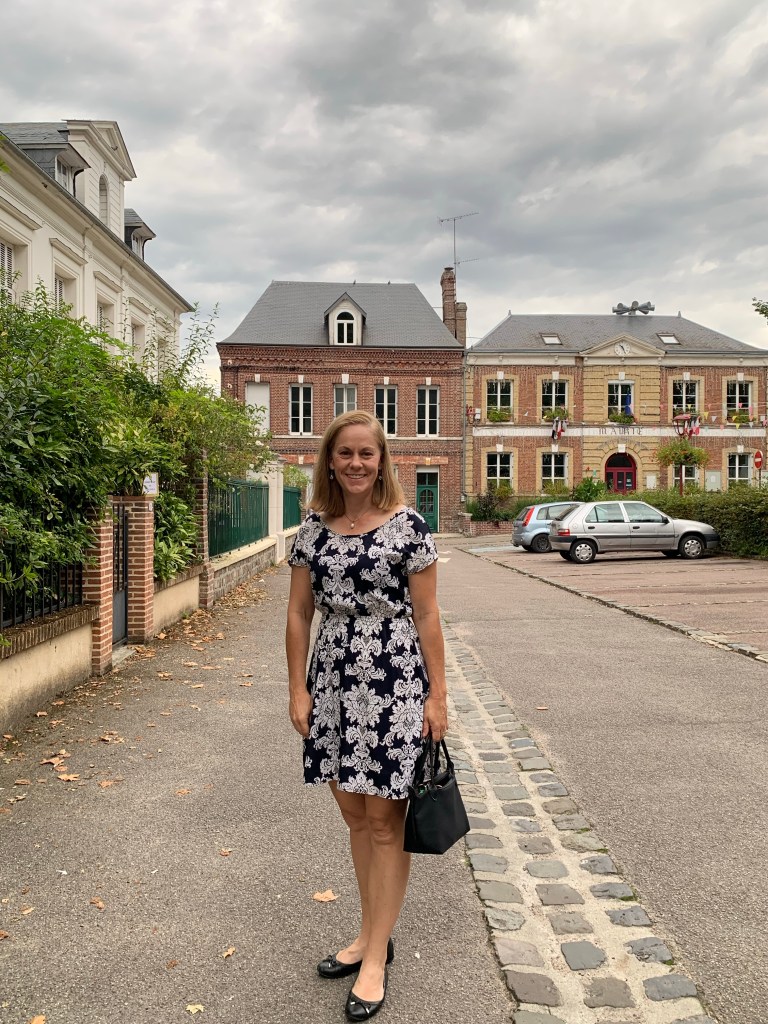
Before heading to dinner we had a photo to mark the day.
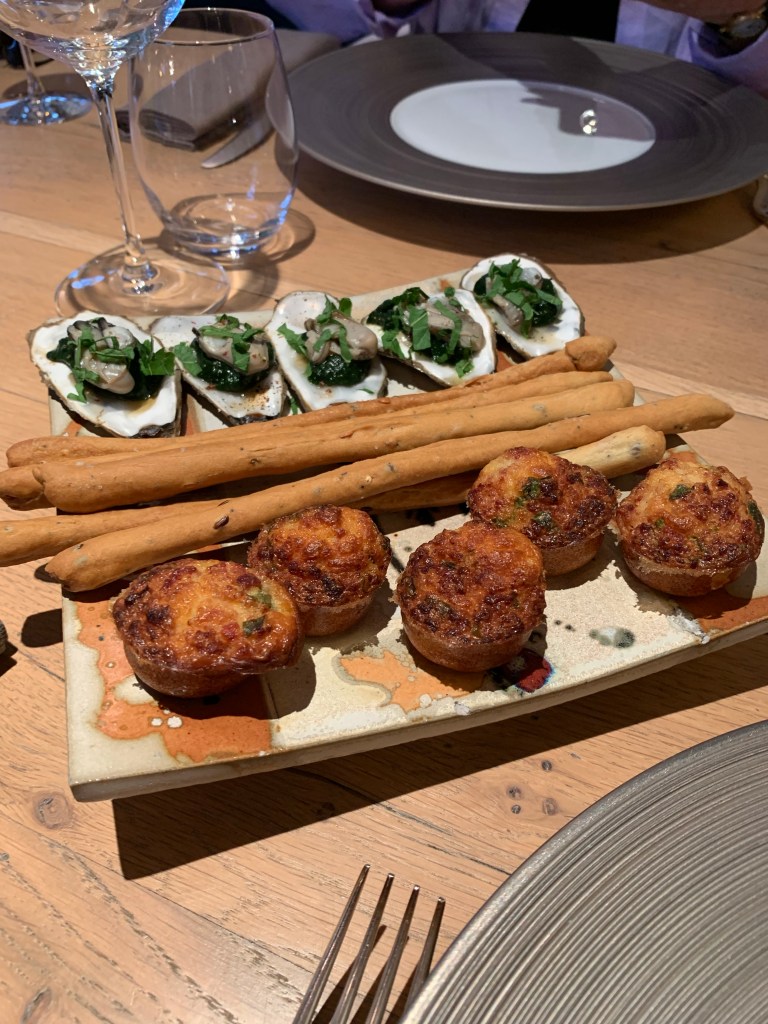
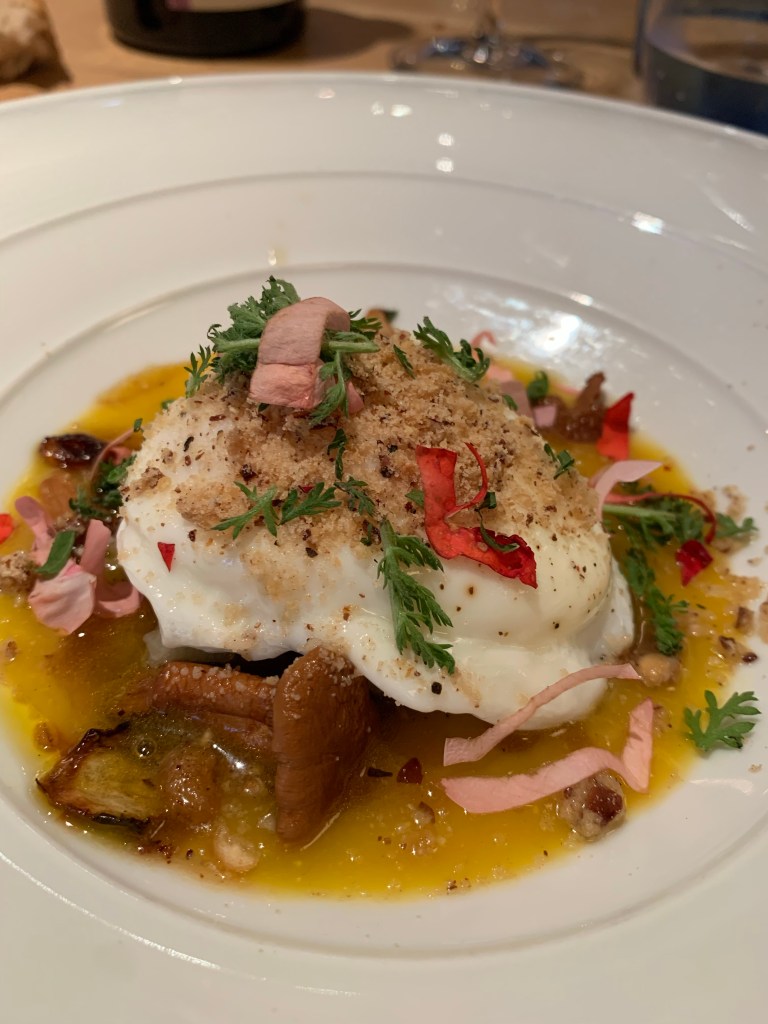
We went to dinner at a lovely local restaurant at Jumieges. It is called Auberge des Ruines and it specialises in locally sourced produce. It was a lovely dinner!
The chef Christophe Mauduit works with local farms to put forward his interpretation of Normandy flavours. The lamb I had was from the field just down the road from the restaurant.
The appetisers before entrée Beautiful looking entrée – and delicious !
Birthday girl photo from the evening!
Thanks to everyone for my birthday wishes and messages ❤️
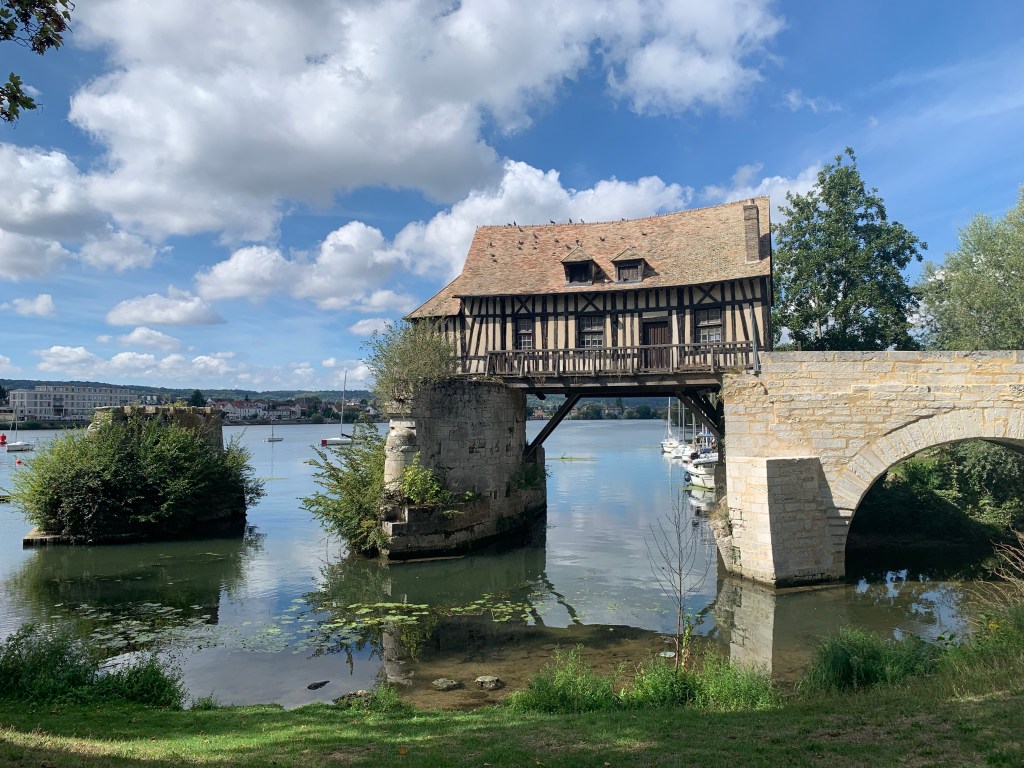
For many years I have wanted to visit the town of Vernon to see the old half timbered house on the old bridge. Today we went there for a visit.
The old mill on the river
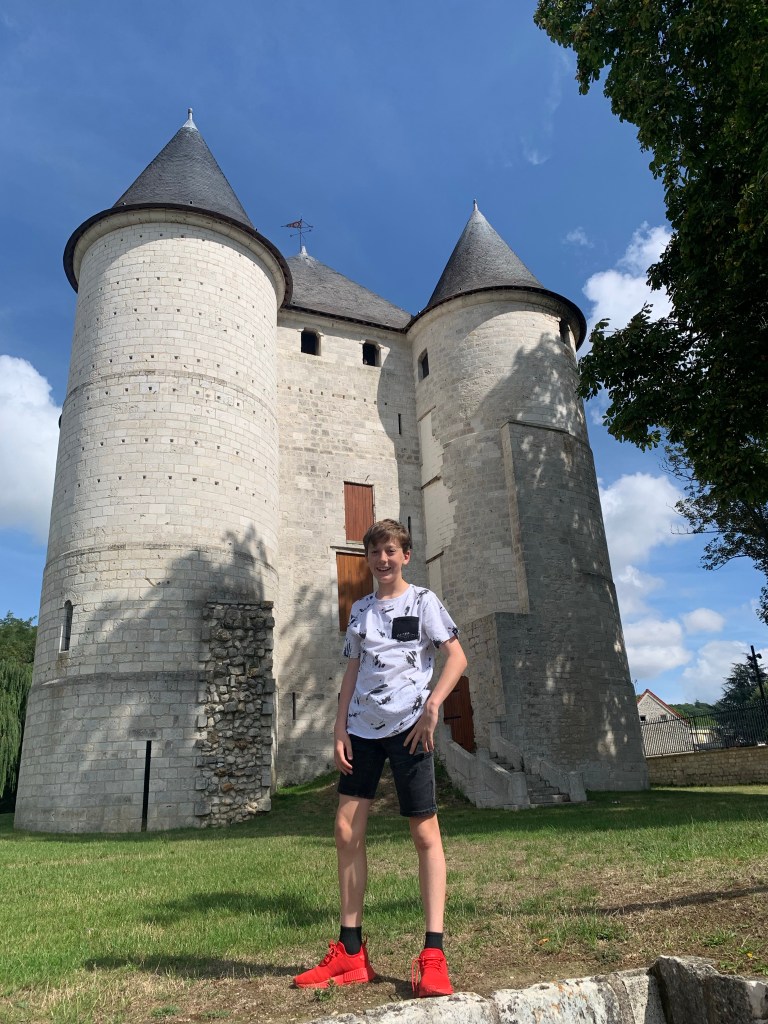
There used to be six mills across the bridge and they used the natural flow of the river to run the mill. Later on a dam was built further up the river and it killed off the mills. There is work being done to renovate the old bridge. in old times it was protected by the tower.
Louis in front of the towers
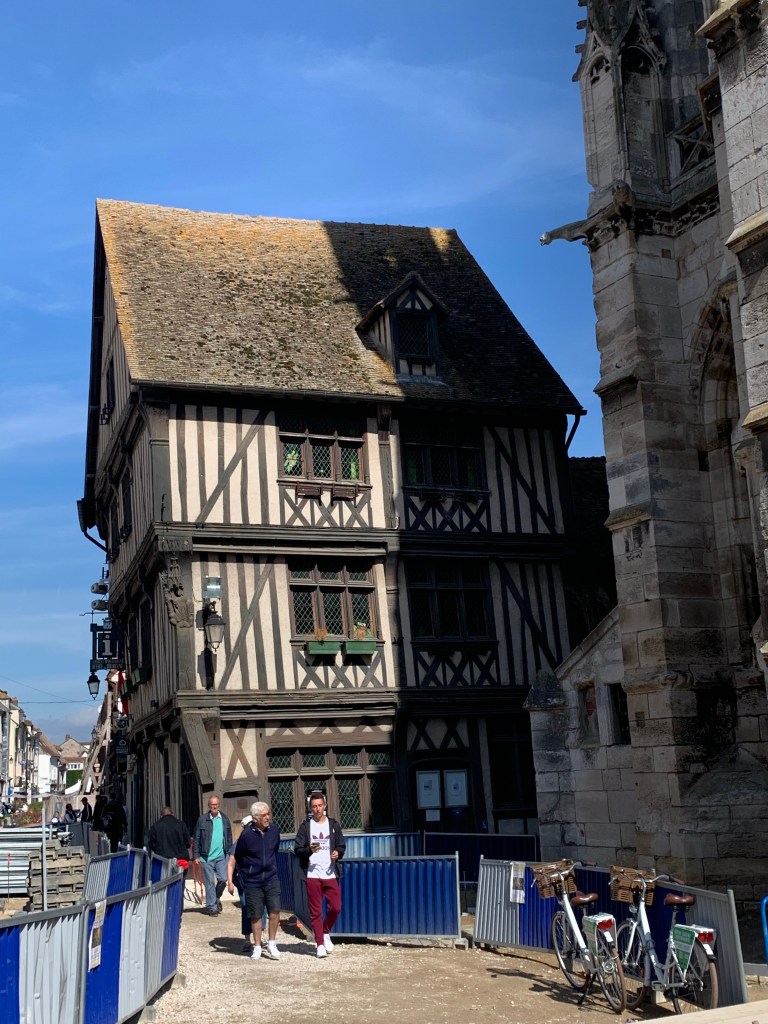
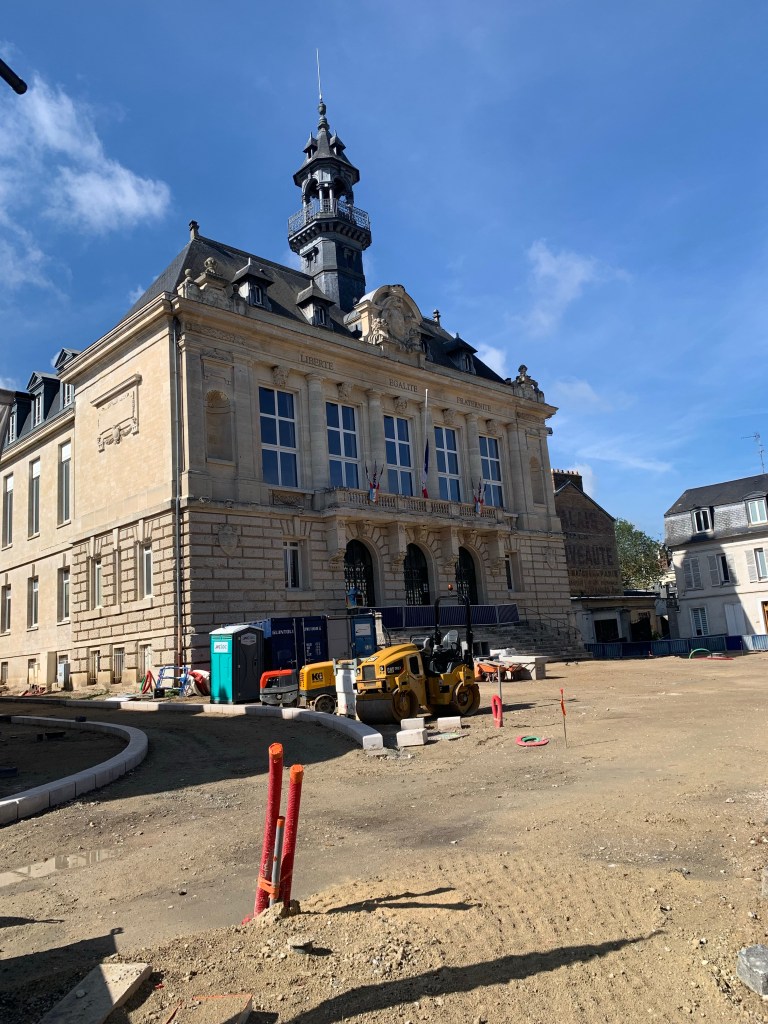
Vernon was a very cute little town with an old church, cute Town Hall and lots of half-timbered houses. There was quite a bit of renovation work going on.
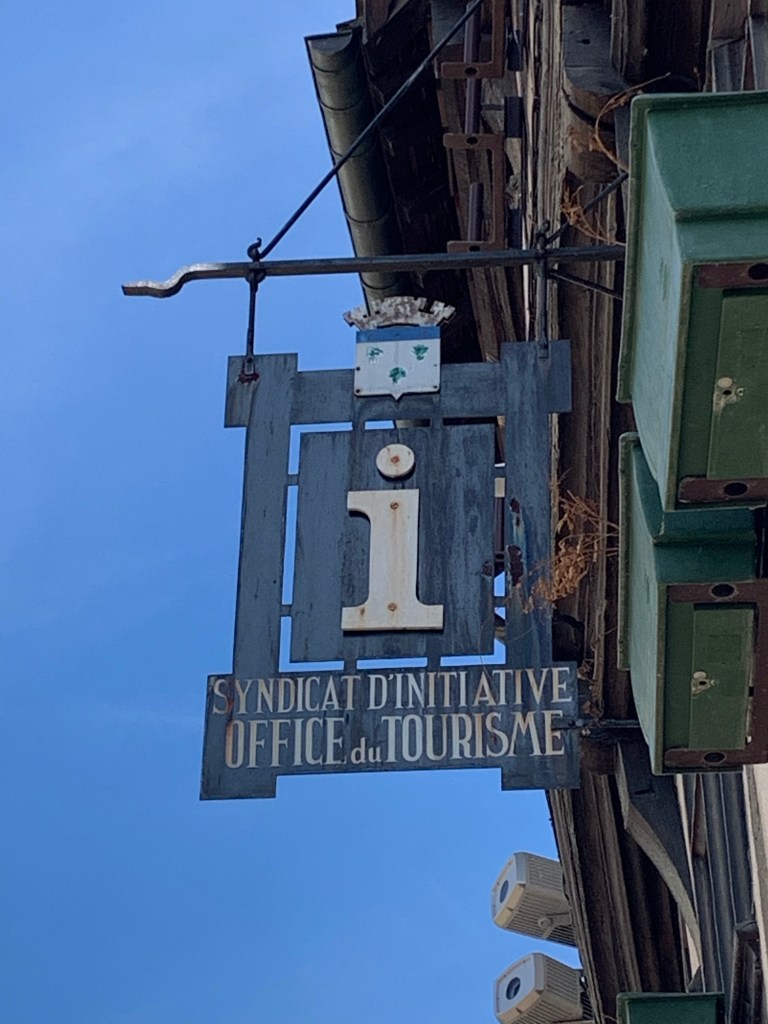
An old house that is now the tourist office Renovations at the Mairie
I love this sign because when I first began to learn French the text book had the tourist office called the syndicat d’initiative. You don’t see it very often today. Mum and I laughed because our textbook was also based on Dieppe!
Vernon also has a lovely chateau, the chateau of Bizy. We popped in for a visit.
Château of Bizy
The château has had an interesting history, like most châteaux. During the revolution it was completely torn down and the current château is rebuilt in a new spot. Louis-Phillippe 1er, King of the French (rather than King of France) and second to last French monarch spent a lot of time at the chateau. The chateau is also connected to Maréchal Suchet, one of the famous generals of the Napoleonic wars. He became the Duke of Albufera. His family and the Bonaparte intermarried and so there is quite a bit of history. The current owner is a great, great granddaughter of Suchet.
——
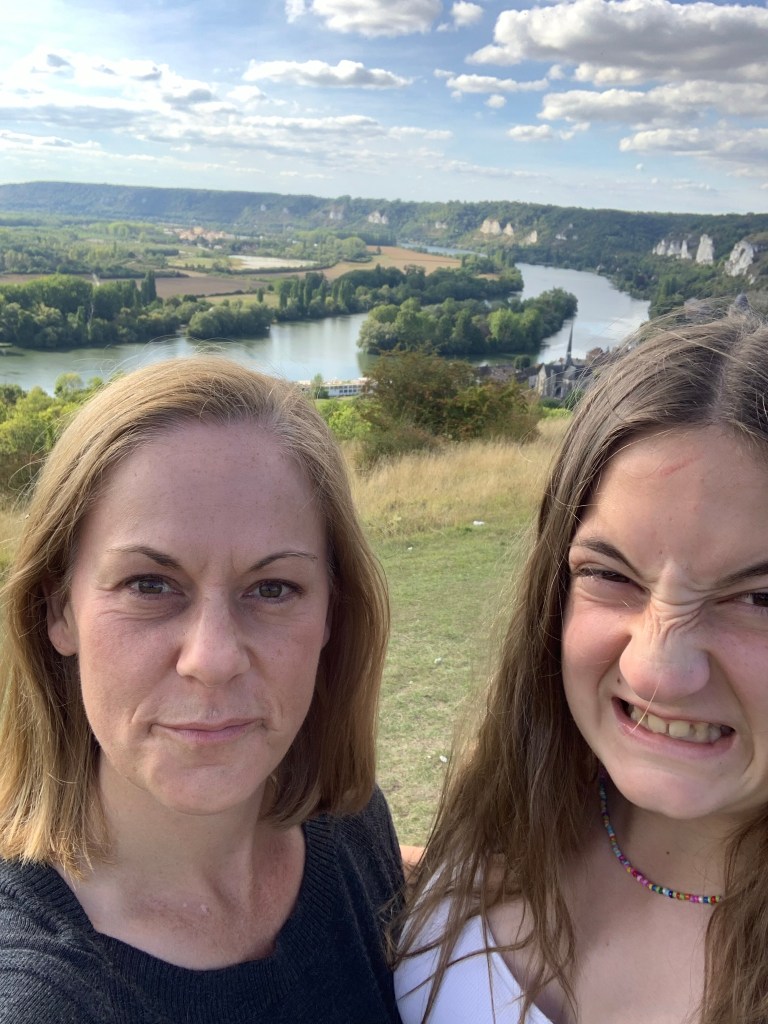
We also visited a second château on the way home. Another one I have wanted to visit for many years. The Chateau Gaillard at Les Andelys. It is now in ruins but set atop a hill with a commanding view of the river and the plains in front of it. It was stunning! We didn’t get to walk around it but just the view was amazing.
Château Gaillard
I have been working my way through a French series called « Les Rois Maudit » by Maurice Druon for many years (The accursed kings in English). It all about the history of the Kings and Queens of France and is a truly epic series.
Part of this true story is set at Chateau Gaillard. It is where Marguerite and Blanche de Bourgogne were imprisoned and Marguerite died.
« The Tour de Nesle affair was a scandal amongst the French royal family in 1314, during which Margaret, Blanche, and Joan, the daughters-in-law of King Philip IV, were accused of adultery. The accusations were apparently started by Philip’s daughter, Isabella. The Tour de Nesle was a tower in Paris where much of the adultery was said to have occurred. The scandal led to torture, executions and imprisonments for the princesses’ lovers and the imprisonment of the princesses, with lasting consequences for the final years of the House of Capet. »
From Wikipedia
Modern day visitors to Chateau Gaillard A modern day Queen?Ruining the scenery!
We took a break from gardening to take Louis to his first proper soccer game. It was in a village just near Dieppe so, of course, we decided to visit there afterwards.
We needed some nourishment for trip, so Mum tested out the tarte Bovary!
Tarte Bovary, a délicieuse mix of red berries
The football wasn’t worth reporting on unfortunately as we came away without much success.
The little village that the ground was in, Offranville, had a wonderful old renovated farm and garden and a beautiful old dove house. Interestingly, in 1789 the law demanded the removal of all dove houses as the damage to nearby crops and seeds by the birds was too much.
The Colombier
We even saw a couple of doves!
Coffee break
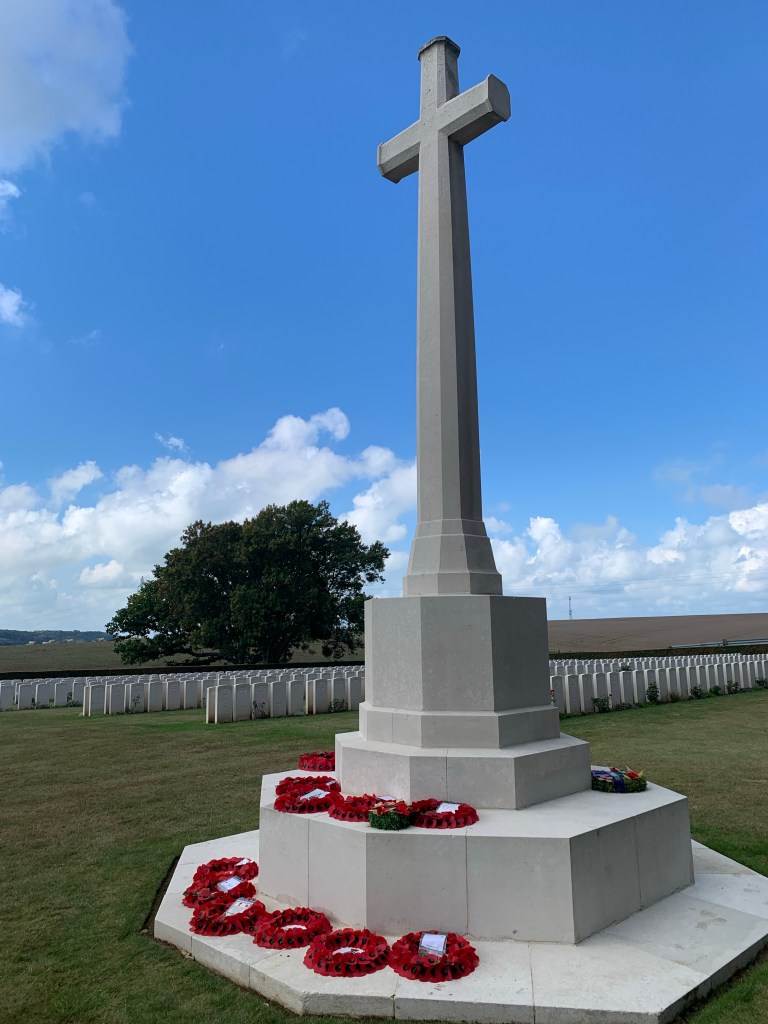
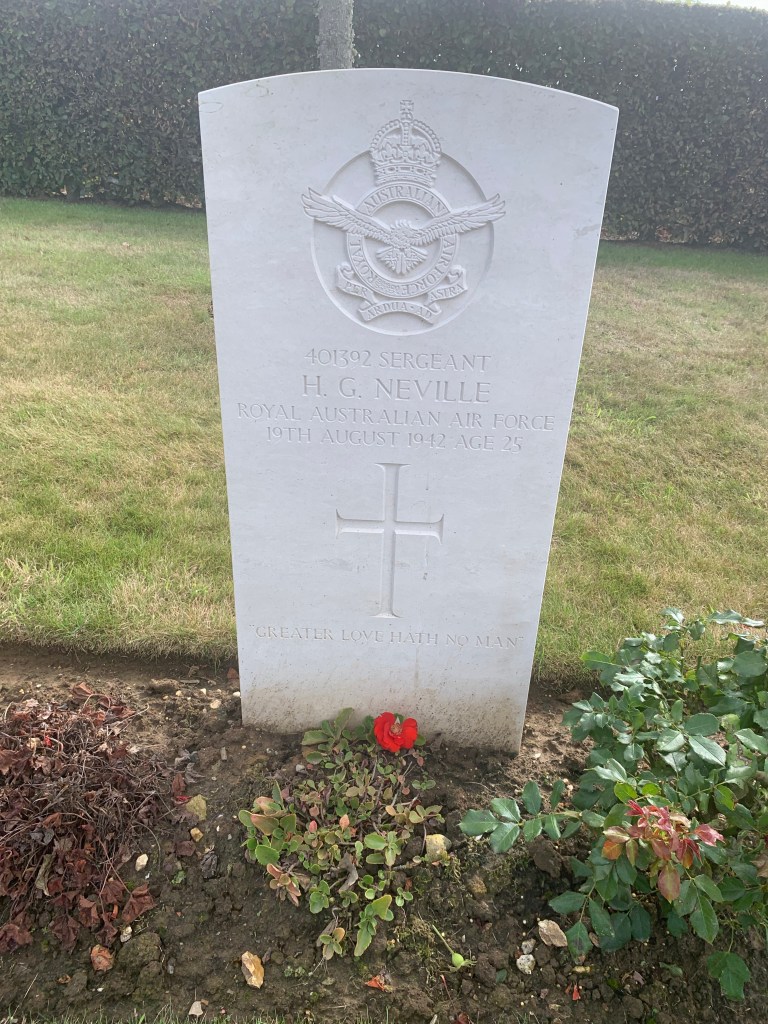
We headed into Dieppe, stopping at the Commonwealth War Graves cemetery for the mainly Canadians who attempted what is known as the Dieppe raid. In 1942 the Allies attempted a small scale landing in occupied France. It was pretty much doomed from the start and many brave Canadians lost their lives.
Wreaths to commemorate the raid which was on 19 August at DieppeThere were two Australians in the cemetery
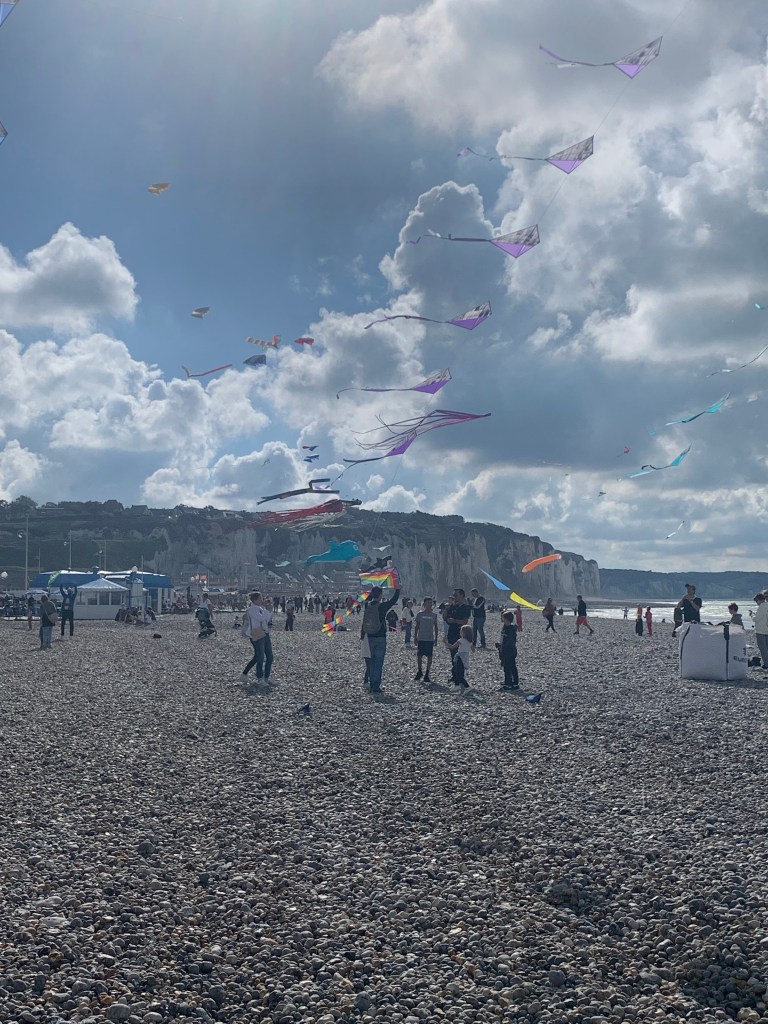
In Dieppe we were surprised to find an enormous kite festival! Apparently one of the biggest in the world! It was amazingly colourful and there were thousands of people.
Looking towards the cliffs on the pebble beach
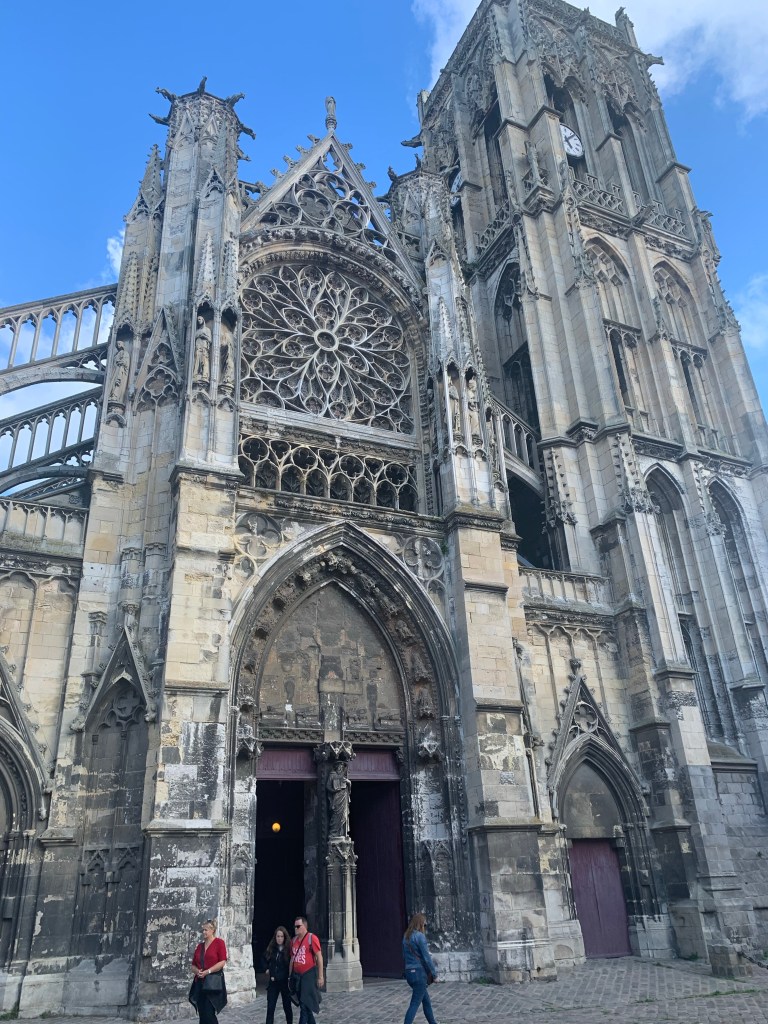
We popped into the church of St Jacques on the trail of St Jacques de Compostelle. It’s an interesting mix of styles due to the mix of English and French from the period when Normandy was part of England.
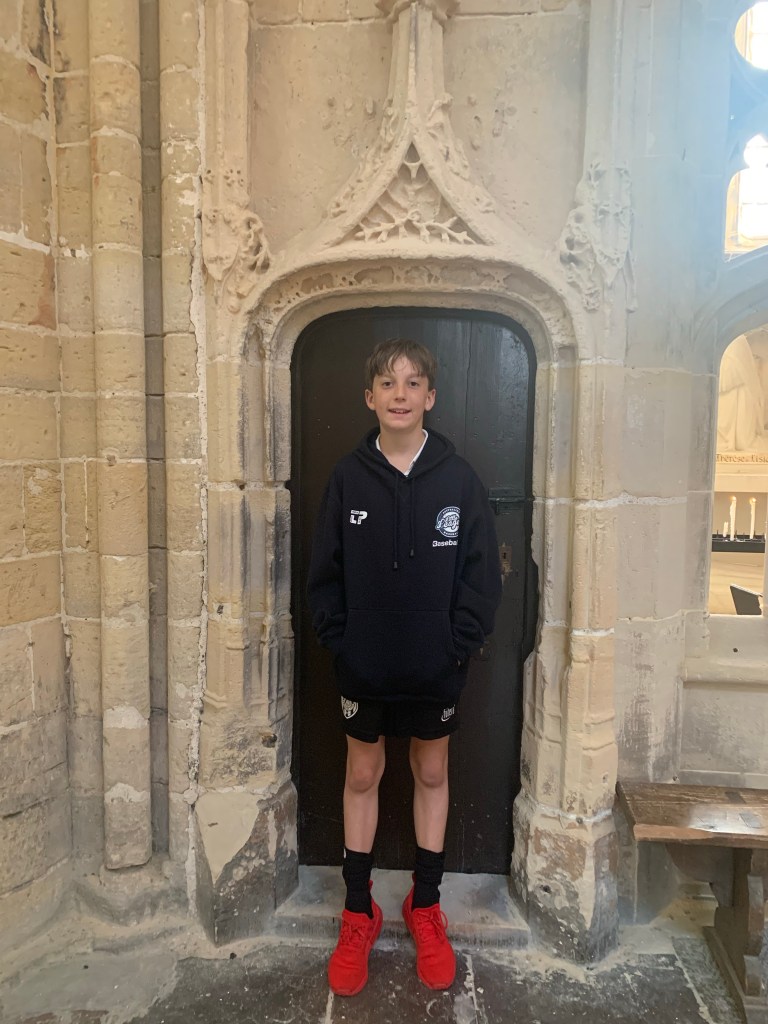
The doors are Louis size.
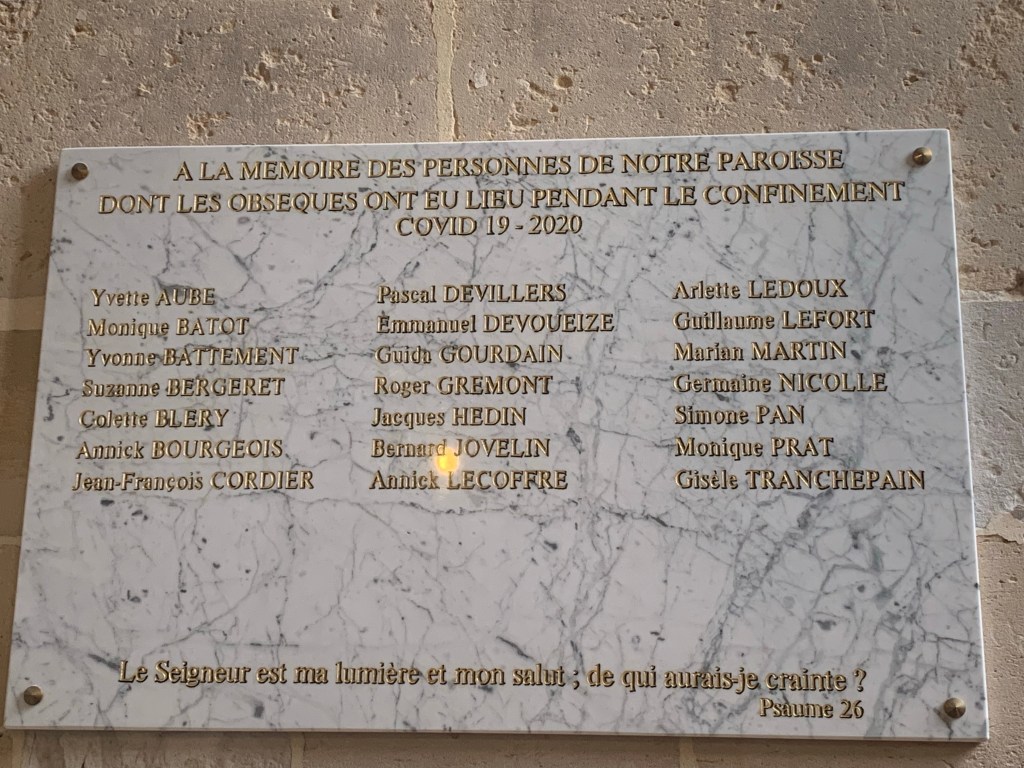
It was moving to see this sign dedicated to all the parishioners who died during the Covid lockdown period when no funerals could be held 😢.
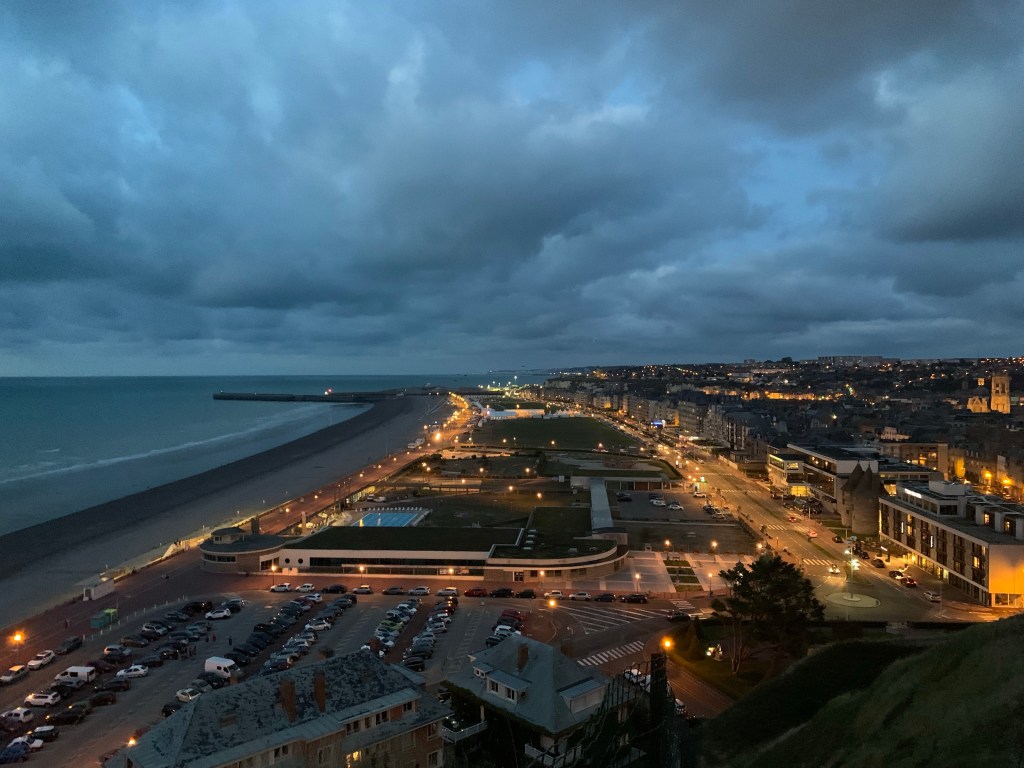
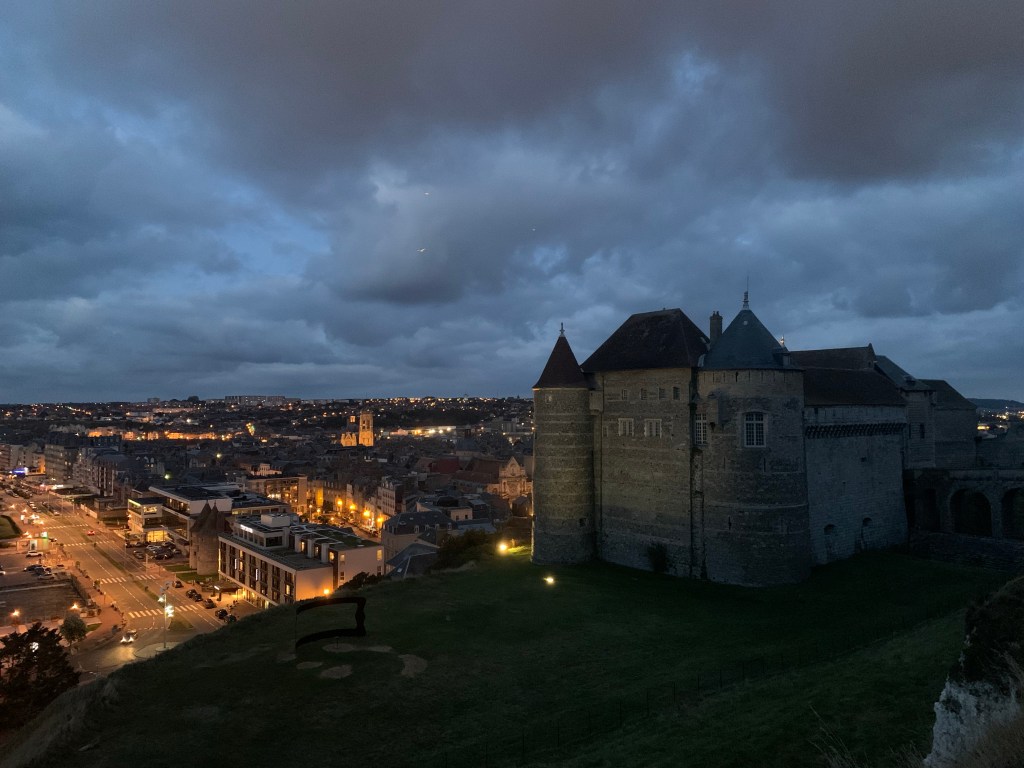
After a delicious dinner of moules et frites, Louis’ favourite, we had a final view of Dieppe overlooking the town and chateau.
I guess we all knew the Queen would not live forever but she has been around for so long. It was sad tonight to hear the news of her death. She has lived through so much and so many changes. As we were explaining it to the kids, we tried to explain how she has been an important figure for so long and all the many family changes she has experienced.
This provoked quite a conversation about monarchies and the French monarchy in particular, which is of course, another whole story!
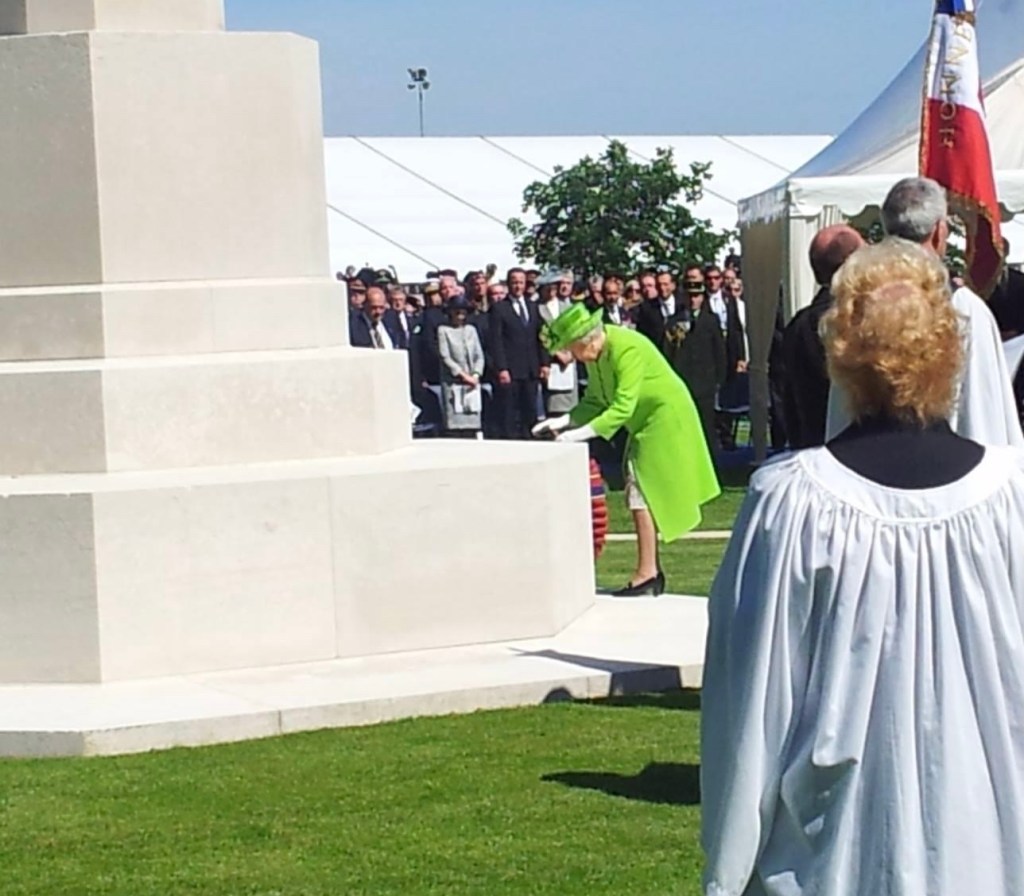
I remembered the time I almost, kind of, met her! She attended the 70th anniversary of D day here in Normandy and I was looking after a group of Australian veterans attending the ceremonies.
As close as I got to the Queen 😁
She came by and spoke to our veterans and was very gracious. They enjoyed meeting her.
Whatever we think of monarchies, the Queen was driven by a sense of duty and sacrificed much in her role.
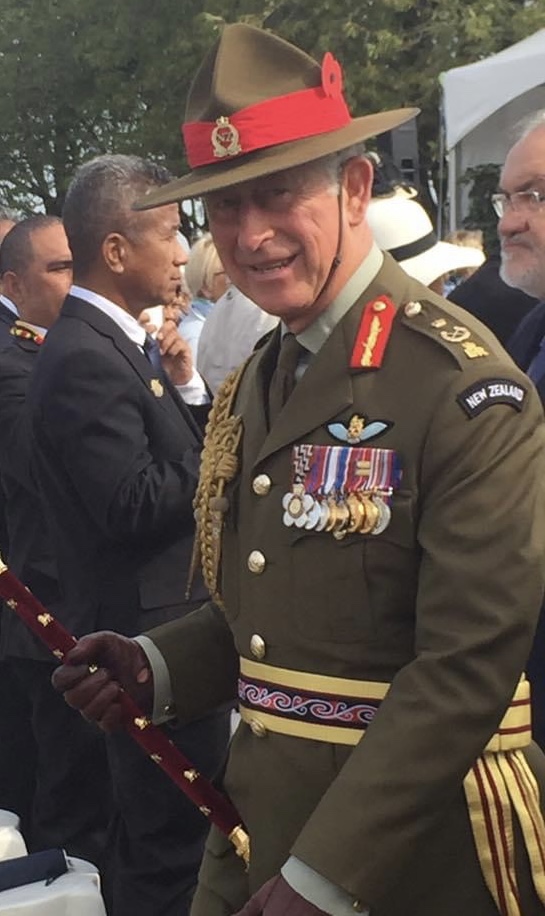
I also reflected on my meetings with our new King Charles III. He attended many of the centenary ceremonies including this photo of him in NZ uniform at a New Zealand ceremony at Longueval in the Somme.
Then Prince Charles at New Zealand centenary ceremony
As Prince Charles he also attended our Australian centenary ceremony for the 100th anniversary of the battle of Villers- Bretonneux on Anzac Day. It was our job to look after him, making all the arrangements and preparations. I distinctly remember having to organise the people who got to meet and chat with him! Quite hard work!
Prince Charles and I at Villers- Bretonneux
It really is a historic change and amazing to think we are just across the water from the UK where all this is currently unfolding. We could almost pop across to Westminster Abbey…!
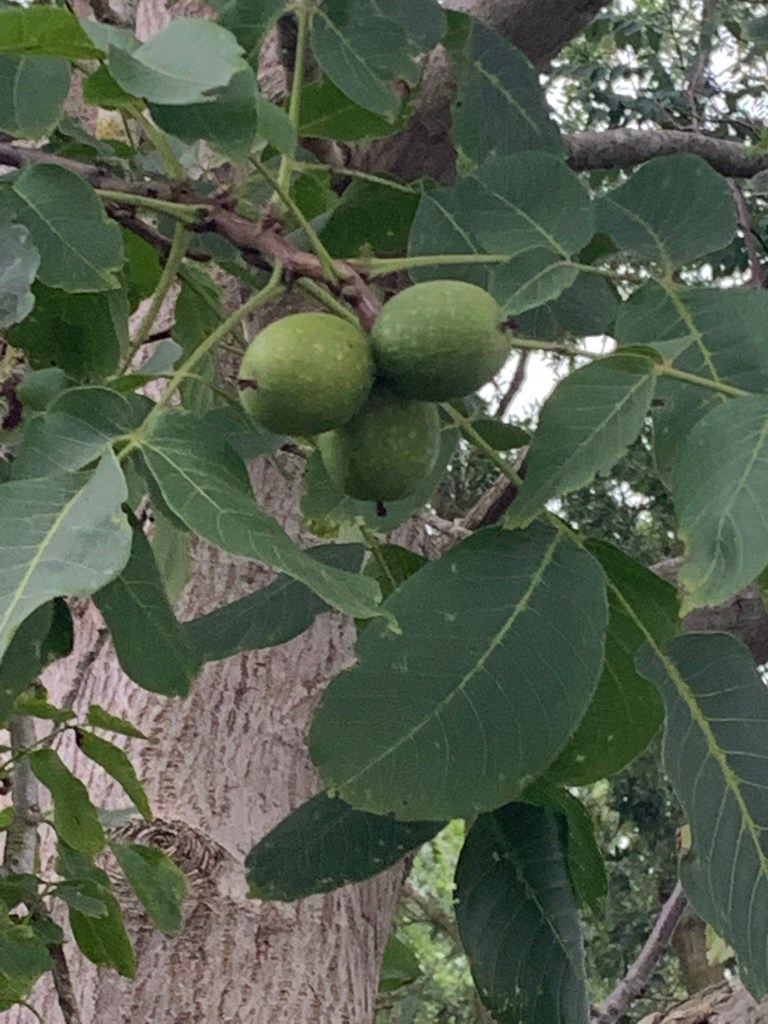
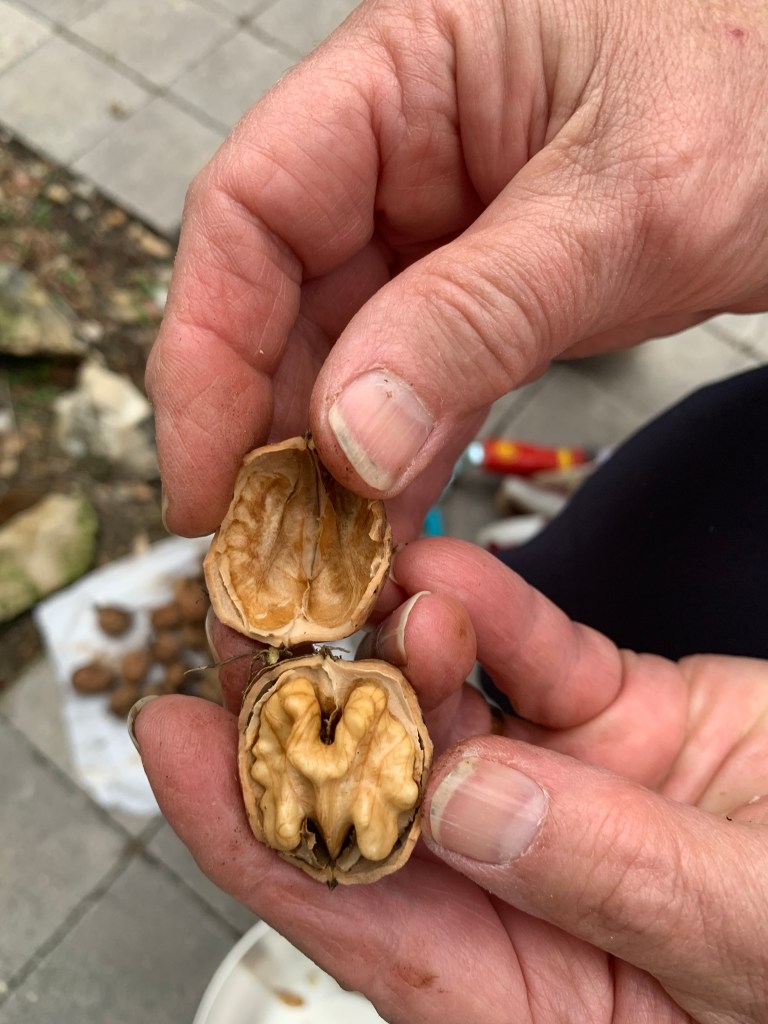
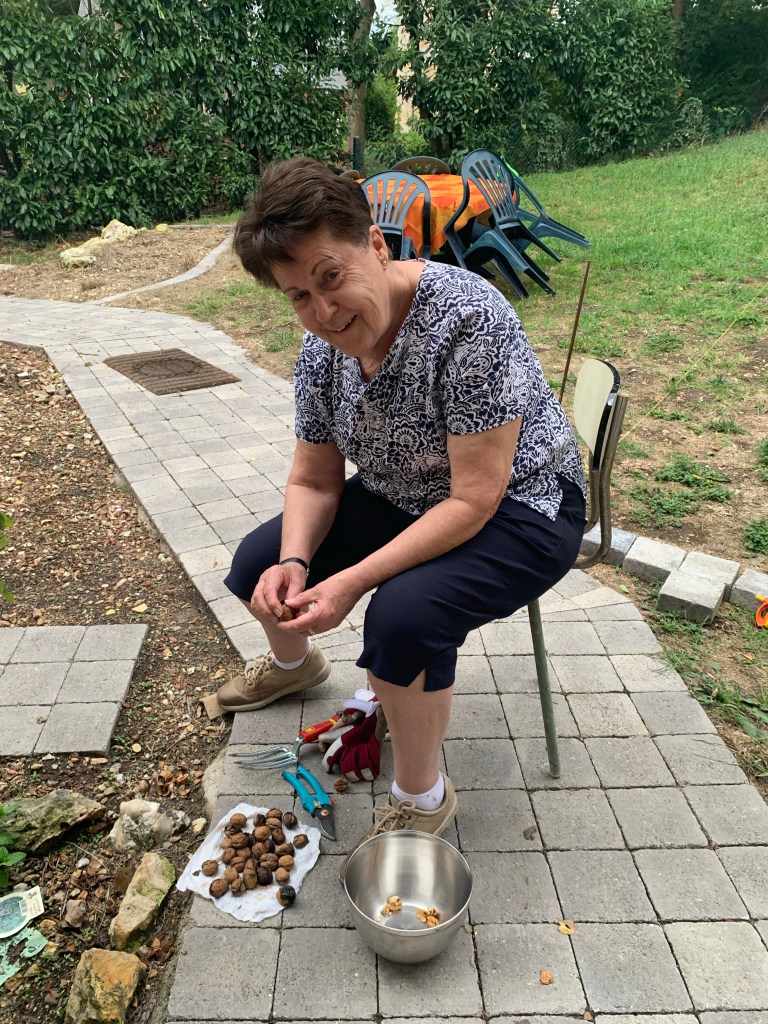
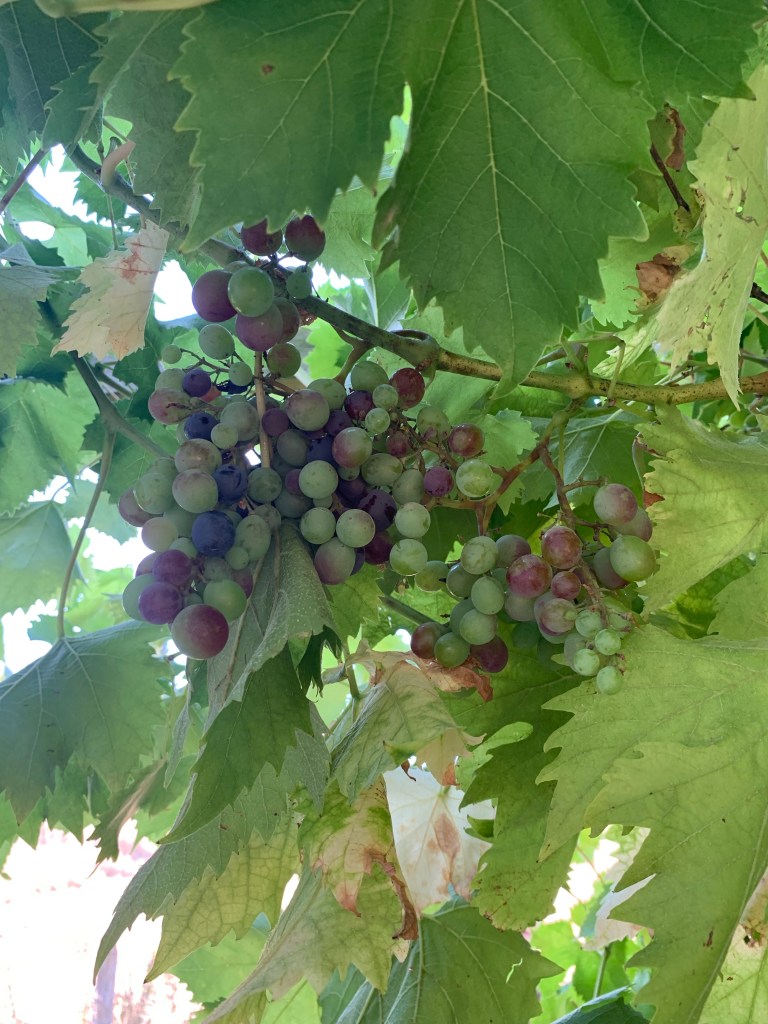
Mum found some fresh walnuts from the tree next door today. They go nicely with the fresh grapes and blackberries from the garden. This area is well known as an orchard and fruit area.
Walnuts on the treeDeliciousGrapes from our vine that I planted 4 yrs agoWild blackberries ( you wouldn’t eat them at home but quite safe here)
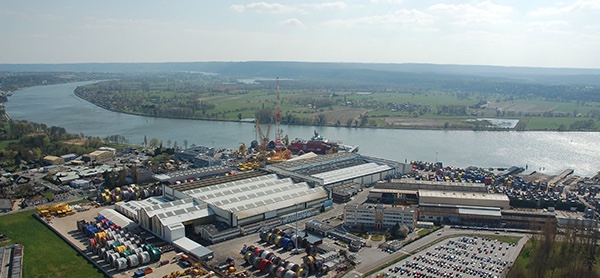
Just near one of Louis’ soccer training grounds is the massive factory of Flexi France. They make flexible pipes for petrol and gas and wind them on massive round reels. It is amazing.
The factory at Le TraitThe reel that the pipe goes on, we drove past as it was being moved.
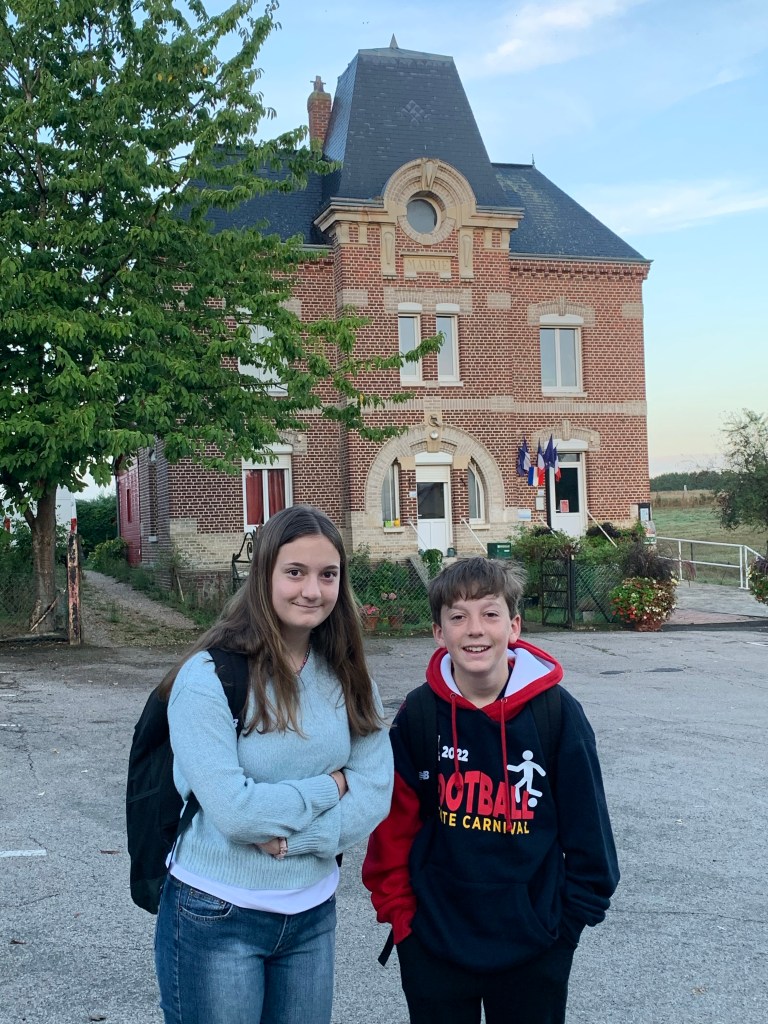
Although school starts early, the short walk to catch the bus at the Mairie is quite pleasant ☺️.
7.30amBus stop in front of the Mairie of Ambourville , the Town Hall of our village.
It was lovely to receive some visitors from Australia to help out with the homework and chores. 😁
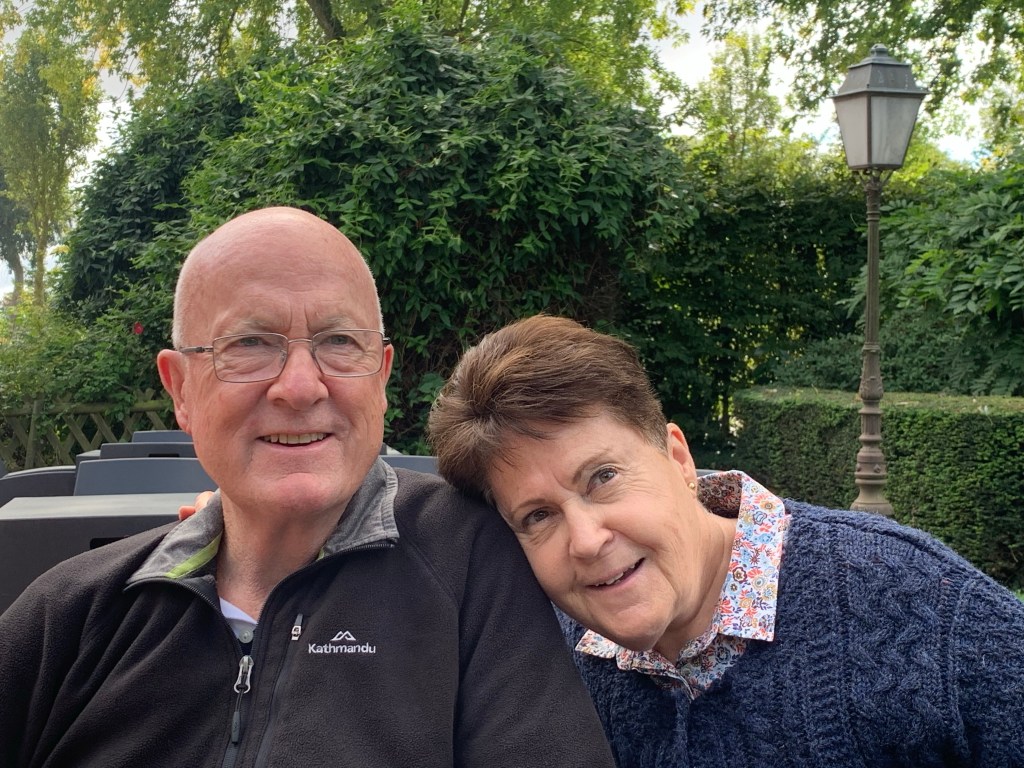
Grandparents ❤️
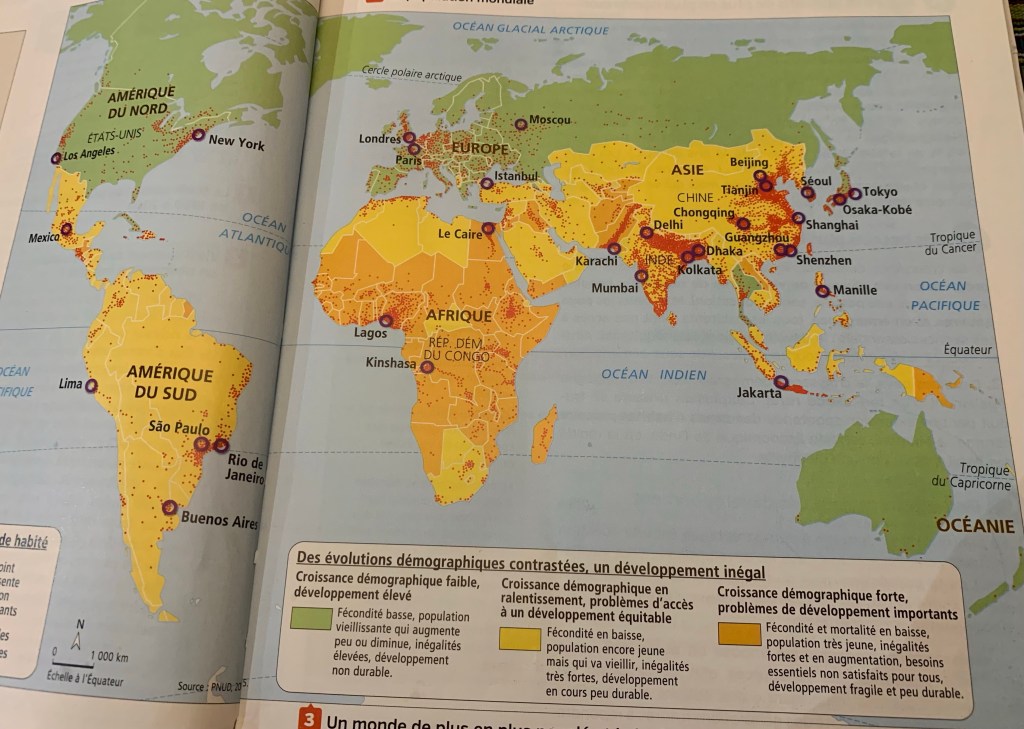
There seems to be a lot of homework and we got right into geography this evening. While we all know Australia is an island continent, for some reason in French the textbook calls us Océanie! What is this? New Zealand is not part of Australia!
Outrageous map of the world!
The visitors have already paid their way and helped to open a jar of olives that had us stumped for a week!
Finally, some olives to eat
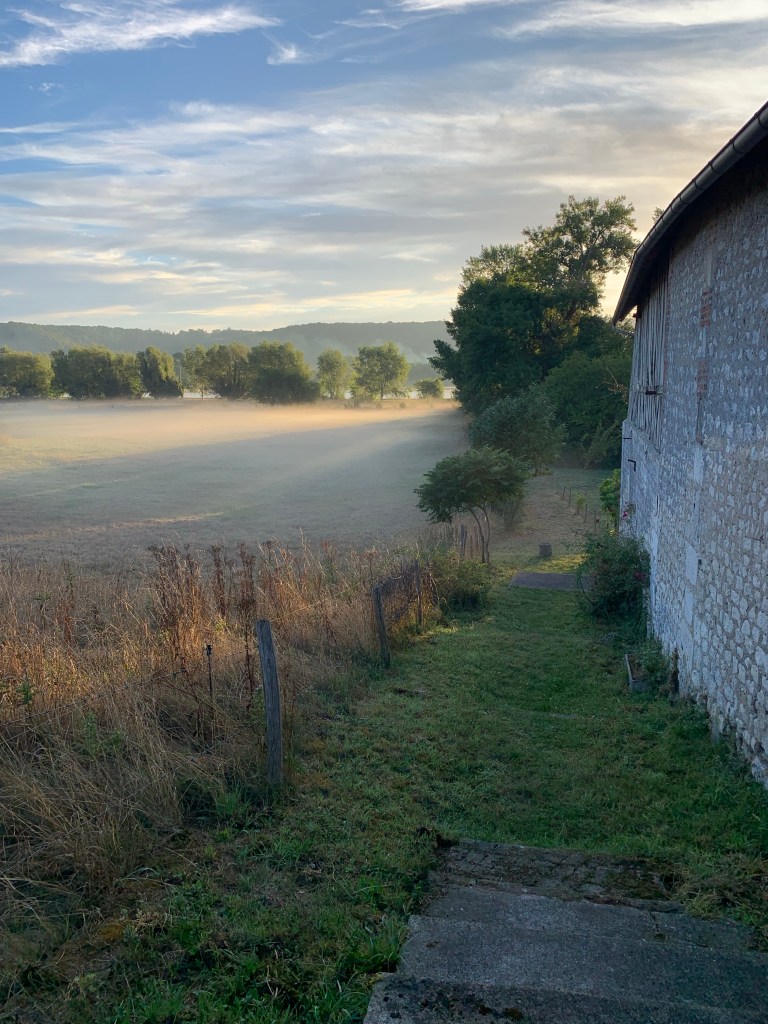
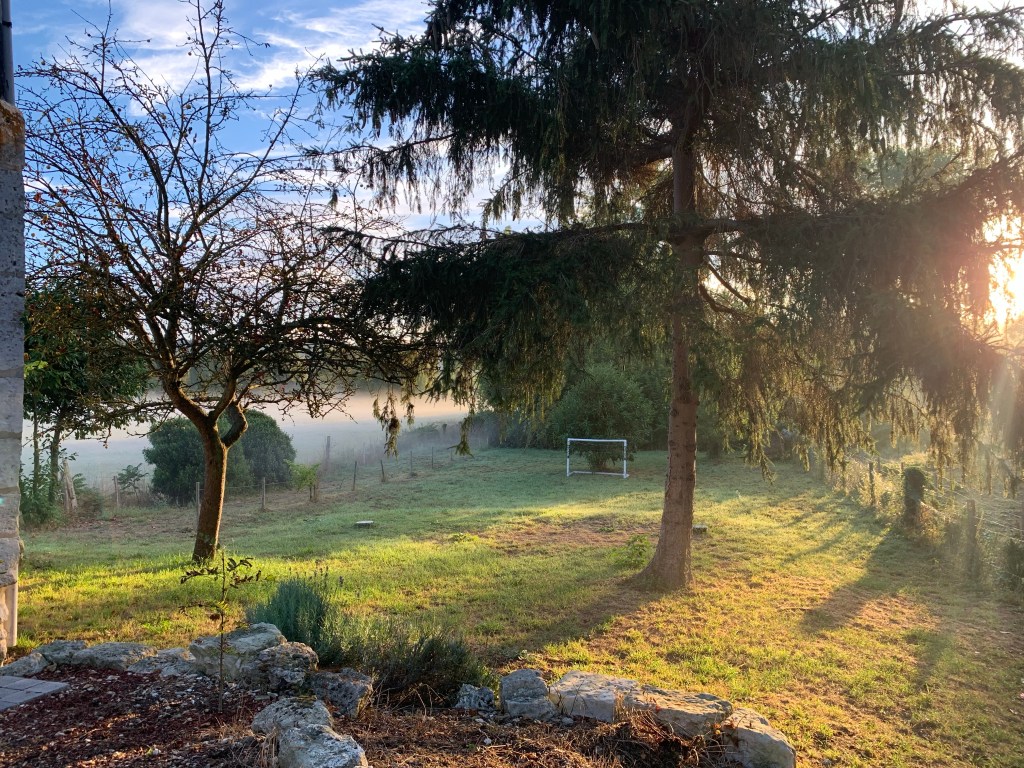
While we do have to get up early for school and catch the bus at 7.30, we do get to experience some lovely mornings!

















 Adventure in Normandie