We have been enjoying some lovely weather this week. Cool and foggy mornings but then eventually lovely days of 20 or so.
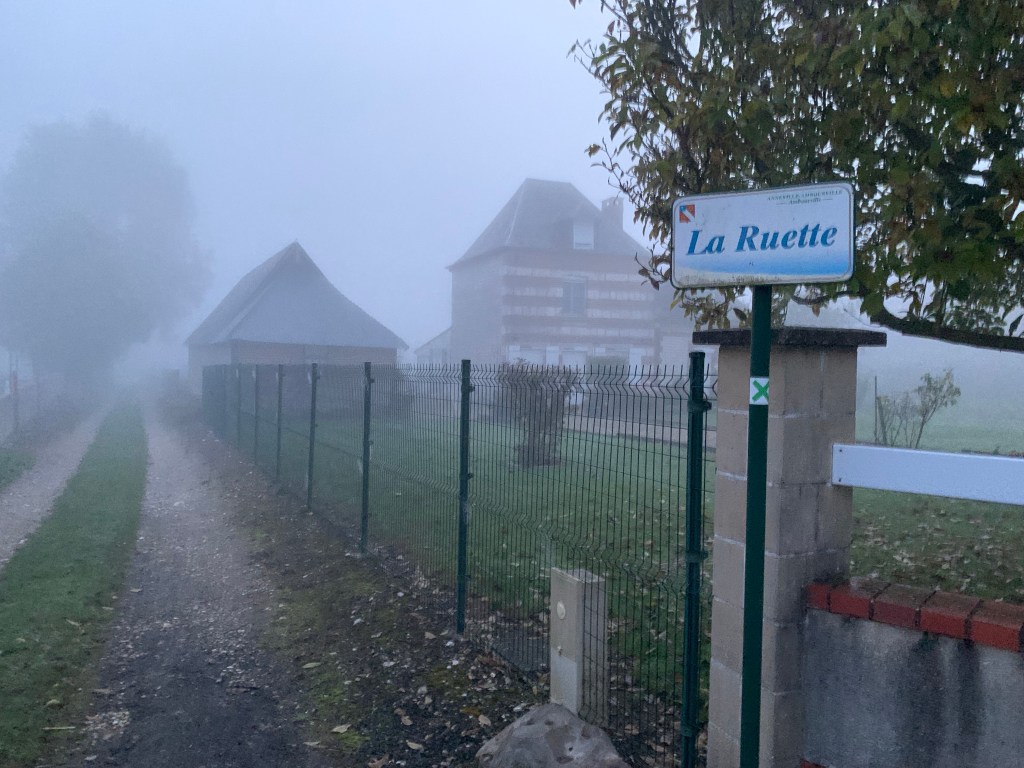
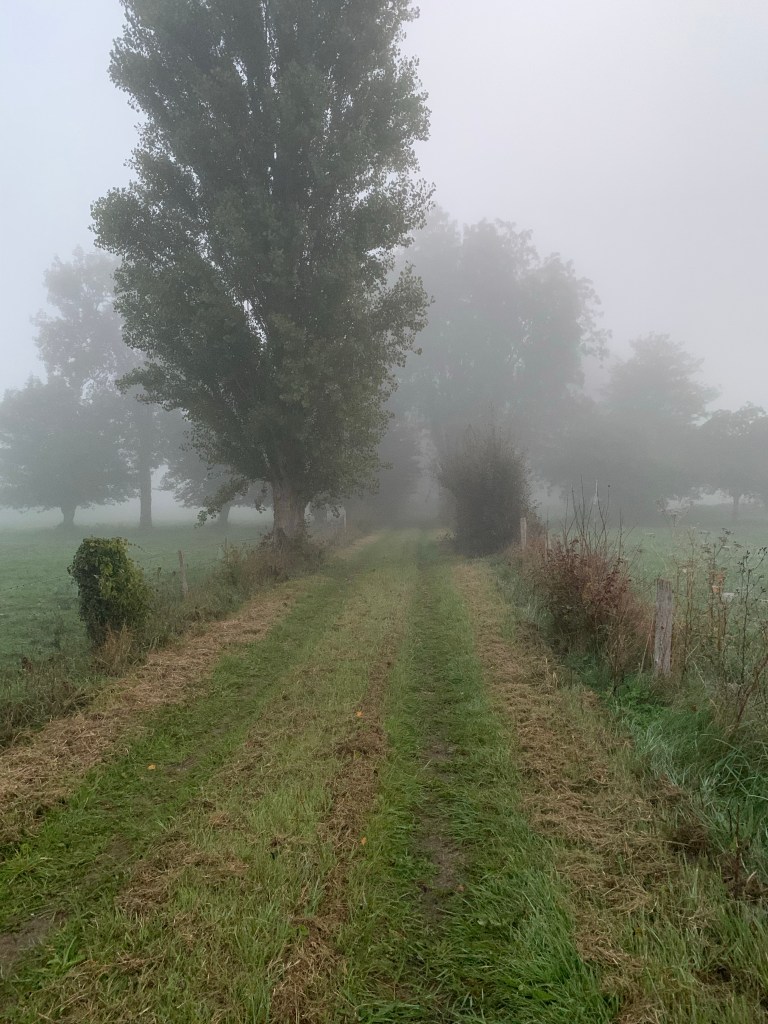
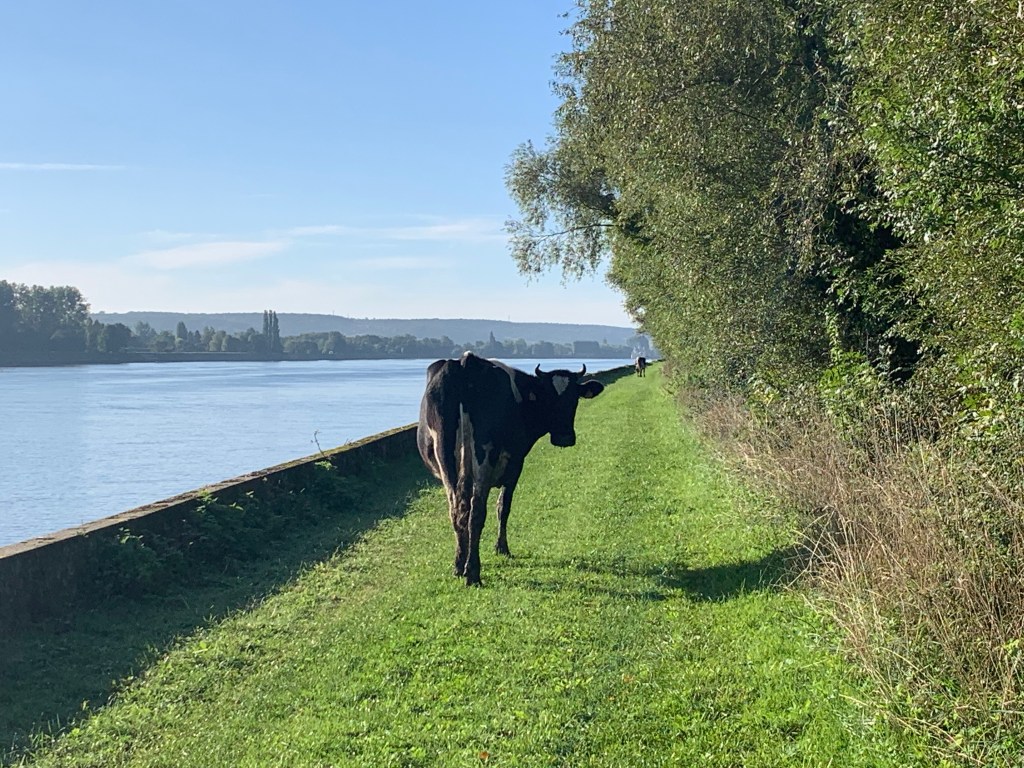
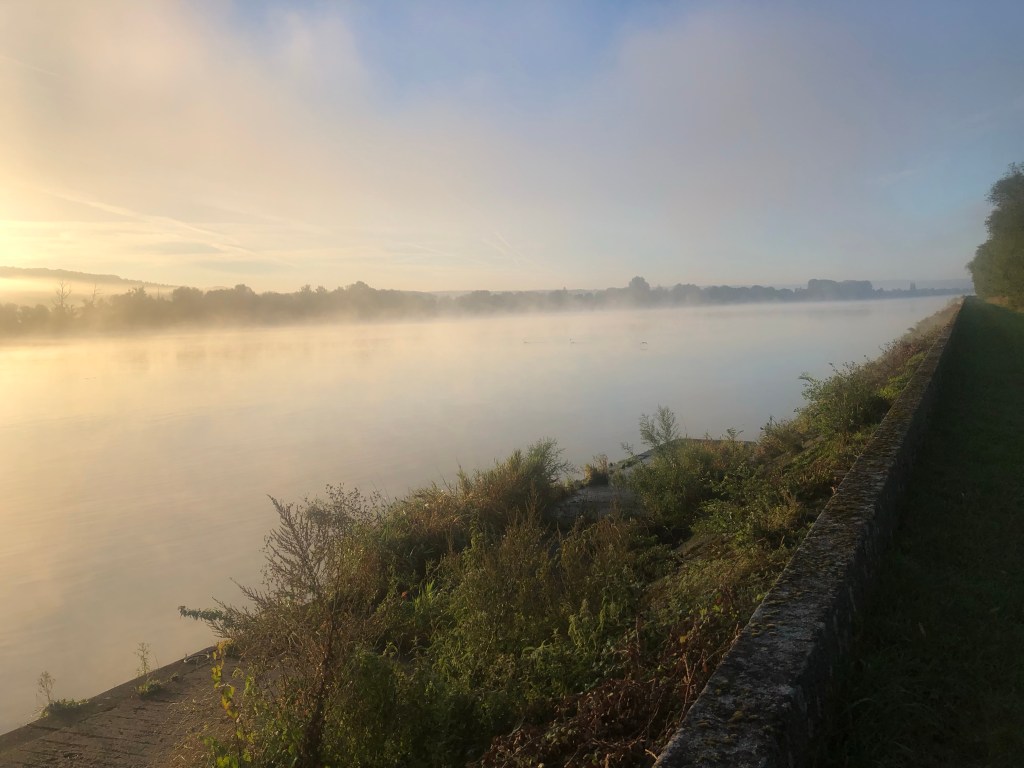
The lane I walk along in the mornings It’s foggy most mornings
We went for a little walk to the river last night.
The boys apparently felt very hot!
I have been cutting and cutting the overgrown blackberries with many injuries. So sharp! Tonight we had a sneaky bonfire to burn it all 😁.
BeforeLots of cutting DuringFire wardens.After
Yesterday I drove past this field and amazed at the straight lines of cut grass. Today they had been balled up into bales. I am not totally sure but think it might be chaff or silage.
Straight lines of cut crop Same field a day later
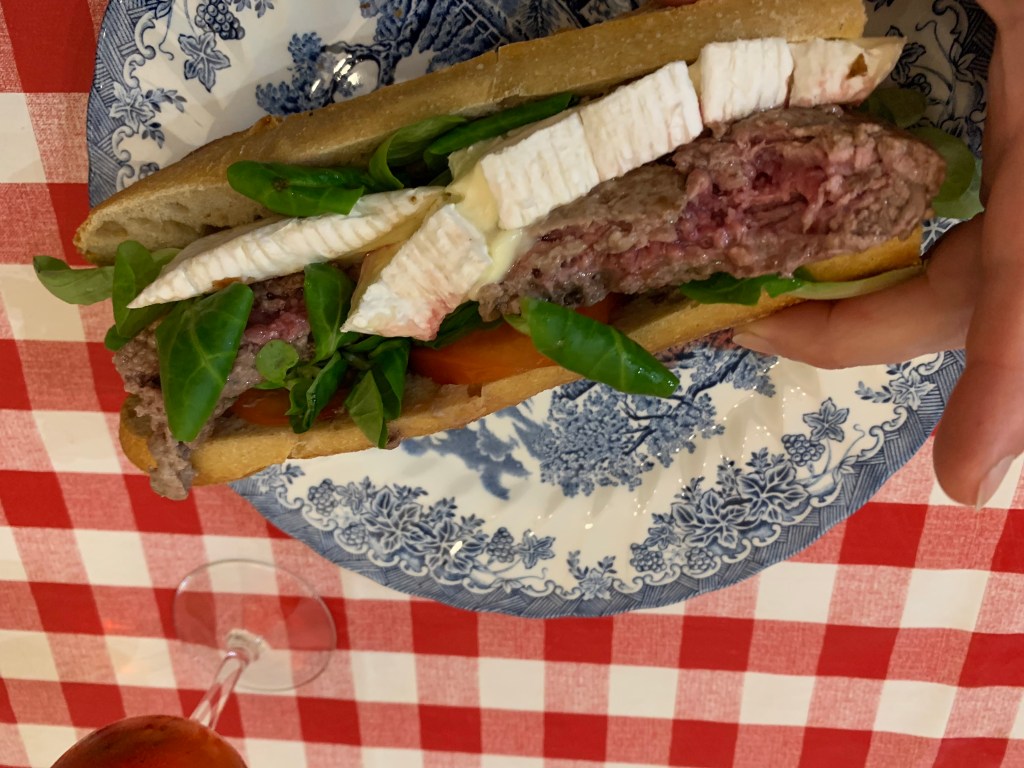
We had a steak haché with camembert baguette to celebrate!
I took a risk and used some precious fuel to drive to Le Havre for a Sunday outing. It was a beautiful sunny day.
Le Havre is a big town and the second biggest port after Marseille, but the biggest for shipping containers.
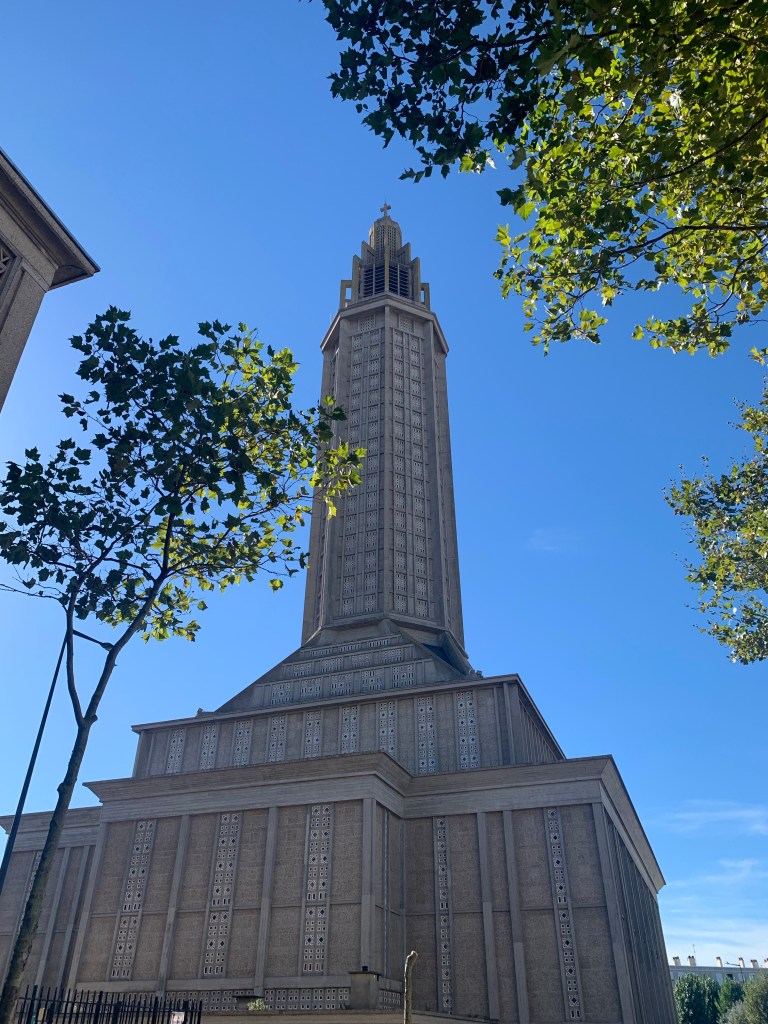
Le Havre was pretty well destroyed after bombing in 1944 and had to be rebuilt. The rebuilding work was undertaken by Auguste Perret who was a huge fan of, and one of the first to use reinforced concrete in large scale construction. I have already come across Perret because he built a famous tower in Amiens that looks over the town and is called la Tour Perret. Looking over the town of Le Havre it is easy to see Perret’s concrete fascination.
Looking towards the harbour, beach on the right, church in the middle A church, but it looks like the Amiens tower
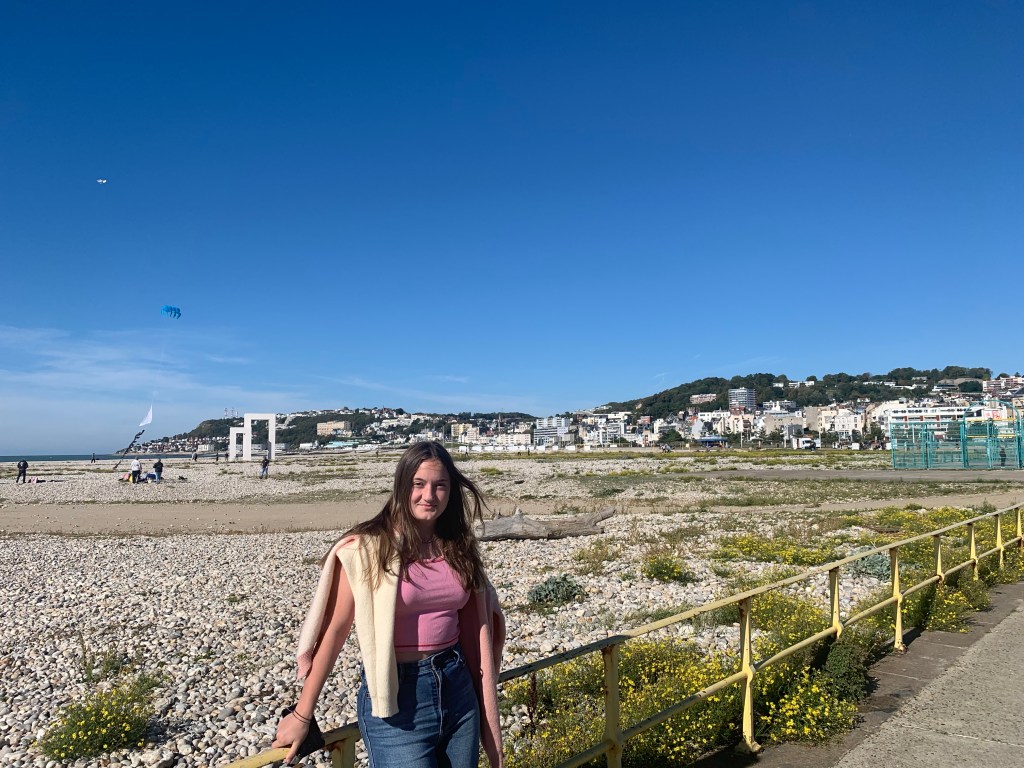
The beach is quite pebbly, but there is some sand at high tide.
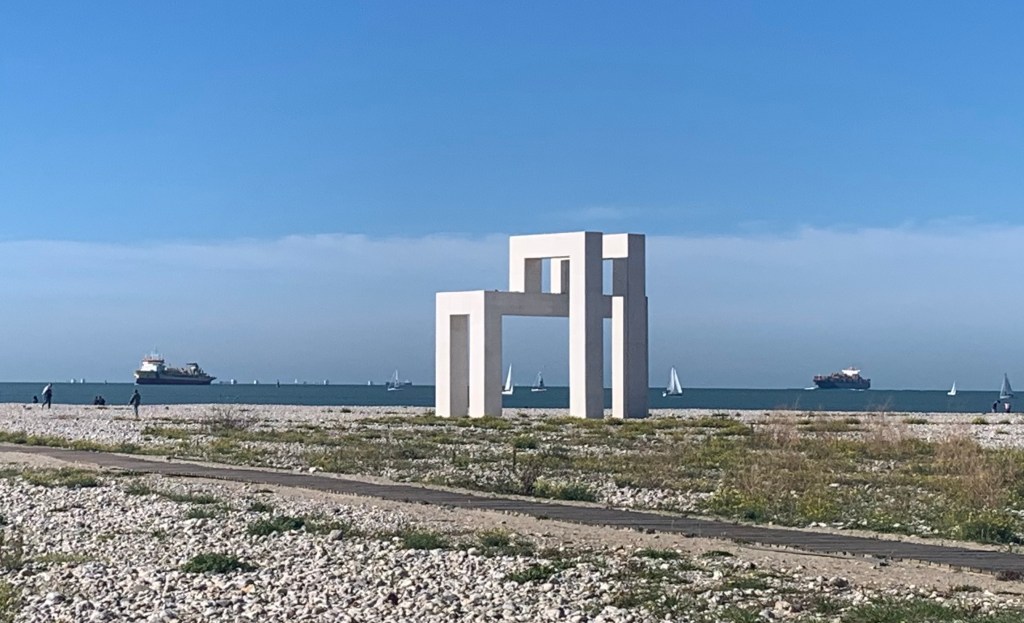
An interesting sculpture. It was made for the celebration of Le Havre’s 500 year anniversary and everyone loved it so much they made it permanent, out of reinforced concrete as a nod to Perret!
The port was pretty enormous and a big ferry came in from the UK.
We had a lovely Sunday lunch.
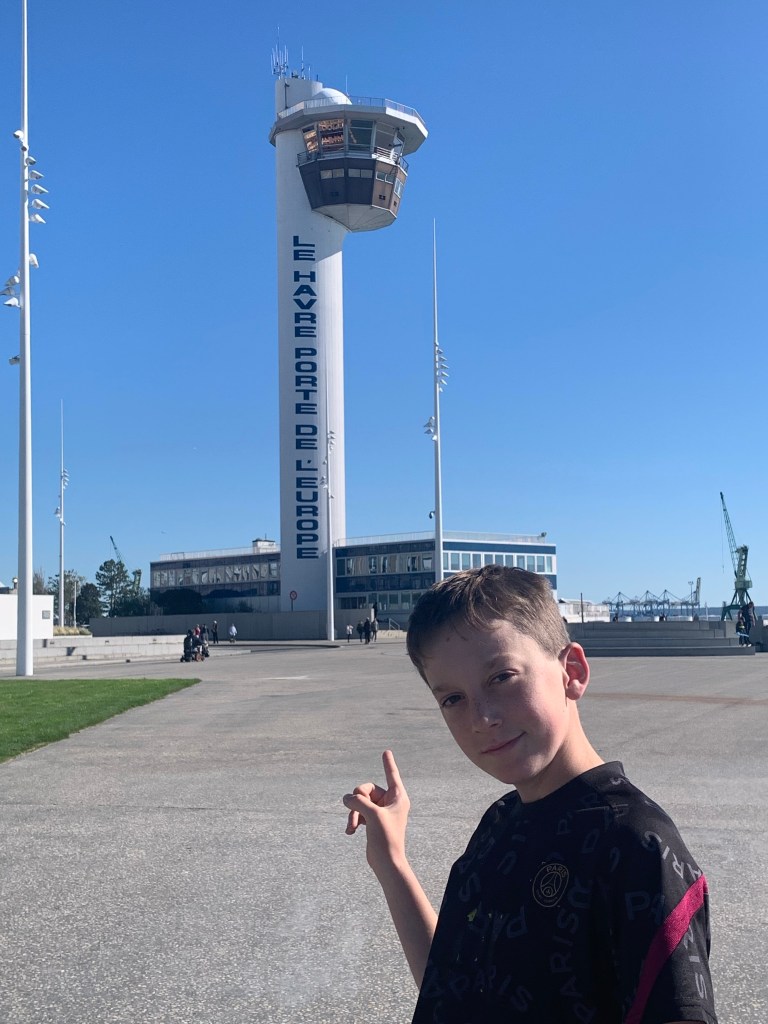
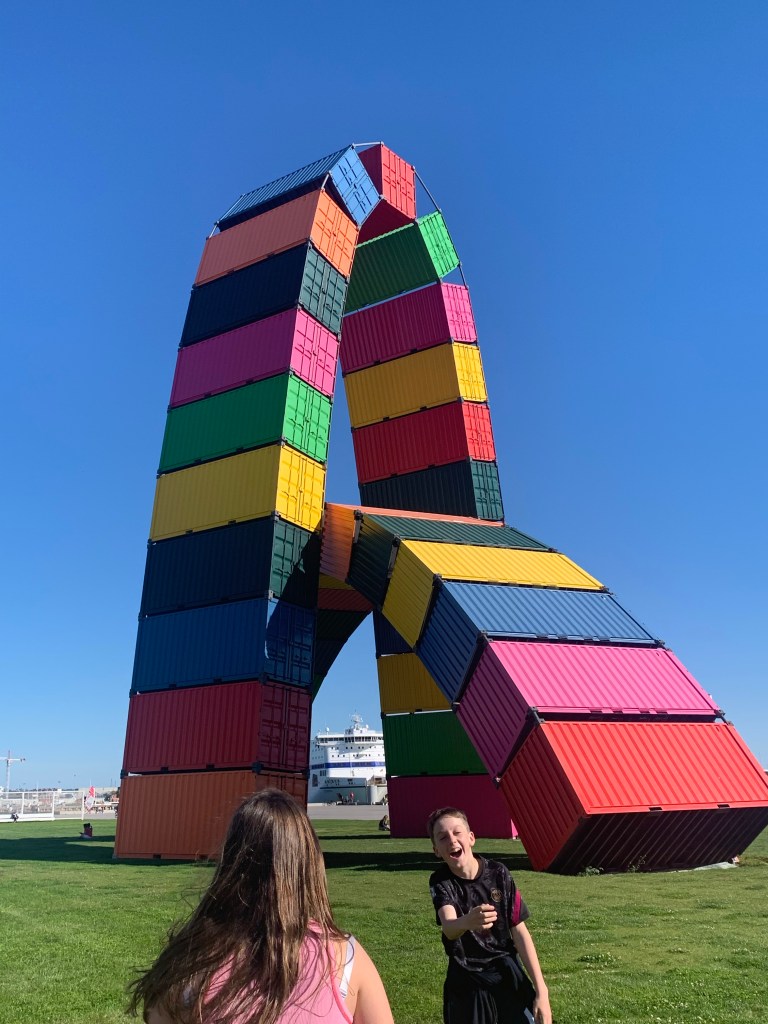
There are many sculptures and interesting architecture around the town.
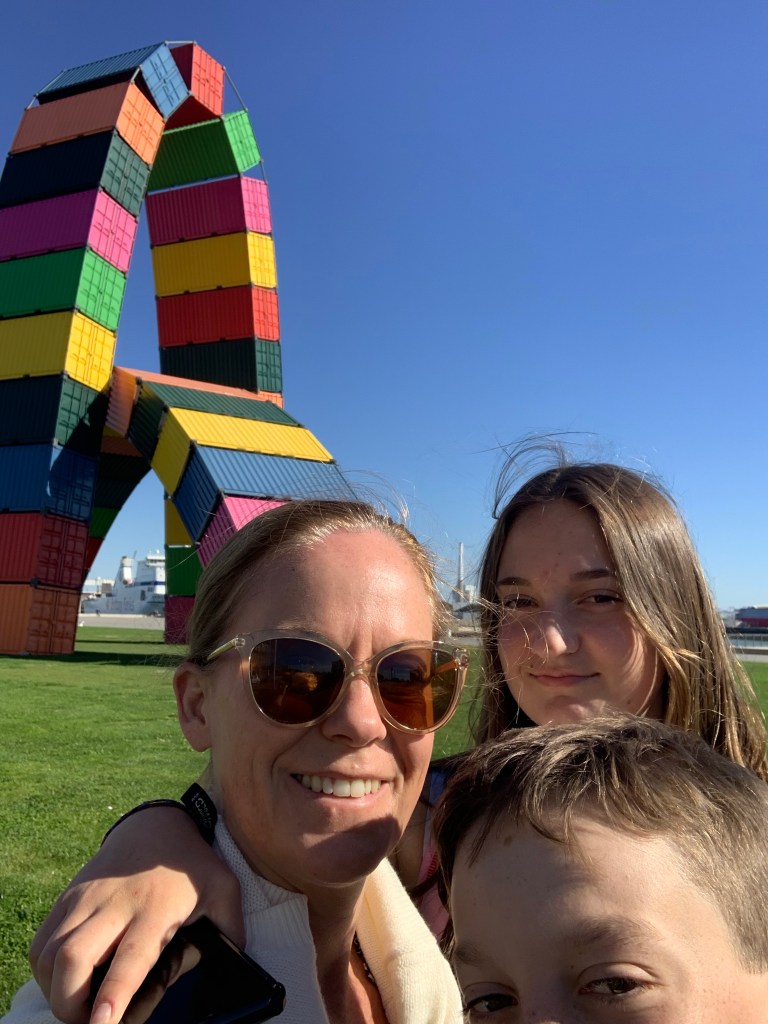
This one is called container chain
This is the volcano.
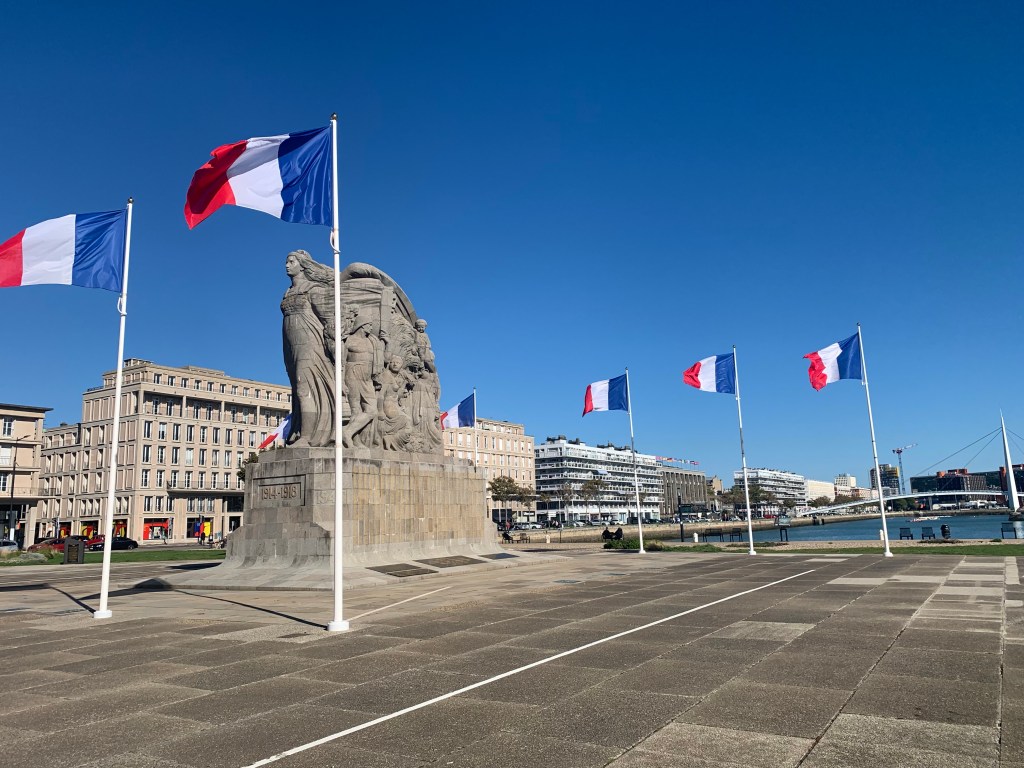
This is a theatre spaceMonument aux morts in the General de Gaulle square
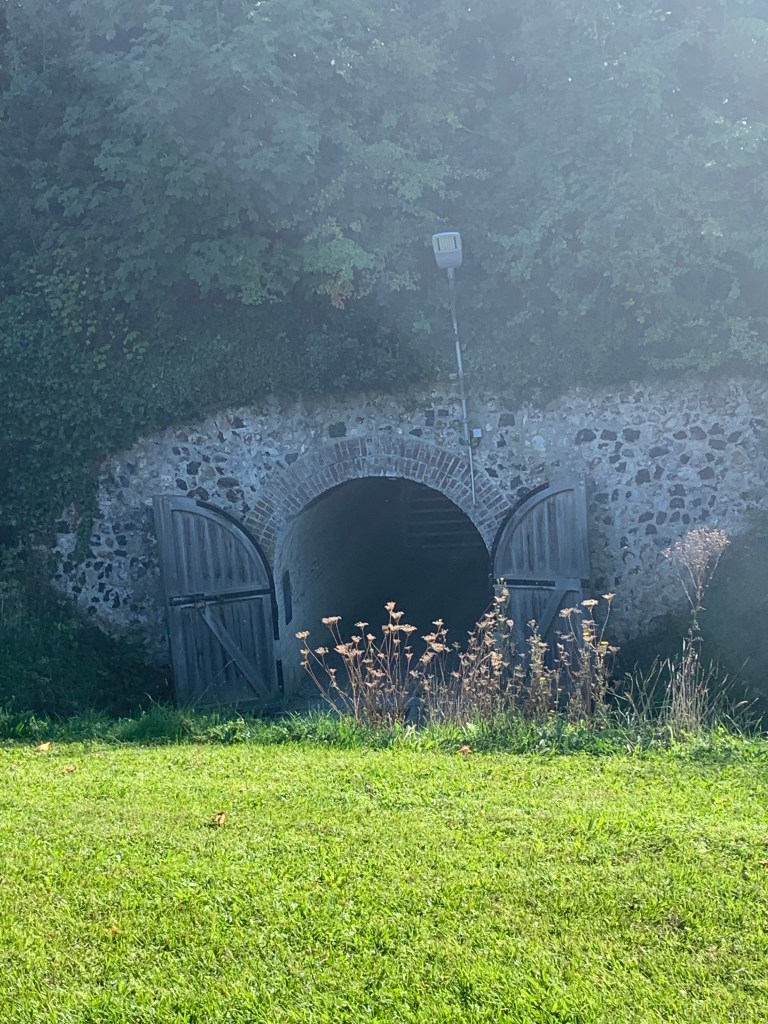
We visited the ‘hanging gardens’ which is a lovely garden area set in an old fort atop the town. It was quite amazing how they have used the fort as a garden and you can walk up and down and around and it was free entry.
There was an even an ‘Austral’ garden!
A gift from the Belgian people to the French.
During the First World War, the Belgian government moved into the area nearby in Le Havre and later put up this statue in gratitude to France.
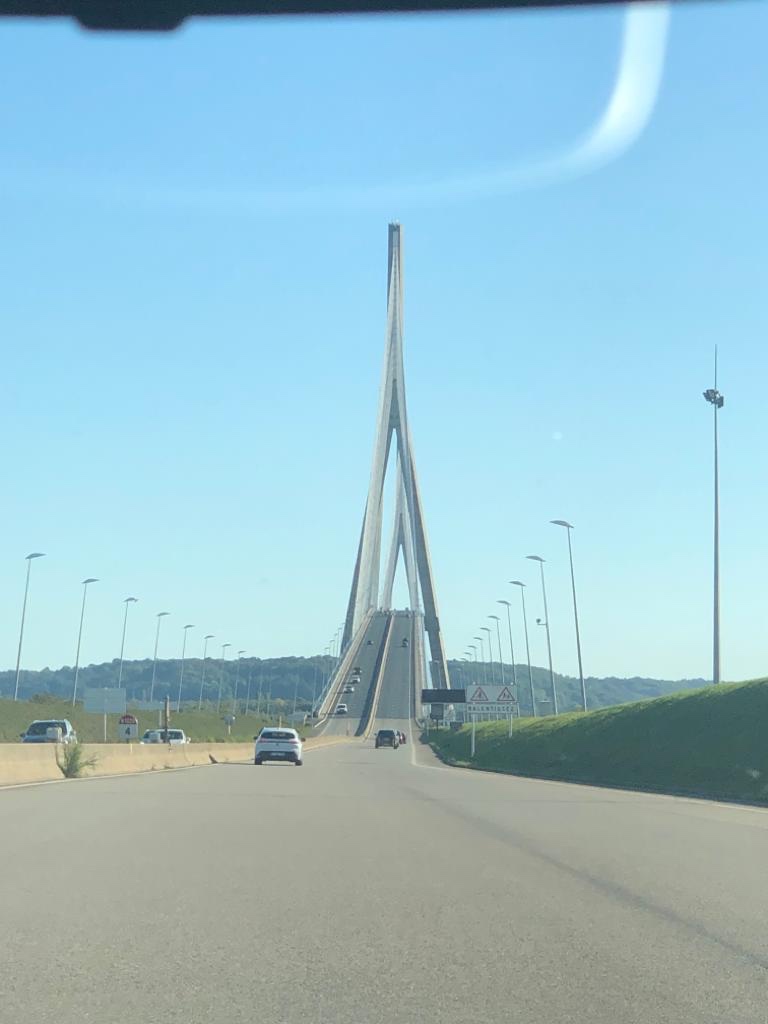
On the way home we took the Pont de Normandie, an amazing piece of construction.
The Pont de Normandie
It is where the river Seine meets the sea and it spreads out amazingly.
Driving along yesterday I saw several long lines of cars queuing for petrol. I didn’t know what was going on but thought it might be best to get some fuel.
It turns out there is a fuel shortage in France due to a strike of oil refiners.
Map showing petrol stations that don’t have fuel
The effects are being felt particularly in the northern parts of France. Petrol stations are not being refuelled so that is why there are long lines.
Well, I have a full tank now, I paid €1.90 a litre. I am not doing the conversion…
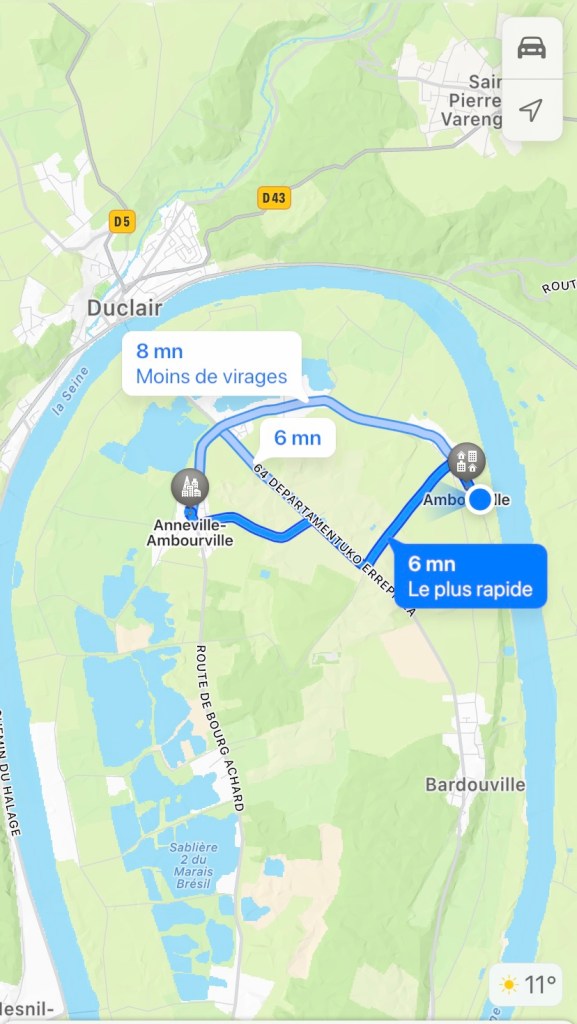
Our village is called Ambourville and it is part of a two village municipality so often it comes up as ‘Anneville-Ambourville’. They are separated by about 10km. Importantly, there is a boulangerie – patisserie in Anneville!
Map showing our village in the loop of the Seine, sometimes it’s is referred to as an ‘almost island’ or presque île. The kids go to school in Duclair.
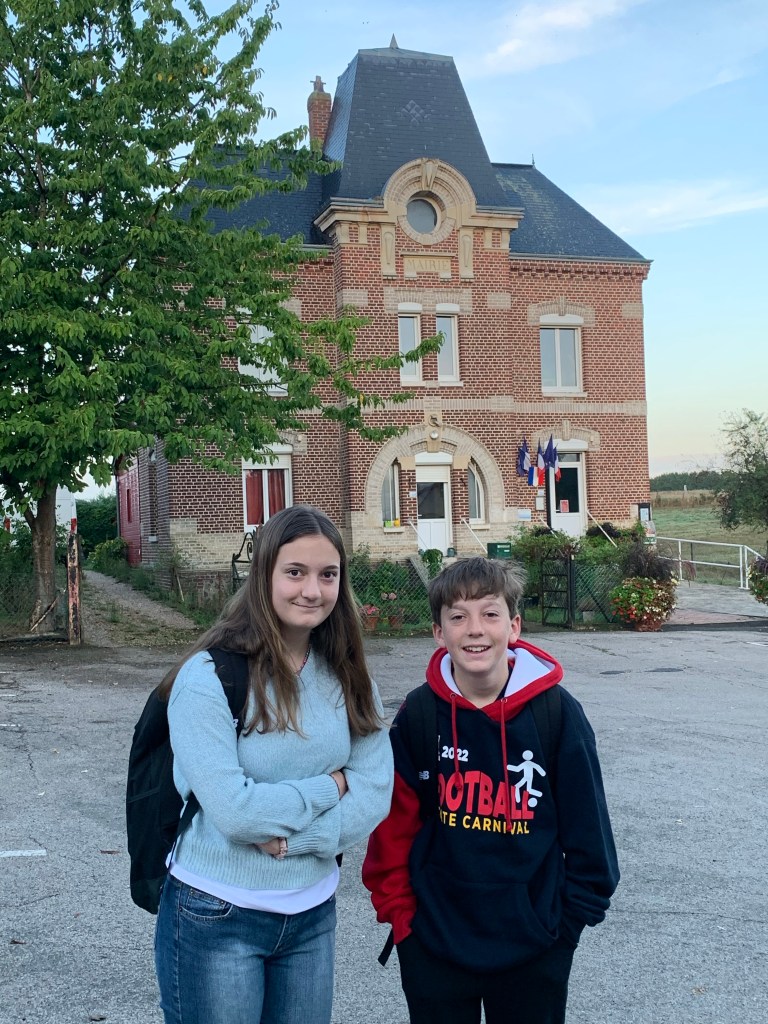
Our village does not have any shops but it does have a Mairie or Town Hall and a part-time Mayor.
We also have a small church.
There are lots of lovely traditional half-timbered houses and thatched roof houses. A few people like us have bought older places and done them up. There are also some of the new triangular houses you see everywhere.
This house has been renovated and a family live here.Same house with crocus flowers Peeking over the hedge Probably my favourite house ❤️Our neighbour’s house – it’s a holiday house so they aren’t there often
You can walk through the village in about 10 minutes but then there are little lanes that take you down to the river and you can walk along there.
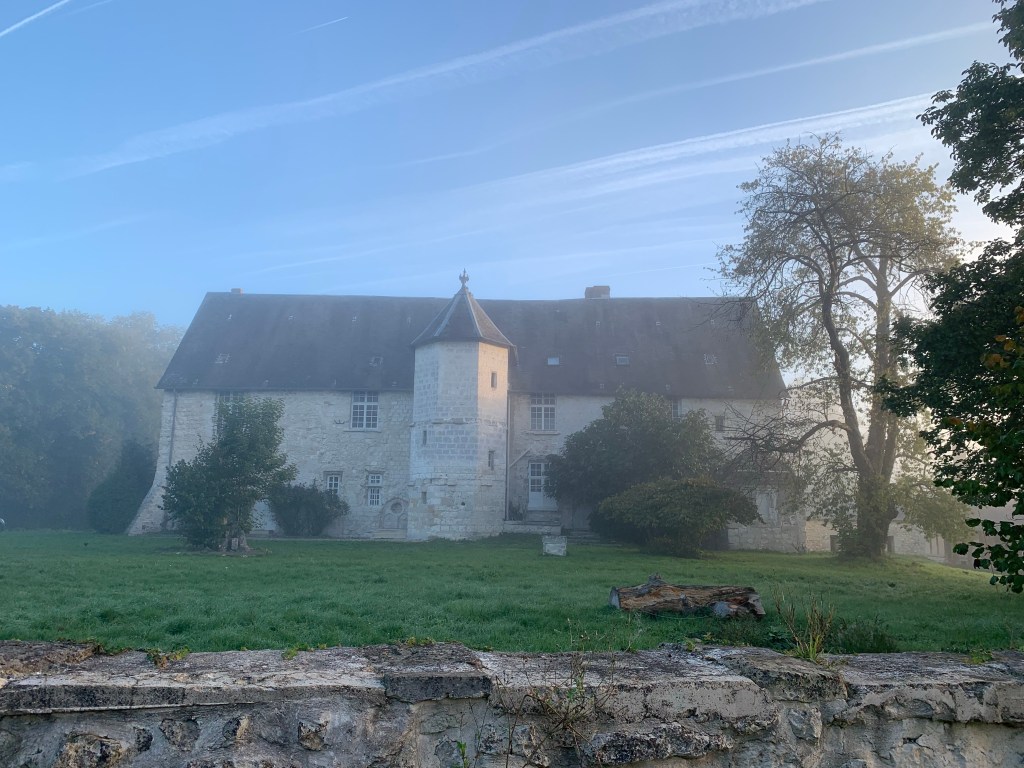
We don’t exactly have a chateau in the village but we do have the manoir de templiers. An old manor house that may have housed some knights Templar. I haven’t been able to find out much about it.
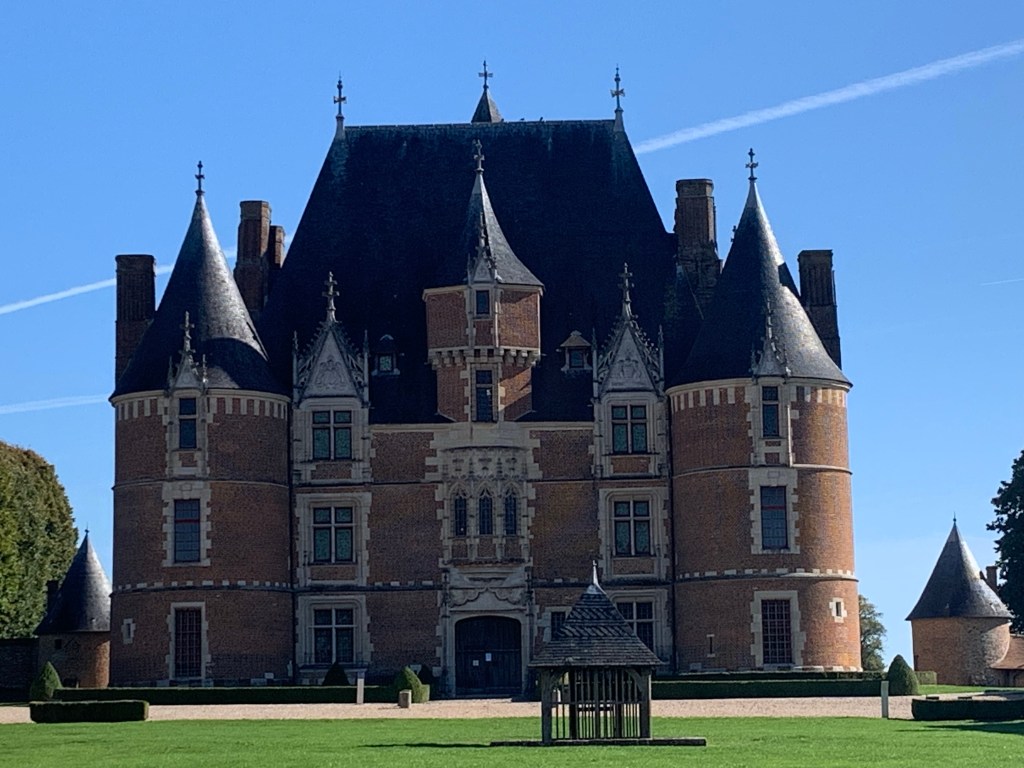
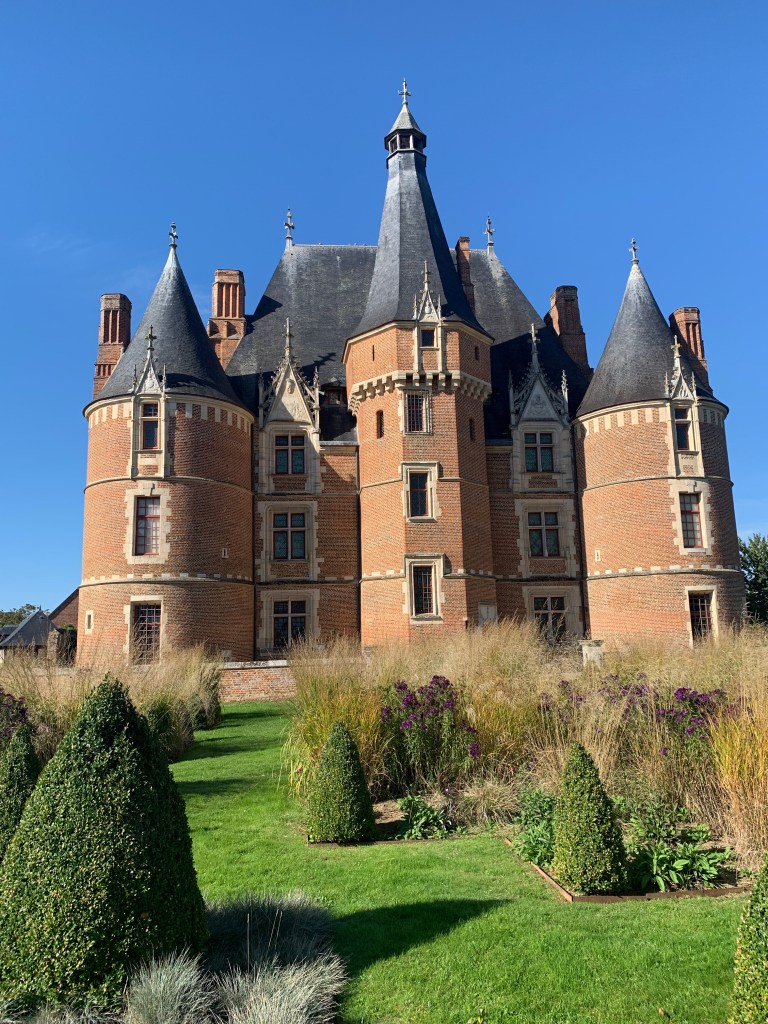
I was lucky to get to visit this château about an hour from the house.
Built in 1485, it had been remarkably well restored and maintained and is now owned by the state.
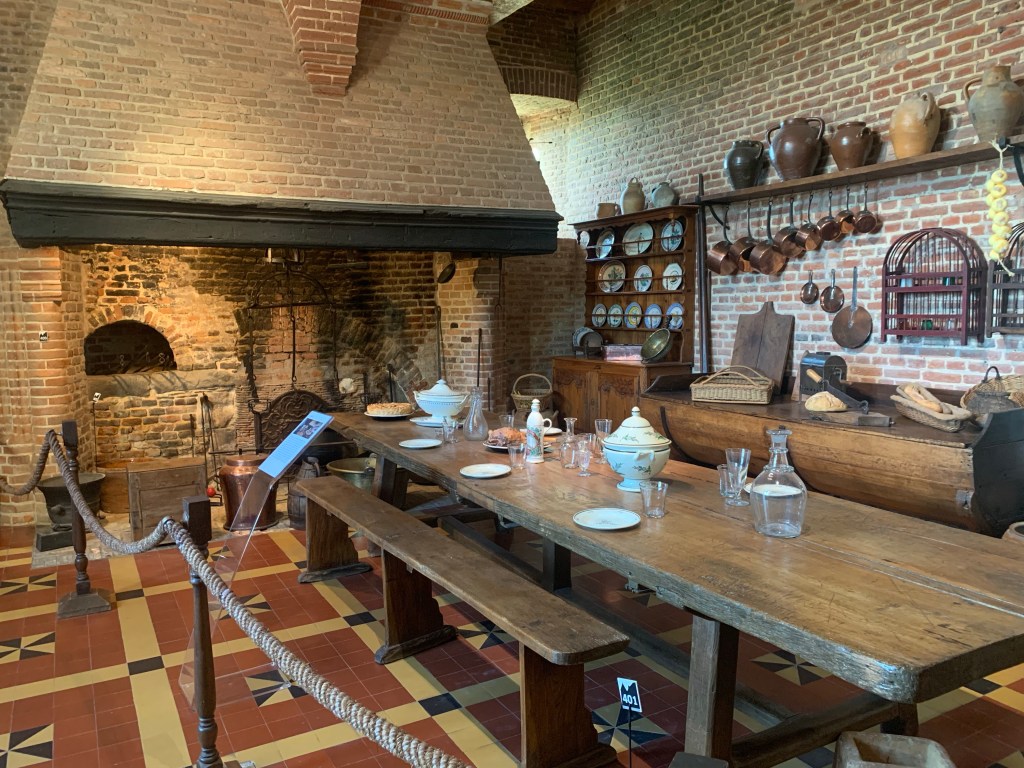
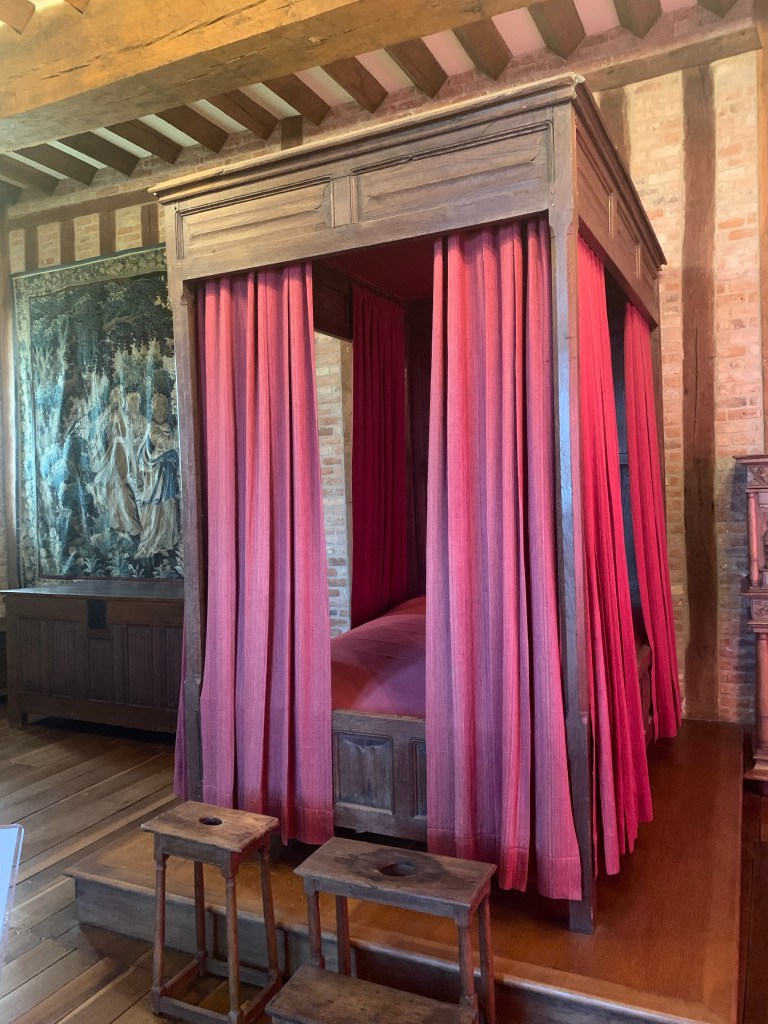
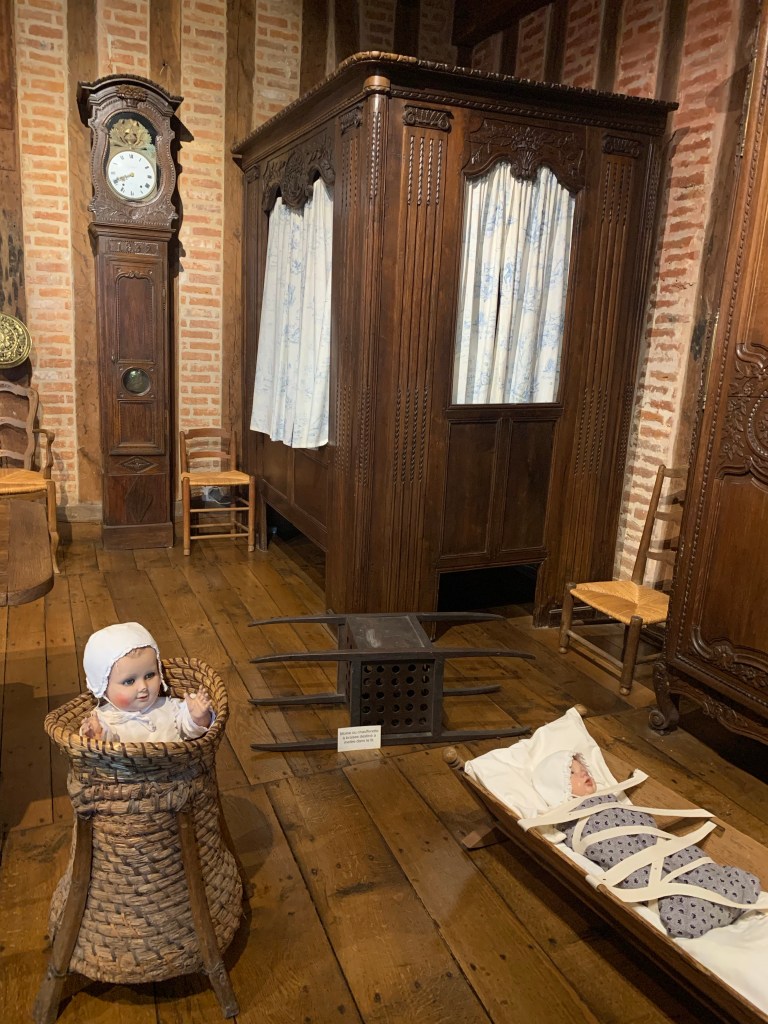
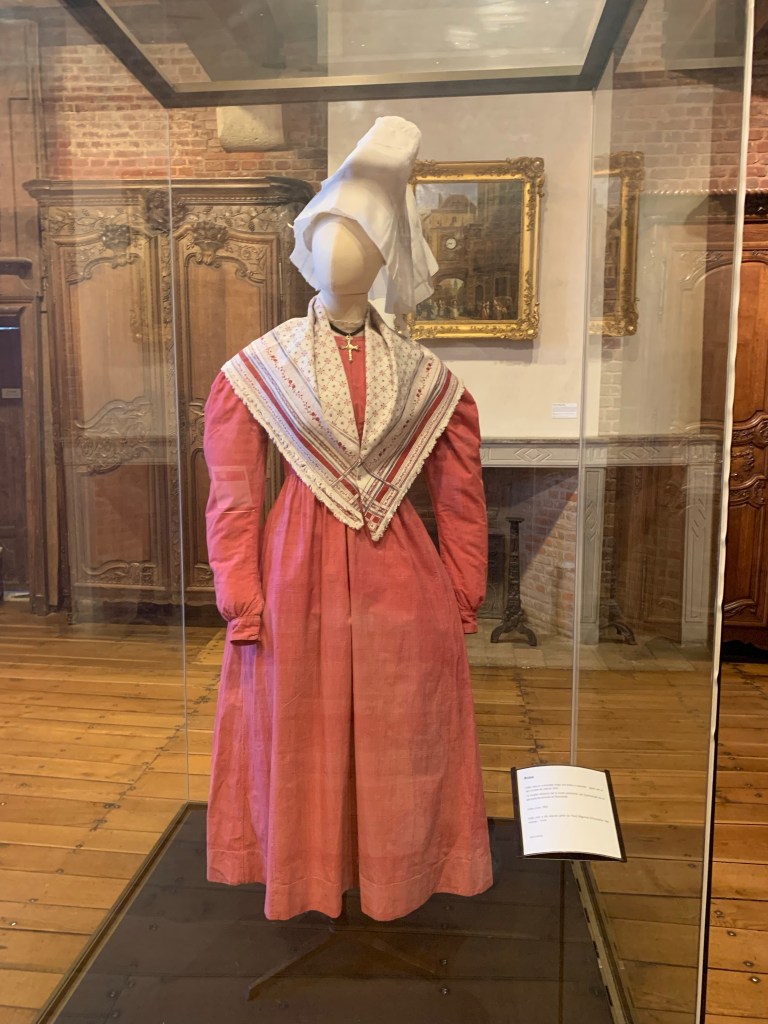
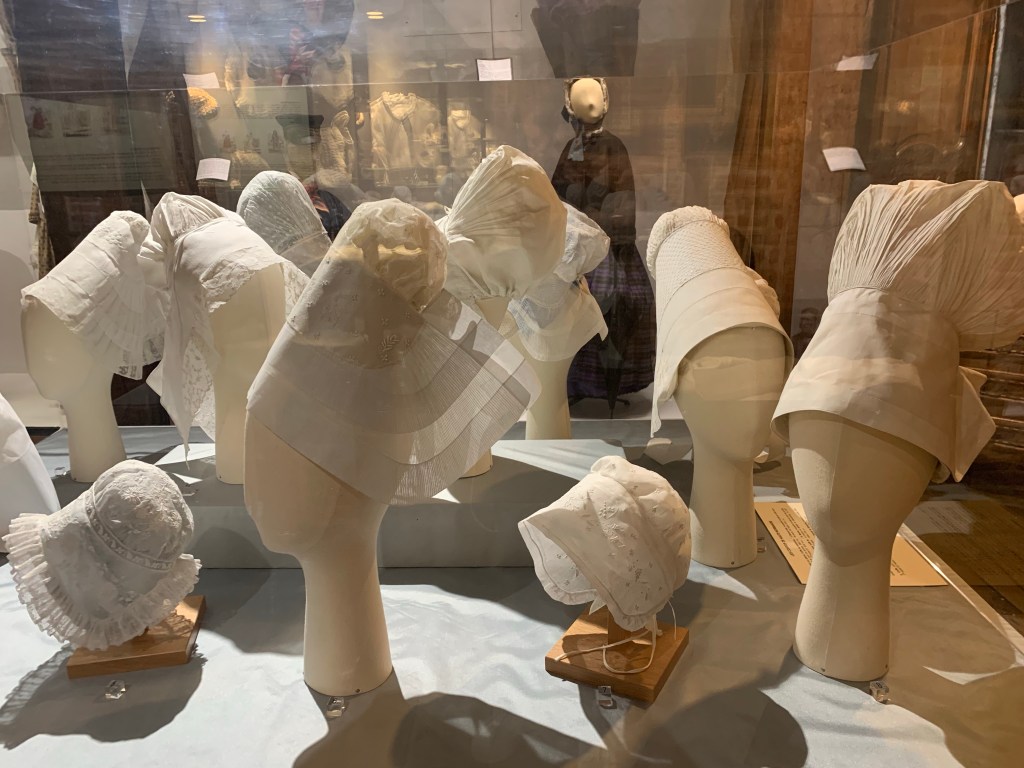
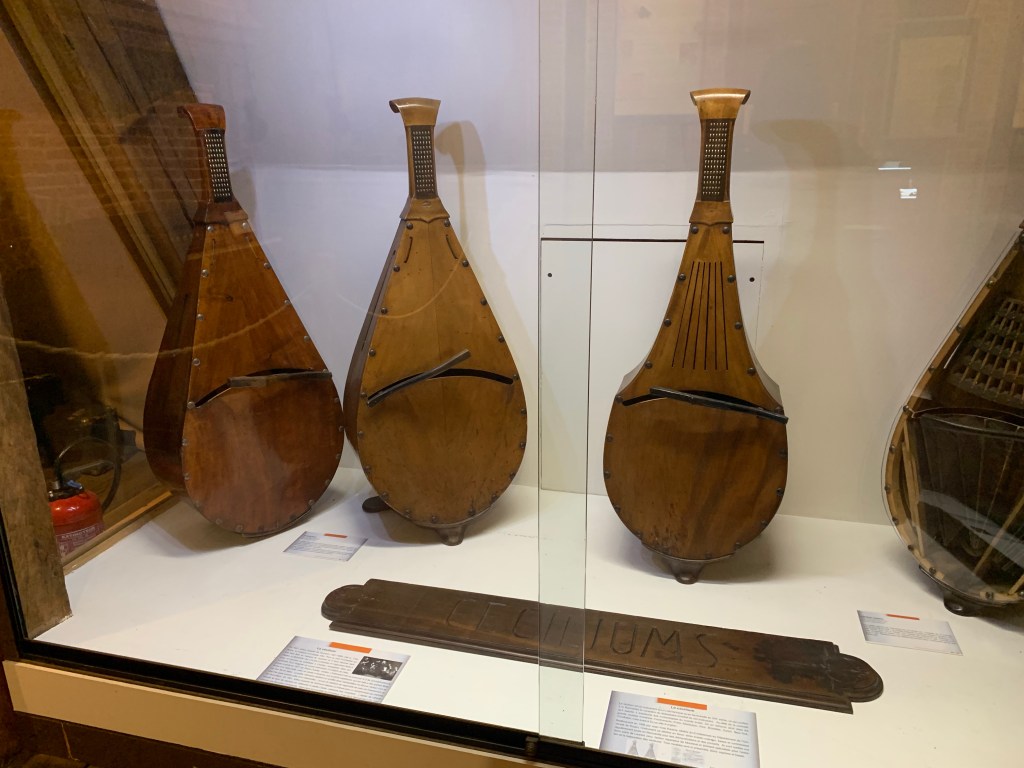
It was very well furnished with rooms of different styles over the life of the chateau, with a focus on local Normandie traditions and culture.
A traditional kitchen I wouldn’t mind a bed with curtains!When you have work to do, pop the baby in a basket or tie them into the cradle!Traditional dress from the region with a very particular kind of hat that was fashionable for a while.This is a cecilium, an instrument invented in Normandy.A wardrobe full of a wedding trousseau!
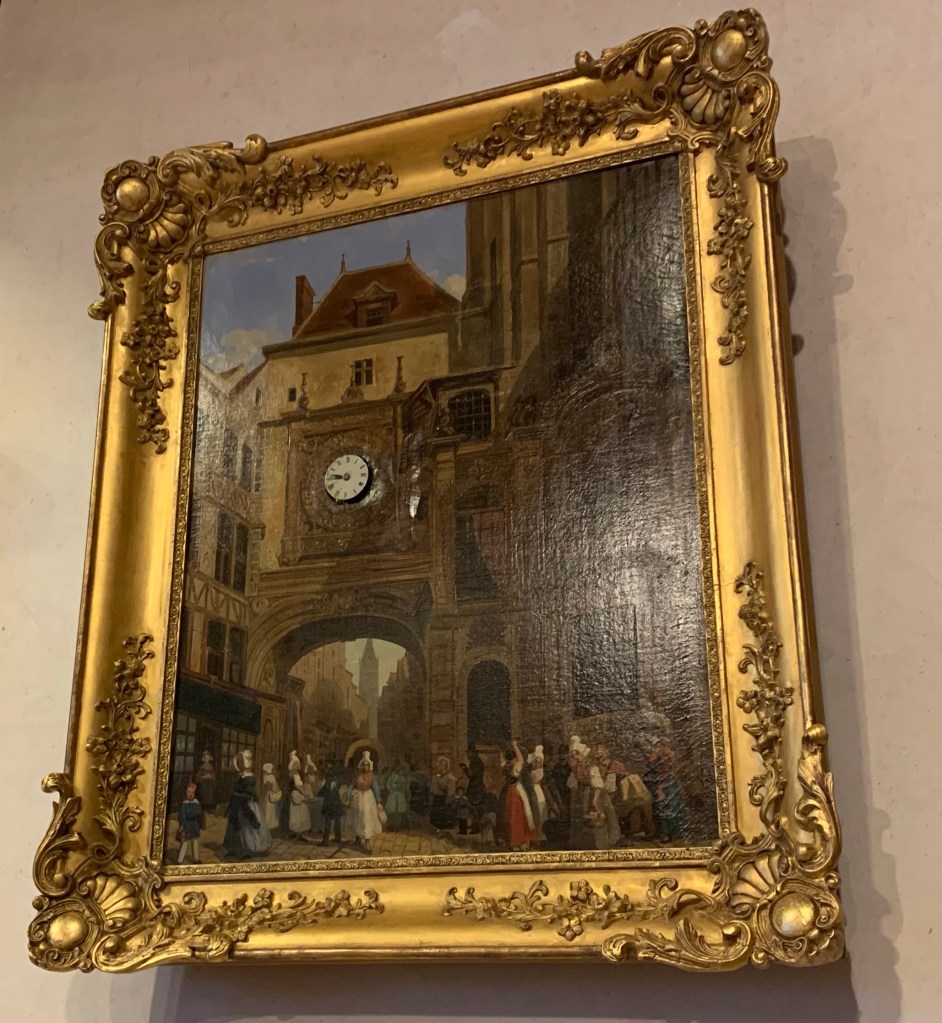
And look, an old painting of the Rouen gros horloge!
It’s Normandie so there were lots of apple trees and I couldn’t resist tasting them! They were falling to the ground and just left there.
It was a very interesting chateau.
There are a lot of events occurring in October to support breast cancer awareness in France. They are calling it pink October. I drove past this display of support which is pretty original.
Rouen is the nearest large town to the farmhouse. I had some business with the bank so Sebastian and I headed in and had a walk around.
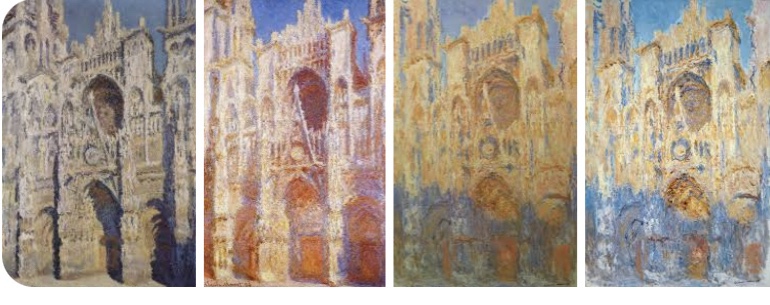
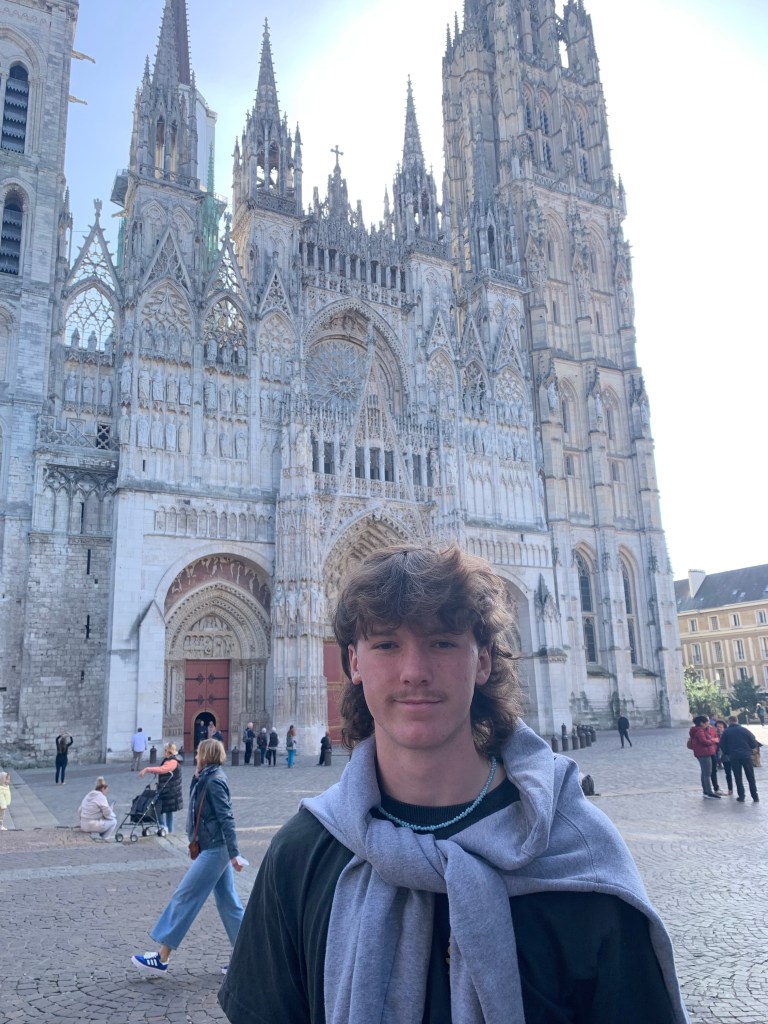
The Cathedral of Rouen is famous for being the object of a series of paintings by Monet which I have always loved.
It’s pretty amazing in real life.
The mullet in front of the Cathedral
The other big thing that Rouen is famous for is that it is where Joan of Arc was burned at the stake. There is a great museum of her life and trial.
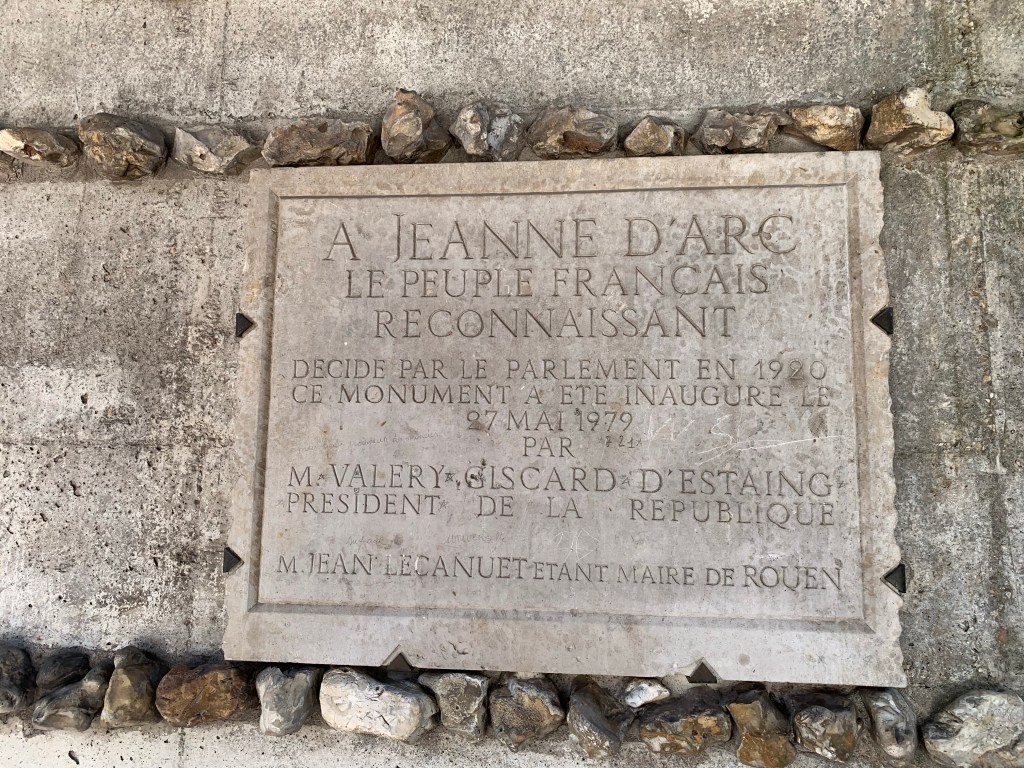
The story of Joan has had an interesting change of reception over the years. Nowadays she is considered a true heroine. This plaque is on the wall of a memorial near the old marché.
To Joan of Arc from a grateful French people. Agreed in 1920, this monument was inaugurated in May 1979 by the President of France and Mayor of Rouen.
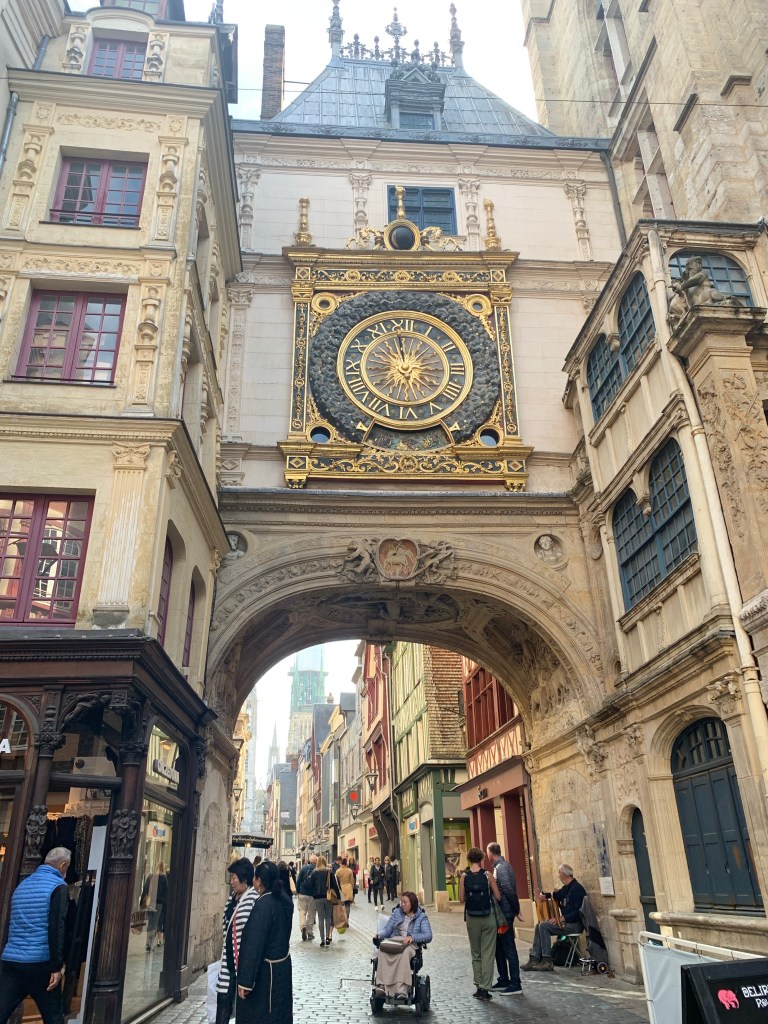
Another iconic site of Rouen is the gros horloge or big clock.
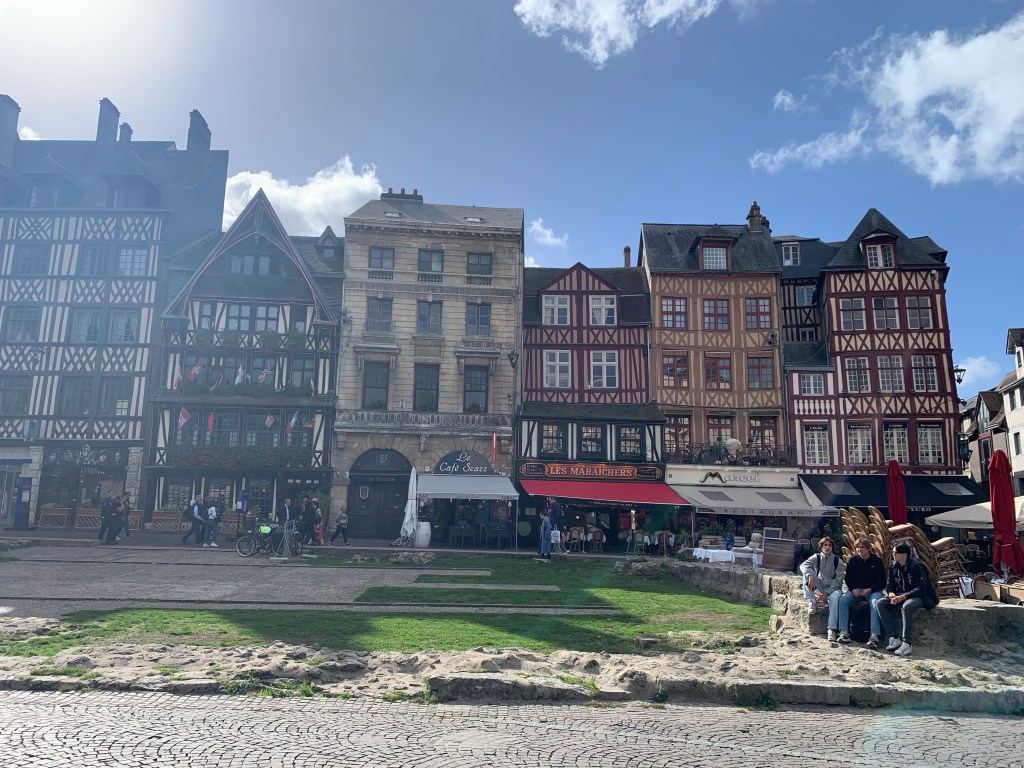
There are lots of old charming half timbered houses in the old part of town.
So cute!BeforeToday! Hardly changed!
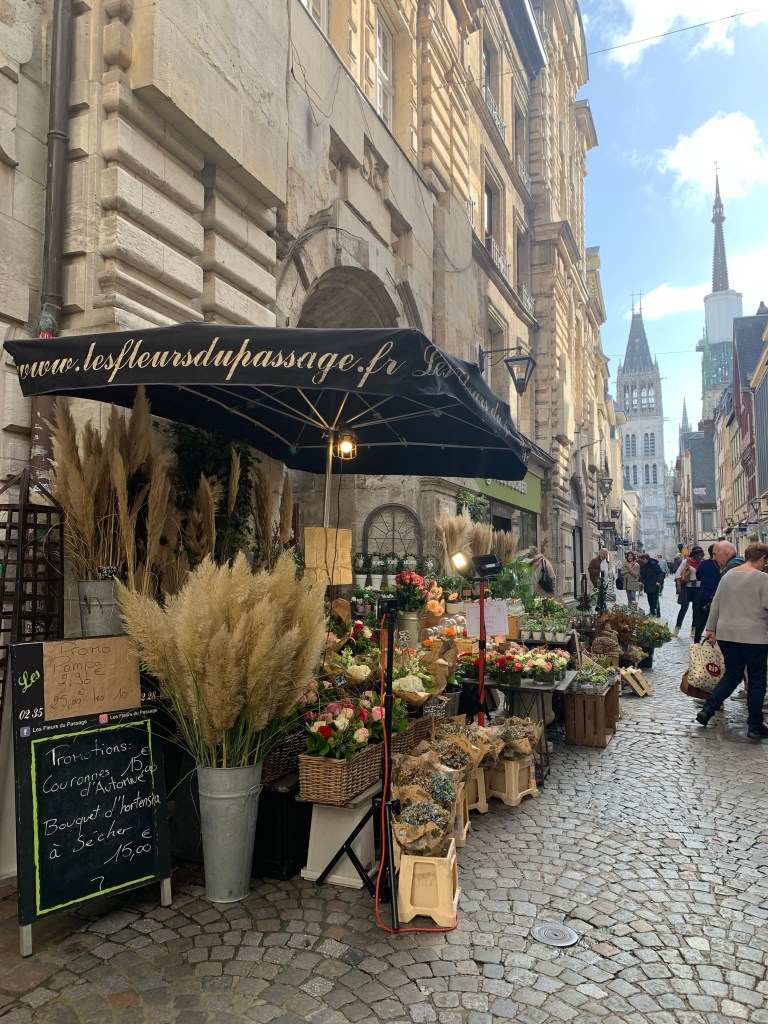
I can highly recommend a visit to Rouen! The area down by the river is also very nice with shops and restaurants.
I have been so busy I haven’t been keeping up with the blog! I have been working on the house and garden during the week and having fun on weekends!
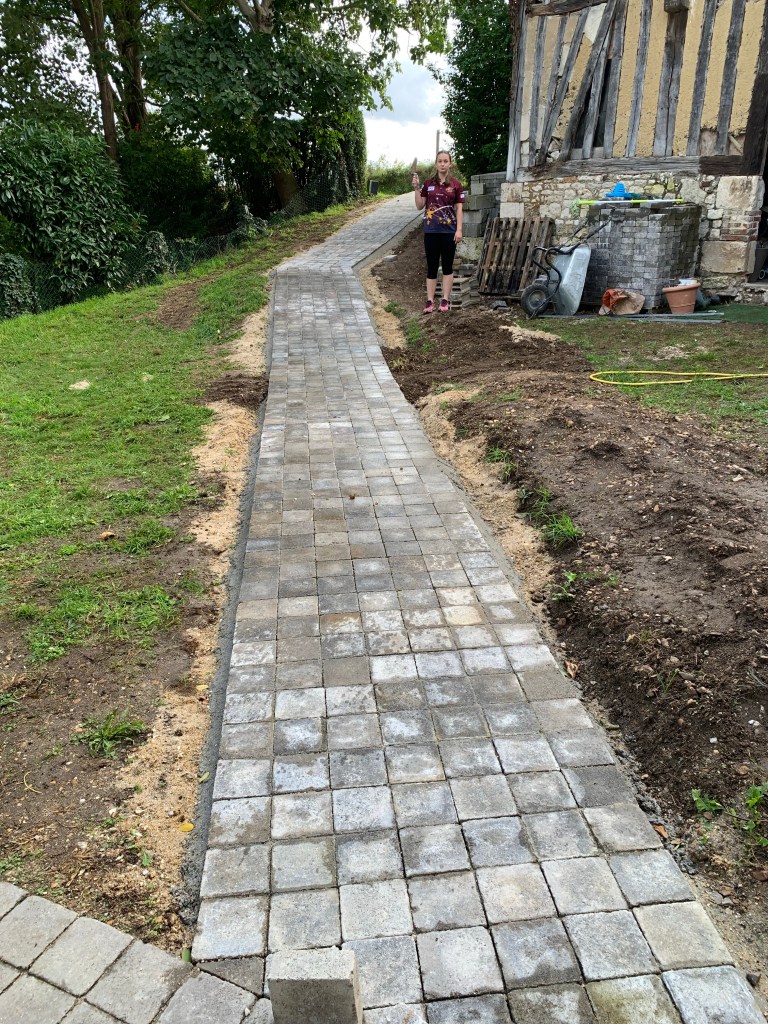
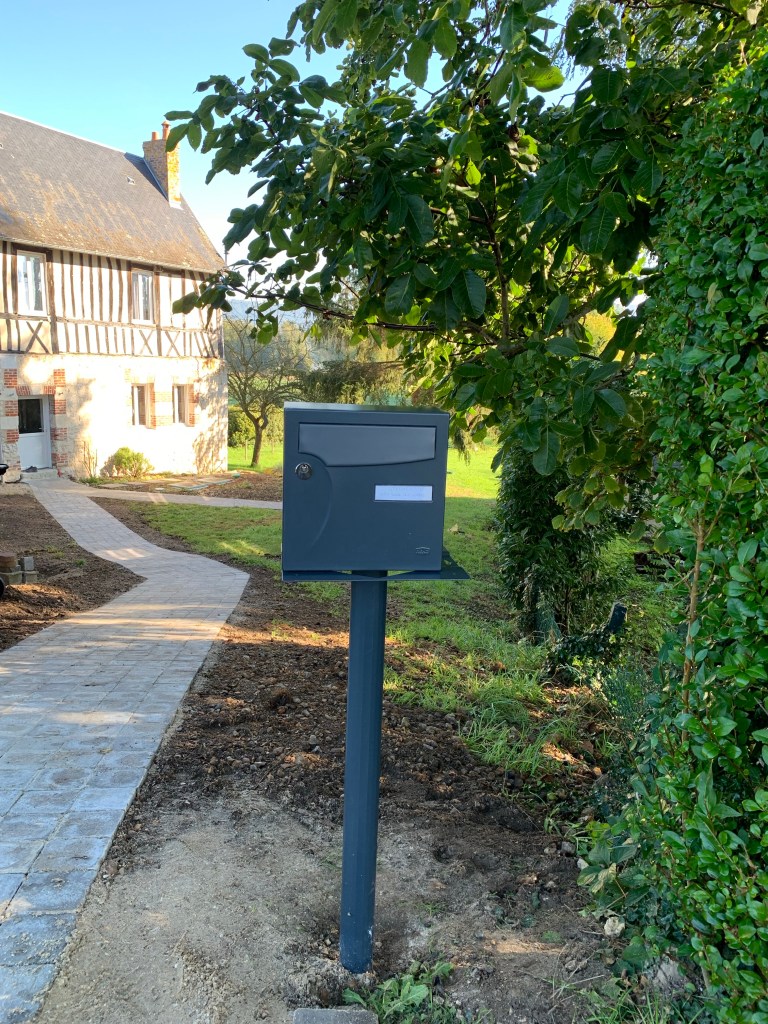
My biggest task has been to finish a new path from the road to the front door. Although there is landscaping expertise in the family, it’s not my specialty. However, we have all got stuck in and after digging it out, adding roadbase and sand, now we have a great new path!
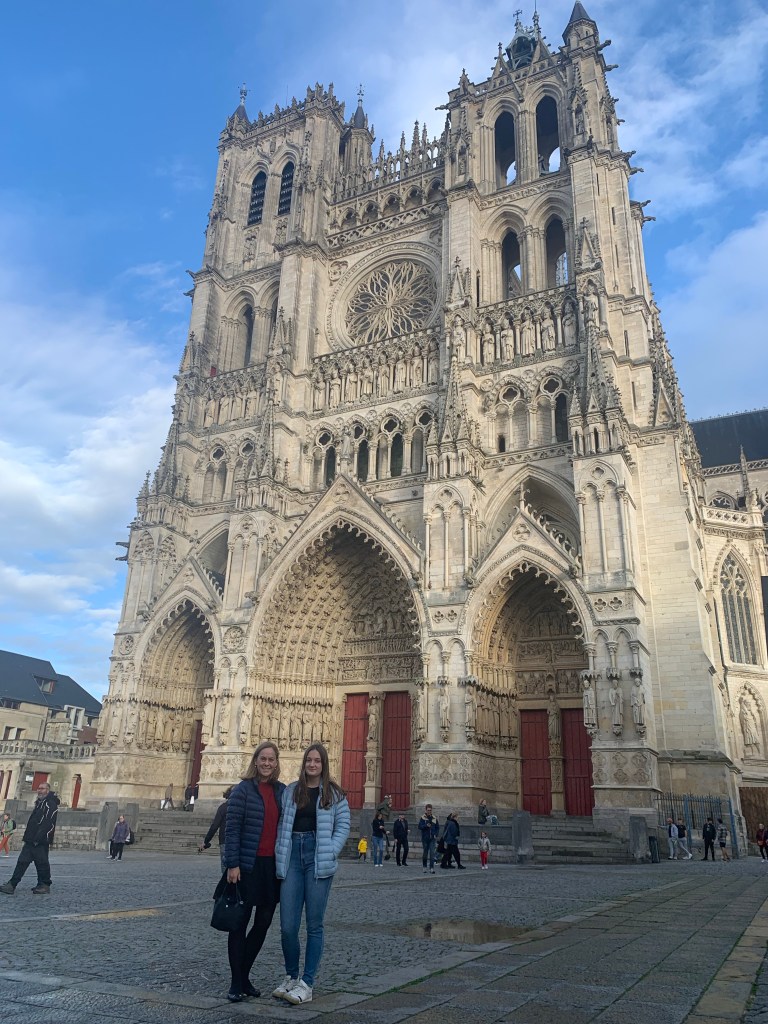
When we lived in France before, my job often had me in the former Western Front. Amiens is a town I know very well and I love it! It’s the gateway to the Somme battlefields. Estelle and Lavinia and I made a quick trip to visit friends while the boys hung out in Paris.
Catching the train around is so easy and mostly, more relaxing. We took a train from our nearest station at Oissel to Paris and then Paris to Amiens.
The Amiens Cathedral is actually the biggest in France, bigger than Notre Dame of Paris! It’s other claim to fame is it’s rapid construction. Commencing in 1220, it was almost entirely complete 68 years later. The facade is truely magnifique and you can still see some of the paint on the statues at the front as it all used to be painted in medieval times.
The inside is as amazing as the exterior and it has some beautifully carved stalls. During the First World War it received a few shells and some damage but was largely saved from destruction.
In 2018, we held a joint ceremony (British, French, Canadian & Australian) inside the Cathedral to mark the Battle of Amiens and the last 100 days of the war which ultimately led to allied victory. That was a memorable ceremony. General Monash fans will know of his important role in this battle and how he considered it one of the most important events and he commemorated it every year.
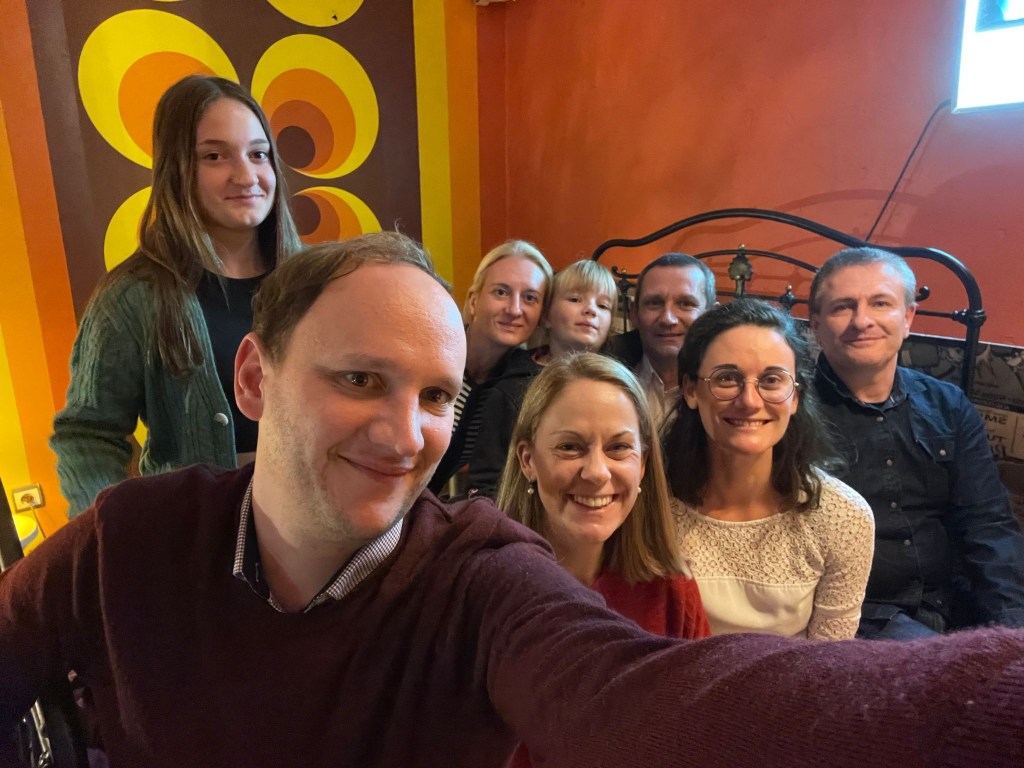
It was nice to walk through the familiar streets of Amiens, stop in a favourite cafe for a drink and have dinner with a very nice group of friends!
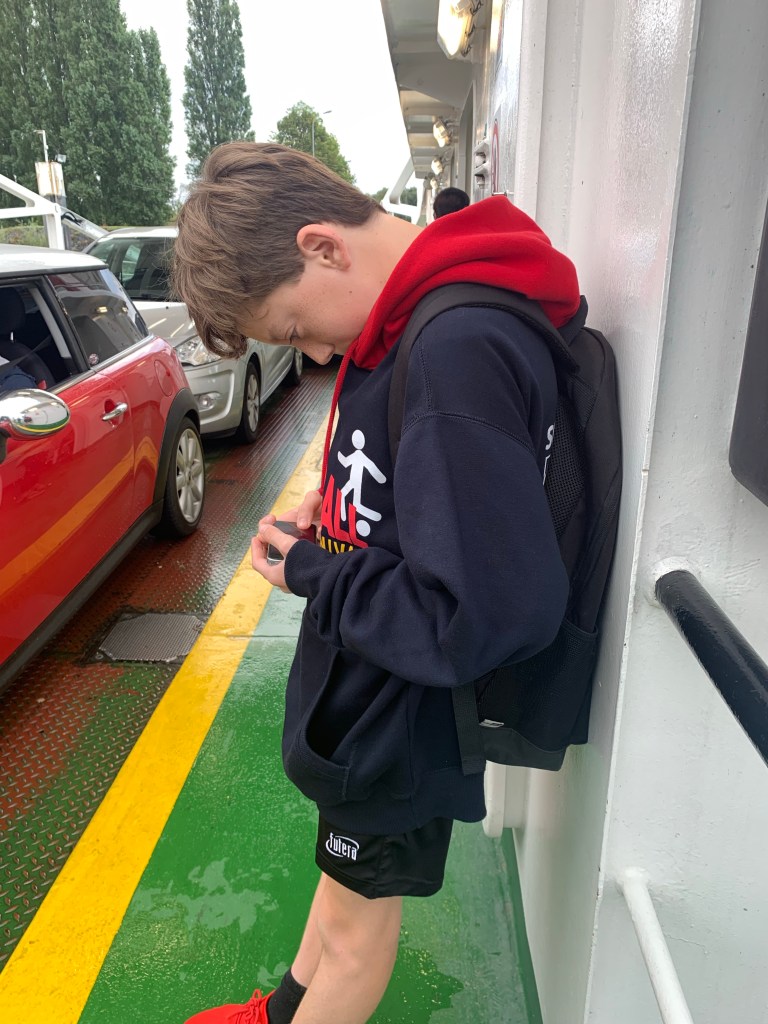
I think I have mentioned how we live on one side of the river and the nearest large town and kids’ school is on the other side. So we regularly take the ferry. It’s a fun experience as you line up, drive on, wait the few minutes to cross and then drive off. Sometimes you can wait a while in line and you don’t want to arrive at lunchtime when the ferry has a break!
Louis enjoying the view on the ferry to school 😁
There are eight ferry crossings near us and ours at Duclair is one of the biggest and can take buses and large trucks. Every year these ferries carry 3 million vehicles across the River. They are an important source of transport in the region and we rely heavily on them.
Duclair ferry
It was therefore quite surprising and inconvenient that when the school called me today as Louis was unwell, that there happened to be a strike on the ferries. I have not been able to find the reason for the strike or how long it will last. (Apparently the ferry has started again tonight).
France is known as a champion striking country. From revolutions to May 68 to the ‘gilet jaune’period that we lived in, it is a common feature. Already several of Lavinia’s school teachers have been absent on ‘grève’, with her being allowed to go home early. I also heard of some flights being delayed at the airport due to a ‘go-slow’.
France is a very socialist country and some think this is the particular link between protesting and strikes and ensuring elected representatives respond to the people. Protests and strikes are certainly covered and even regulated in law. When a big protest is called, people do come out in large numbers. Strikes in France are often across multiple sectors and can easily become generalized. The gilet jaune movement started out as a protest against fuel prices and ended up including a huge range of complaints, complicating the Government’s ability to respond.
The Figaro said that since 1789 there have been 16 constitutional breakdowns, always following a civil war or military defeat.
Other articles suggest that protesting and striking is more than a right but is a tradition.
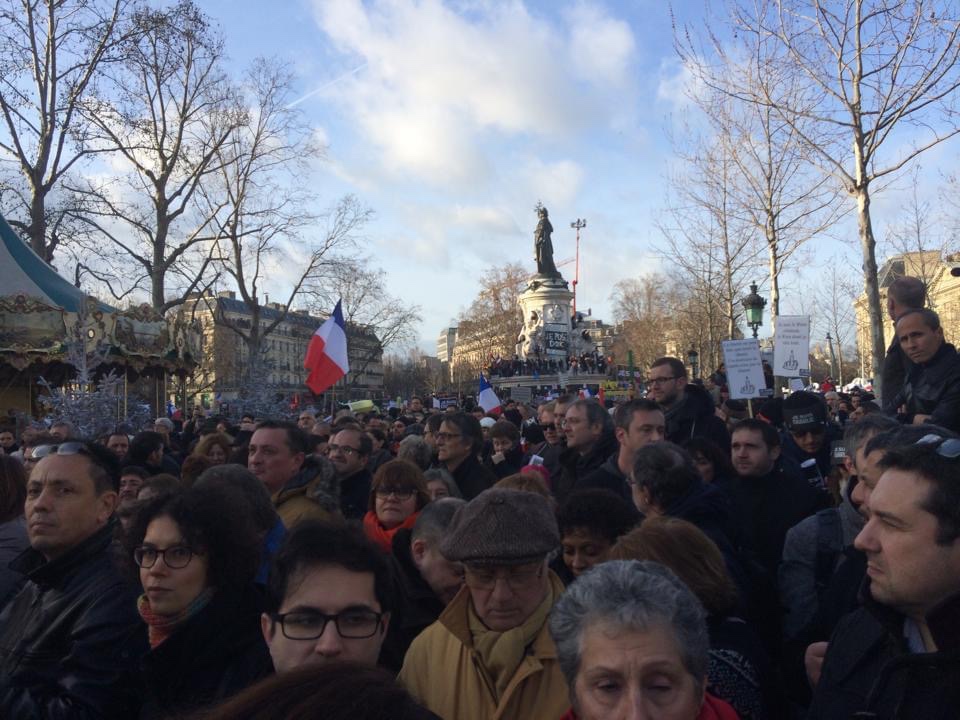
I vividly remember my first mass protest in Paris. We flew back from Australia as the Charlie Hebdo attacks occurred in 2015. Days later I attended an enormous free speech rally with my friend Estelle. It was an amazing experience! Literally thousands of people standing and walking together with a feeling of true solidarity. It was very uplifting!
Place de la République
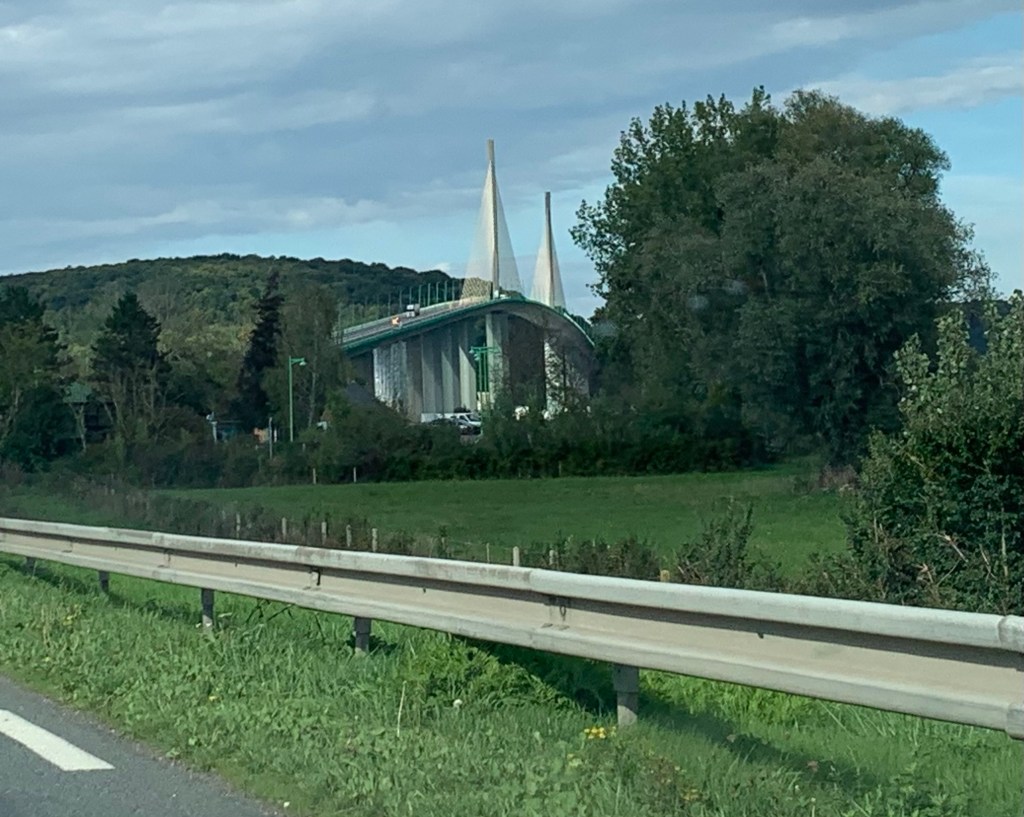
So anyway, today I had to go the long way around and got to experience the grandeur of the Pont de Brotonne! It is pretty high to allow the big ships to go underneath.


























 Adventure in Normandie